
Quote in B2B & AI Quote Engine: How It Works
Discover how an AI quote engine transforms B2B commerce with faster pricing, accurate quotes, automation, and an improved buyer experience.

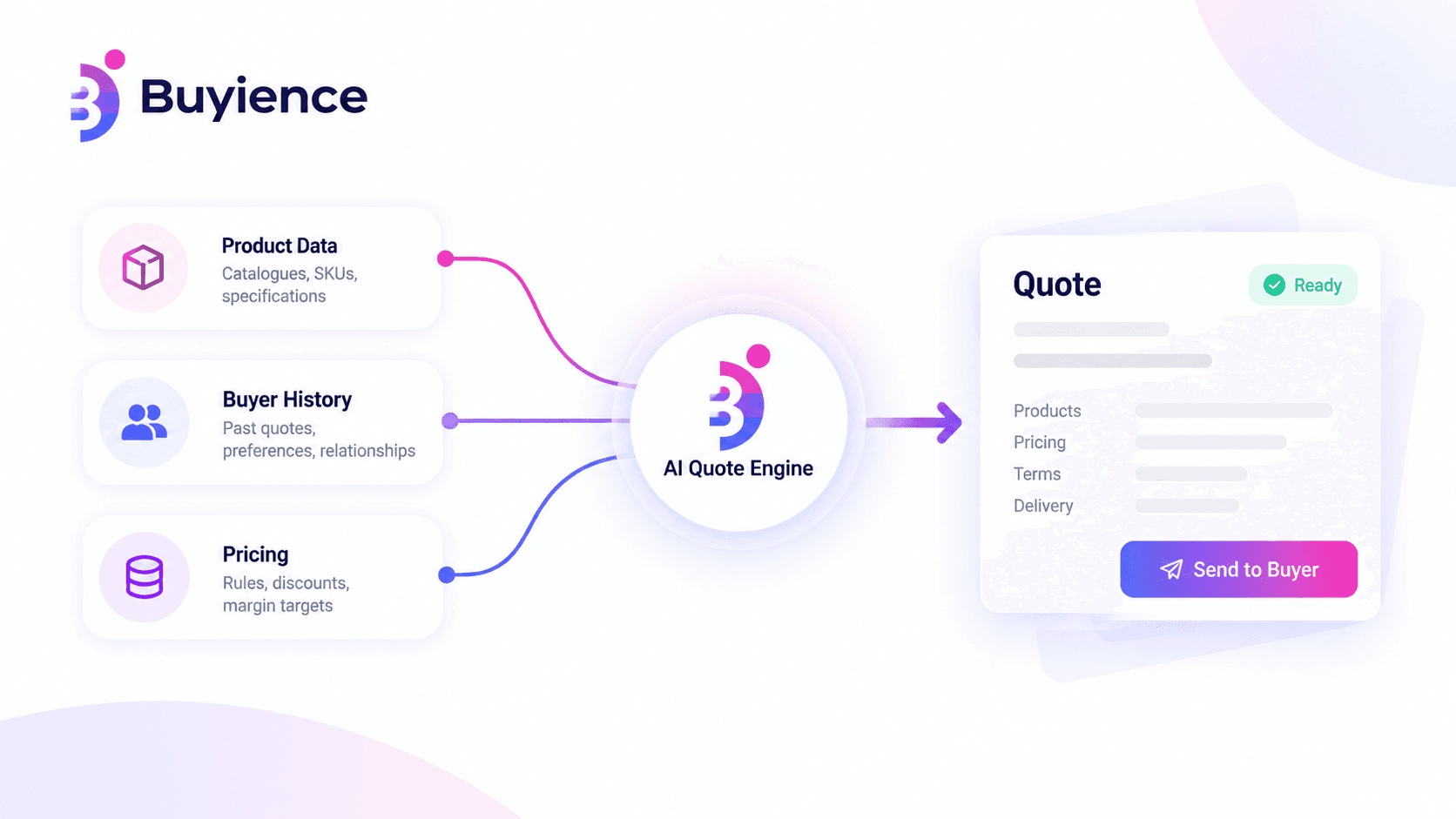
In B2B commerce, quoting is rarely just about price.
It’s about context, confidence, and speed — and that’s where most systems start to struggle.
As product catalogs grow, pricing becomes customer-specific, and deals move faster, quoting turns into one of the most fragile parts of the B2B revenue cycle. Teams rely on spreadsheets, approvals slow things down, and every exception introduces risk.
This is why quoting has become a strategic problem, not just an operational one.
Why Quoting Breaks Down in B2B Commerce
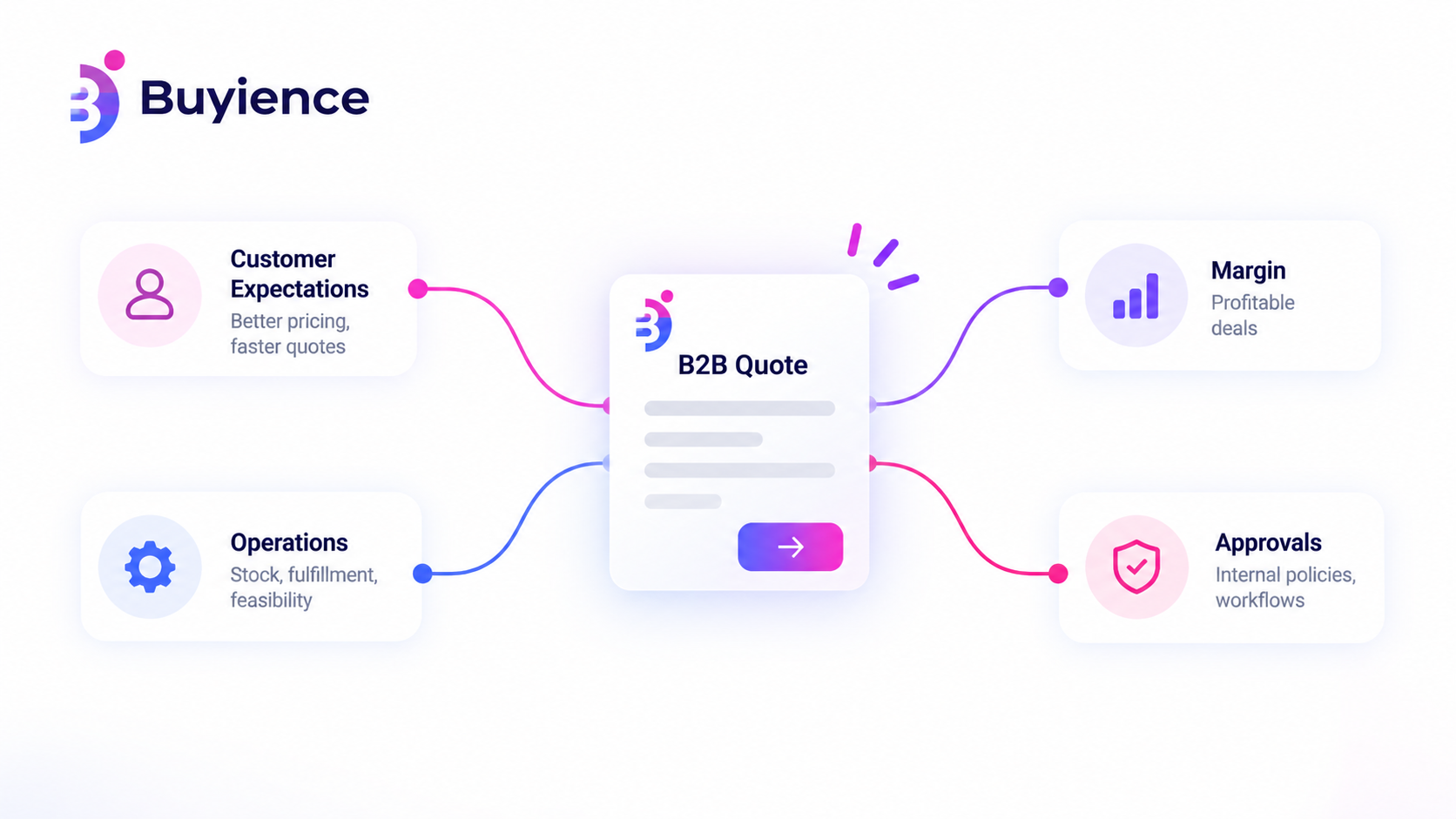
Unlike B2C, B2B quoting operates in a world of negotiated pricing, complex configurations, and internal dependencies. Every quote must balance:
- Customer expectations
- Margin targets
- Operational feasibility
- Approval workflows
— often at the same time.
In practice, this means:
- Sales teams wait on finance
- Finance waits on clarity
- Operations validates late in the process
By the time a quote reaches the buyer, momentum is already lost.
The issue isn’t lack of pricing logic.
It’s lack of decision support at the moment quotes are created.
The Limits of Rule-Based Quoting Systems
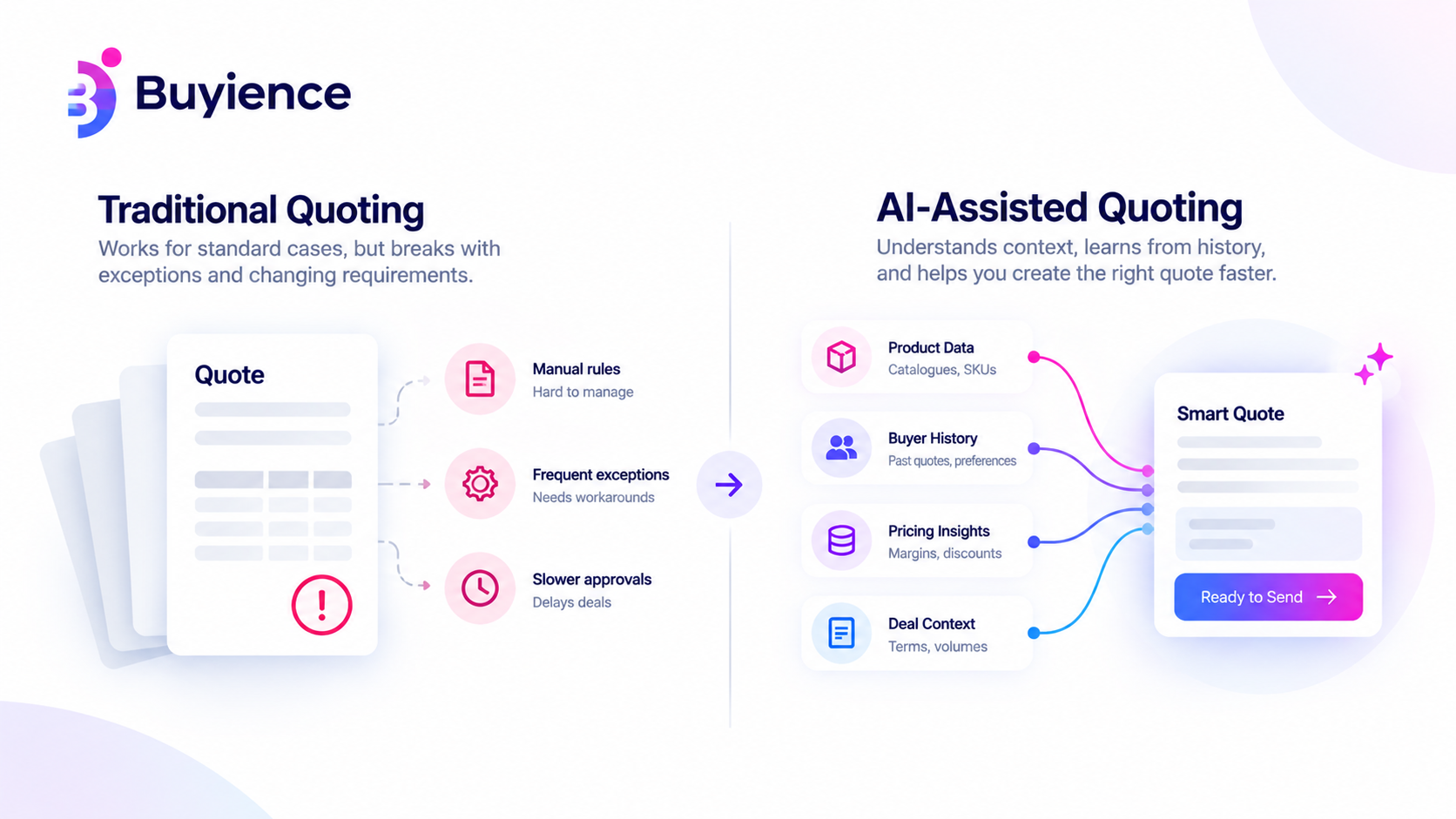
Traditional CPQ systems were designed to bring structure through rules. They work well in controlled environments where products, pricing, and deal structures remain predictable.
Modern B2B commerce is rarely predictable.
As businesses expand into new markets, introduce new pricing models, or support more complex customers, rule-based systems become harder to maintain. Every exception requires new logic. Every change increases friction. Over time, quoting systems slow the business instead of enabling it.
Most importantly, these systems don’t improve with use. They enforce rules, but they don’t learn from outcomes.
What an AI Quote Engine Changes
An AI Quote Engine for B2B shifts quoting from rule execution to decision support.
Rather than replacing human judgment, AI assists it by analyzing historical quotes, approvals, and deal outcomes. The goal is not to automate pricing decisions, but to provide context while those decisions are being made.
This allows teams to understand:
- How similar deals were priced
- Where risk typically appears
- Which configurations often require revision
Quoting becomes more informed, more consistent, and significantly faster.
How the Buyience AI Quote Engine Works
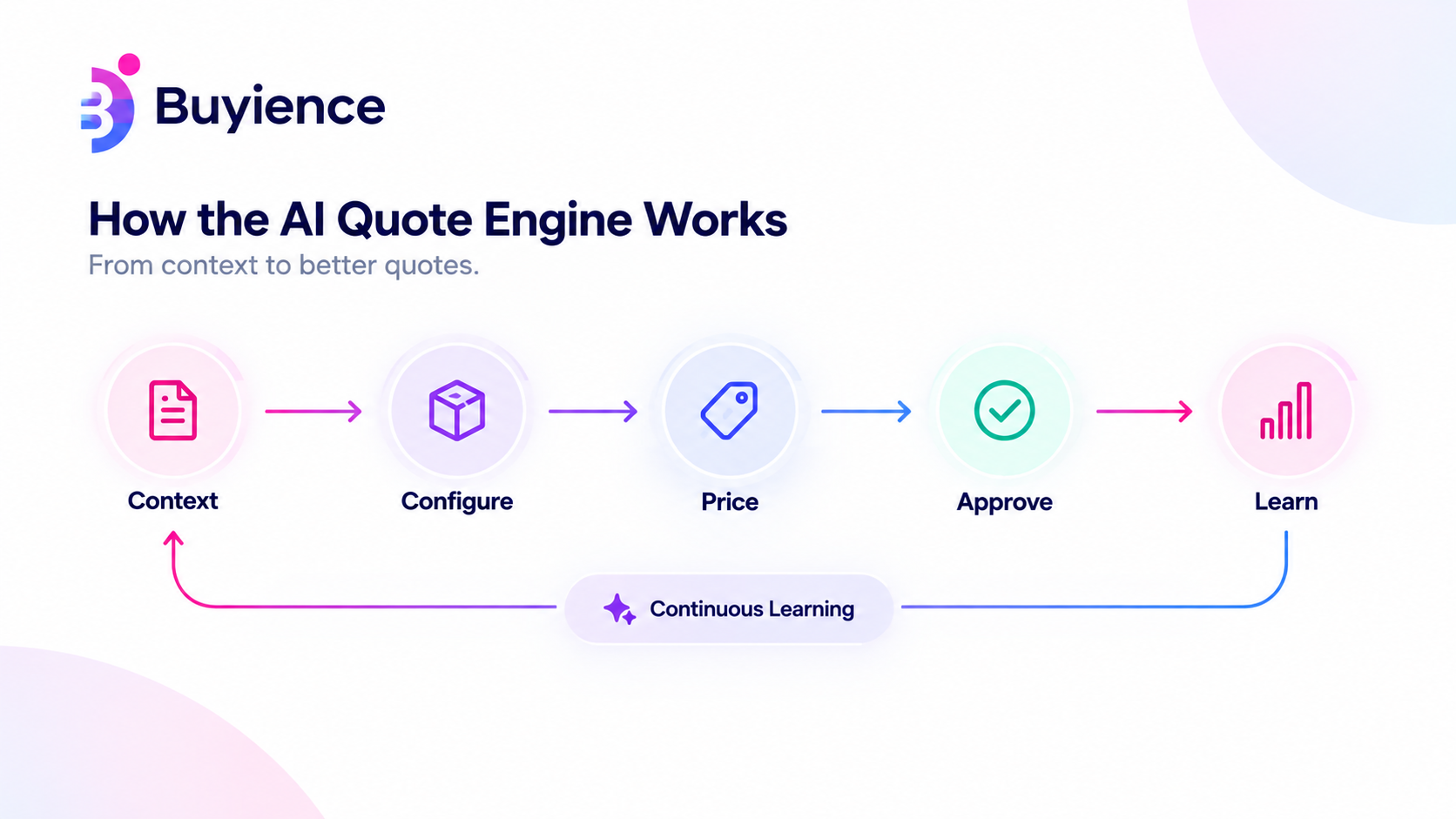
Within the Buyience B2B Commerce Platform, AI assistance is applied across the quoting lifecycle.
- Quote initiation — Buyience builds context using customer history and comparable past deals.
- Configuration — the system guides valid combinations and highlights potential issues early in the process.
- Pricing — Buyience doesn’t decide what the price should be. Instead, it surfaces margin impact, historical patterns, and potential risk — helping sales teams make confident trade-offs while staying in control.
- Approvals — standard quotes move quickly, while higher-risk or unusual deals receive the right level of attention without unnecessary delays.
- Learning loop — as quotes are accepted, revised, or rejected, outcomes feed back into the platform. Over time, quoting becomes more predictable and easier to manage — without locking teams into rigid logic.
Quoting as Part of the Buyience Platform
The Buyience AI-Powered Quote Engine is not a standalone tool. It operates as part of the broader Buyience B2B Commerce Platform, connected to product data, pricing structures, customer context, and operational workflows.
This integration ensures quotes reflect real business conditions, not isolated rule sets. It also allows intelligence gained during quoting to benefit forecasting, planning, and sales execution across the organization.
Why This Matters for Growing B2B Teams
Growing B2B companies often find themselves stuck between enterprise CPQ systems that are too heavy and manual processes that no longer scale.
Buyience is designed for this middle ground. It supports real-world B2B complexity without introducing unnecessary overhead, allowing teams to scale quoting alongside growth in products, customers, and markets.
Just as importantly, it captures institutional knowledge — ensuring experience compounds instead of disappearing when teams change.
Closing Thought
Quoting is no longer a back-office task.
It’s a customer-facing moment that directly influences trust, speed, and deal outcomes.
B2B companies that treat quoting as a strategic capability — supported by intelligent systems rather than rigid rules — are better positioned to move faster and compete more effectively.
That shift is exactly what AI-assisted quoting enables in modern B2B commerce.
FAQ
Questions, answered
What is an AI Quote Engine for B2B?
It’s a system that assists quoting by analyzing historical quotes and outcomes to provide guidance during pricing, configuration, and approvals.
How is this Different from Traditional CPQ?
CPQ focuses on enforcing predefined rules. An AI Quote Engine adds learning and context to support better decisions within those rules.
Does Buyience Automate Pricing Decisions?
No. Buyience provides pricing intelligence and guidance while keeping humans in control.
Who is Buyience Designed For?
Mid-market and growing B2B companies with complex pricing, configurations, and approval workflows.
Related articles
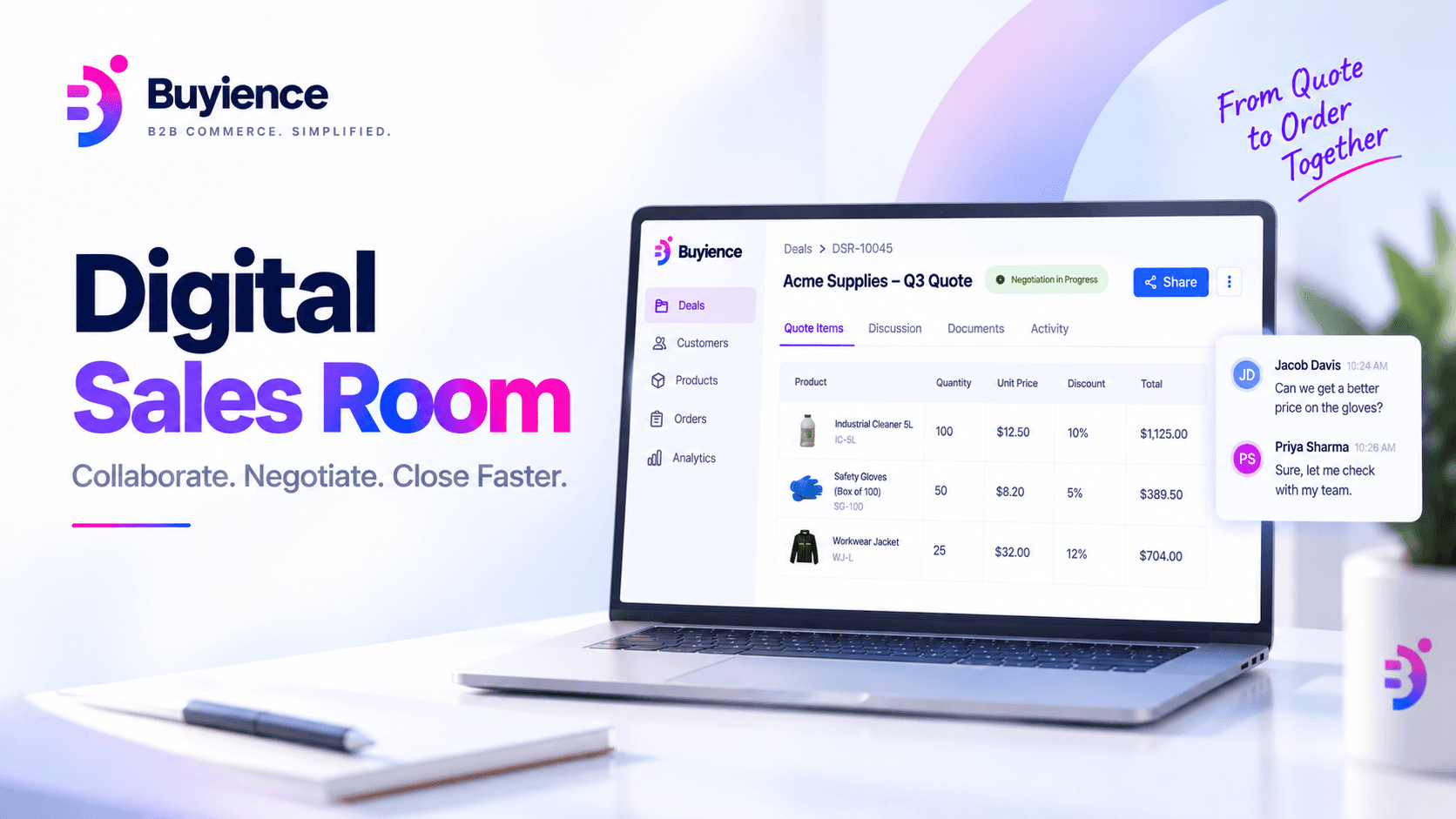
Digital Sales Room (DSR)
A digital sales room (DSR) is a secure, shared online workspace where a seller and a buyer work through a deal together — reviewing quotes, negotiating pricing, exchanging questions, and reaching agreement — in one place, with a record of everything that happened.
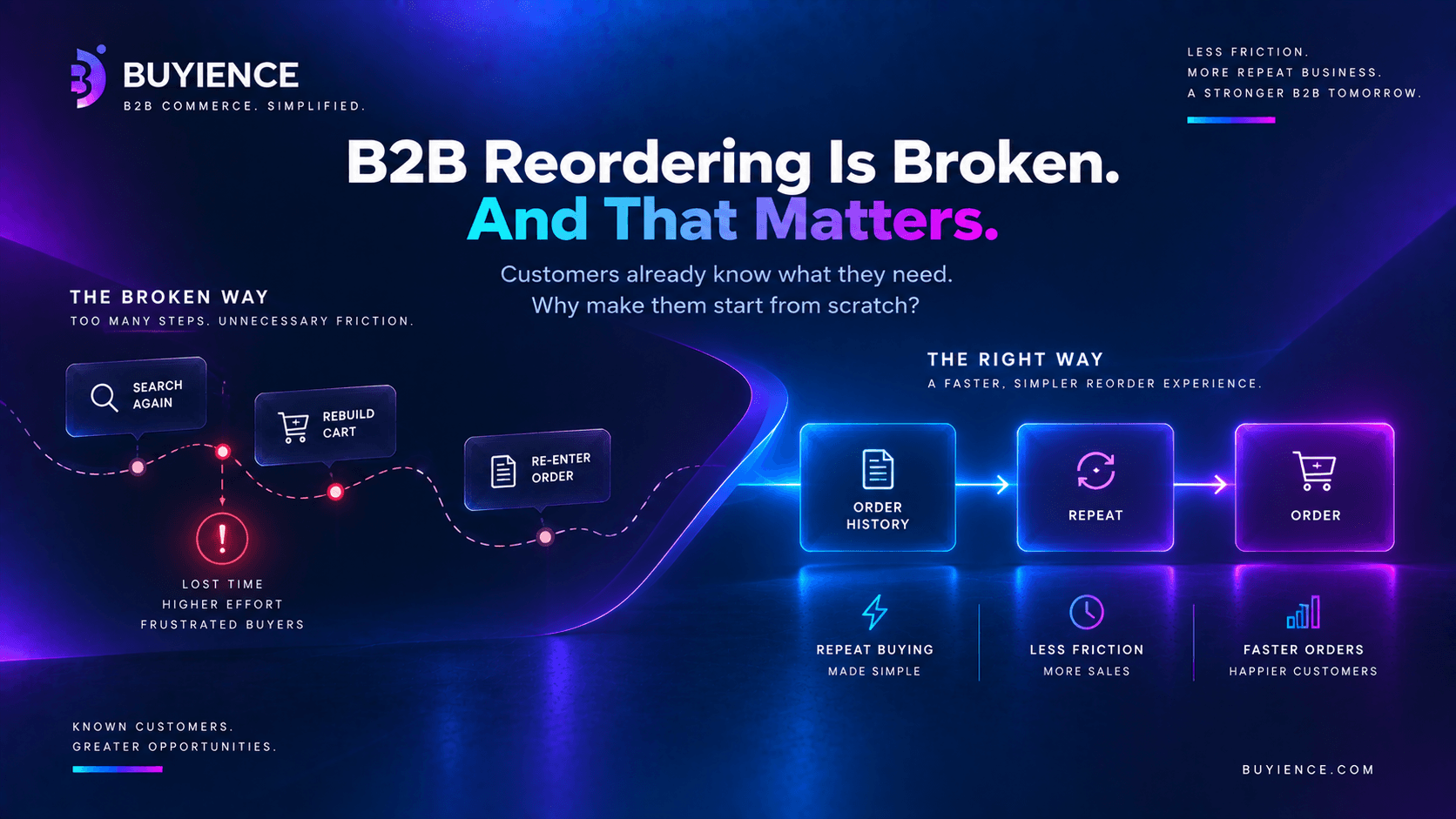
B2B Reordering Is Broken — and Why That Matters
A B2B reorder portal is a system that allows customers to quickly repeat previous purchases using saved order history, predefined product lists, or contract-specific pricing—without starting from scratch.
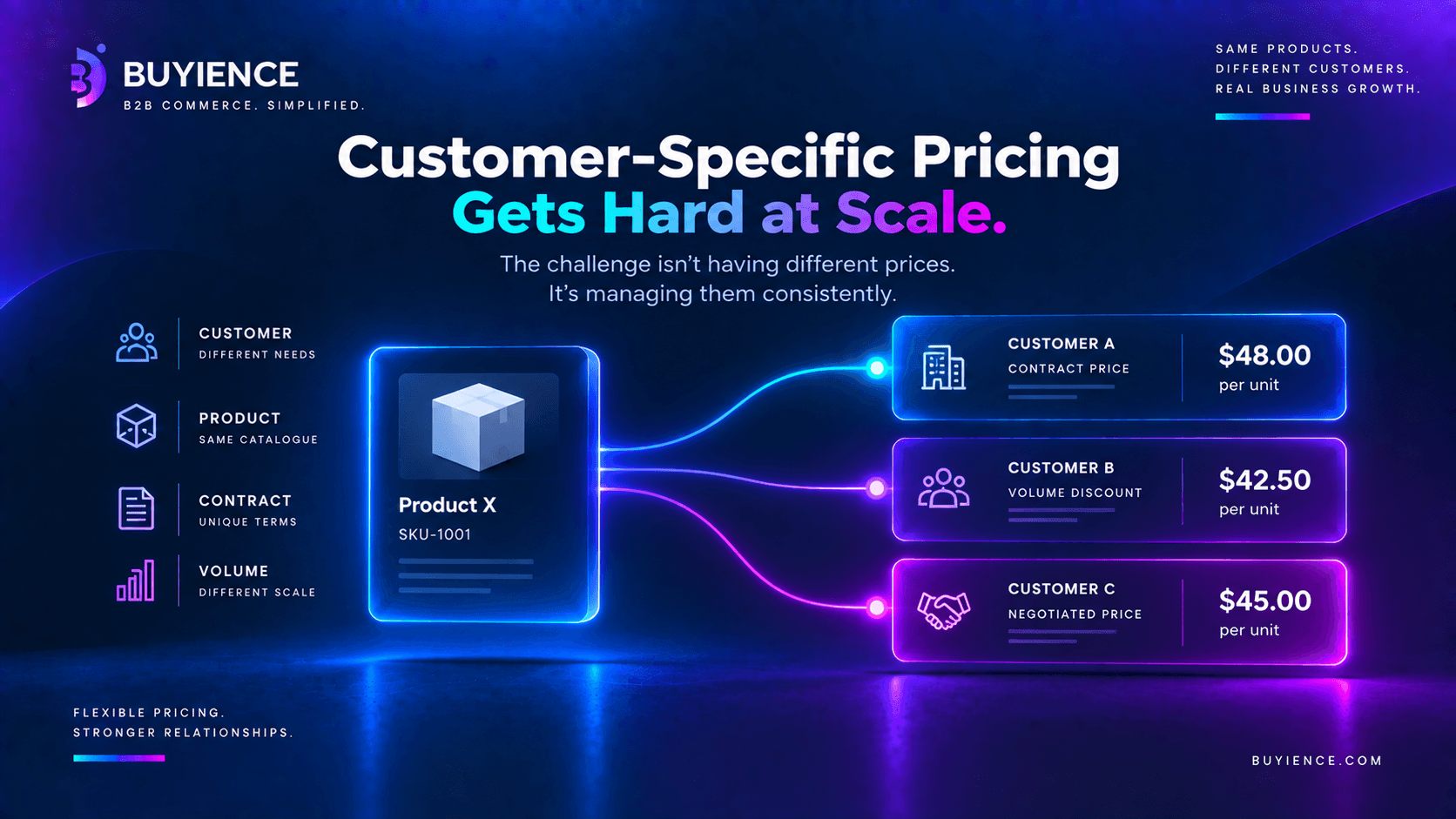
How B2B Teams Manage Customer-Specific Pricing at Scale
B2B pricing software is a system that centralizes and automates pricing logic across customers, products, and channels—ensuring consistent, real-time pricing without manual intervention.