
B2B Commerce and Headless Architecture: What Headless Solves, What It Doesn't, and When It Matters
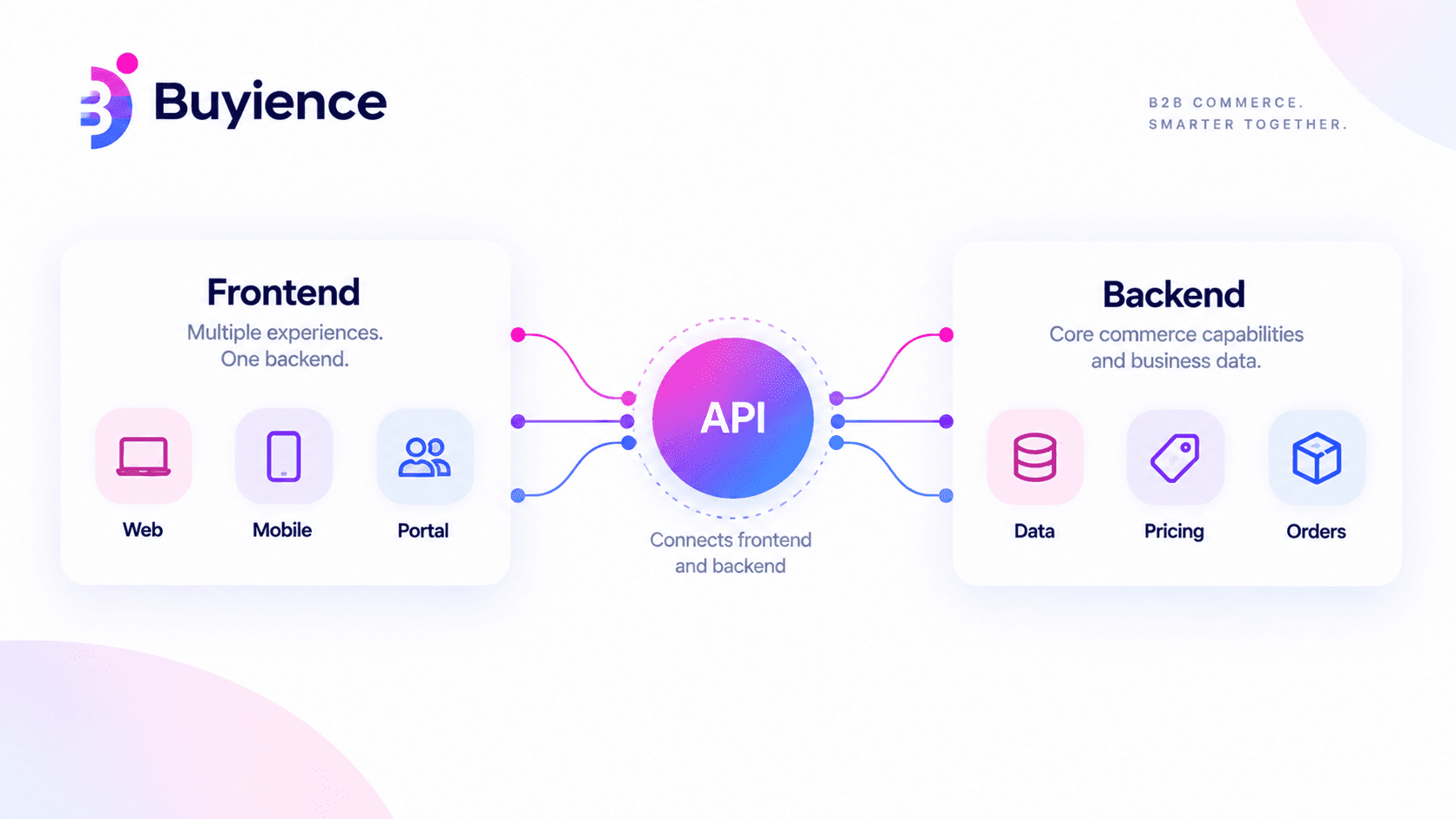
Headless architecture separates the frontend presentation layer of a system from the backend business logic and data management.

Headless architecture has become one of the most discussed concepts in modern commerce. B2C brands adopted it to build faster storefronts and custom experiences. Vendors promote it as the future of commerce platforms. Analysts write reports positioning headless as essential for digital transformation.
For B2B commerce leaders, this creates confusion. Does headless solve the problems they actually face—complex pricing, quote management, approval workflows, sales collaboration? Or is it primarily an architectural choice that addresses different concerns?
Understanding what headless architecture actually enables—and what it does not—helps businesses evaluate whether it matters for their specific operational needs or whether other capabilities should take priority.
What Is Headless Architecture?
In headless architecture, the frontend and backend layers are decoupled. The backend exposes its functionality through APIs—interfaces that allow the frontend to request data and perform actions without needing direct access to backend code. The frontend consumes these APIs to display information and process user interactions, but it operates independently from the backend systems.
This separation means the frontend can be rebuilt, redesigned, or replaced without modifying backend logic. A business could launch a new customer-facing storefront, create a mobile app, or build specialized portals for different customer segments, all connecting to the same backend systems through APIs.
The term "headless" reflects this decoupling—the "head" (frontend) is separated from the "body" (backend), and they communicate through defined interfaces rather than being built as a single unit.
What headless actually enables is flexibility in how users interact with commerce systems. It does not inherently change what those systems can do—their capabilities for pricing, inventory management, order processing, and workflow automation remain functions of the backend architecture, not the presence or absence of a frontend coupling.
Why Headless Emerged in Commerce
Headless architecture emerged in response to limitations that became apparent as businesses tried to adapt monolithic commerce platforms to changing requirements.
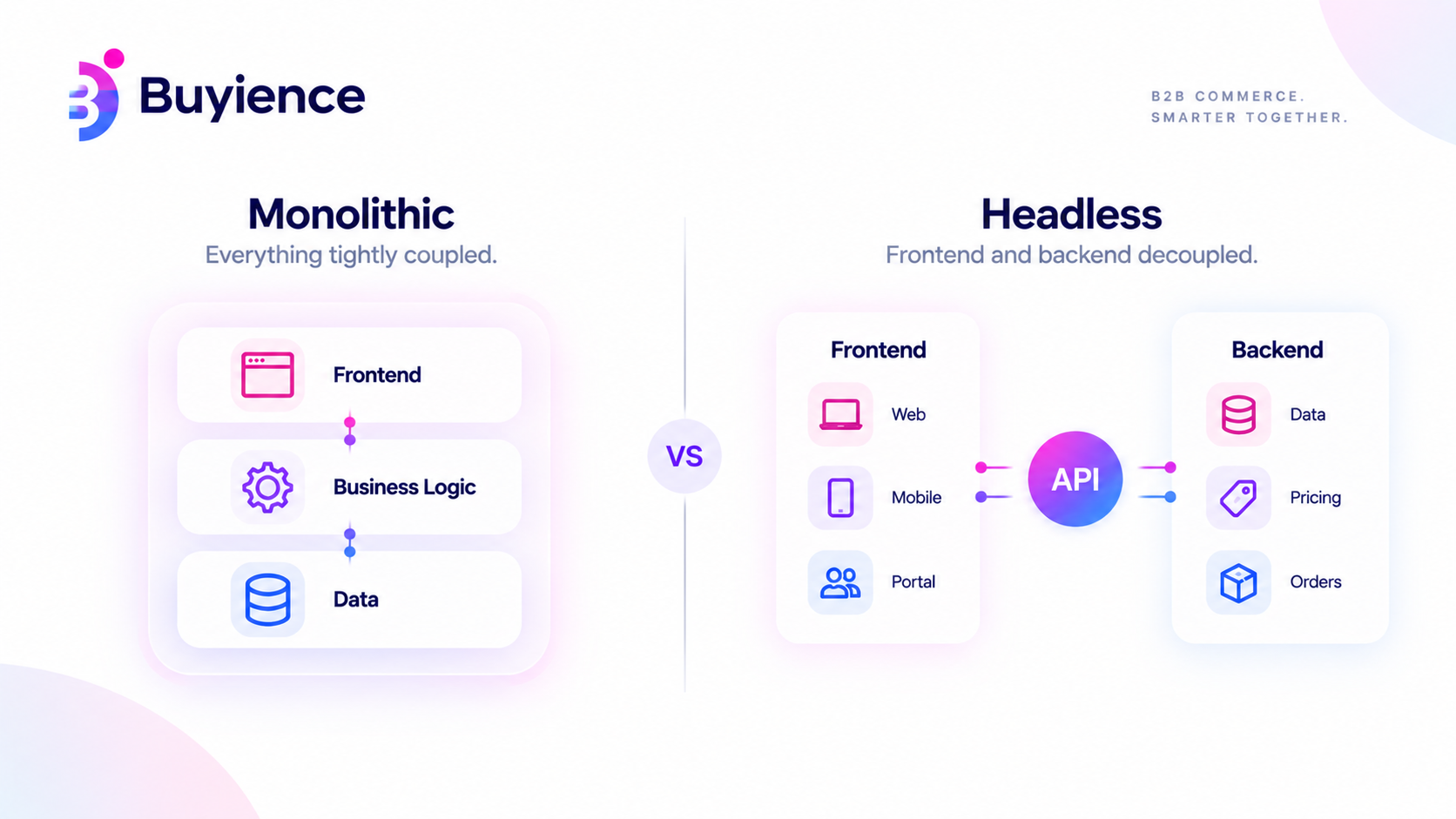
- The monolithic constraint — In tightly coupled systems, modifying the storefront often meant touching backend code, which required development resources, testing cycles, and careful coordination to avoid breaking functionality. Simple design changes could take weeks or months because they cascaded through the entire system.
- Frontend flexibility demands — Businesses wanted to experiment with different user experiences, test new design approaches, and update interfaces quickly in response to customer feedback. When the frontend and backend were coupled, this iteration speed was limited by backend complexity and deployment cycles.
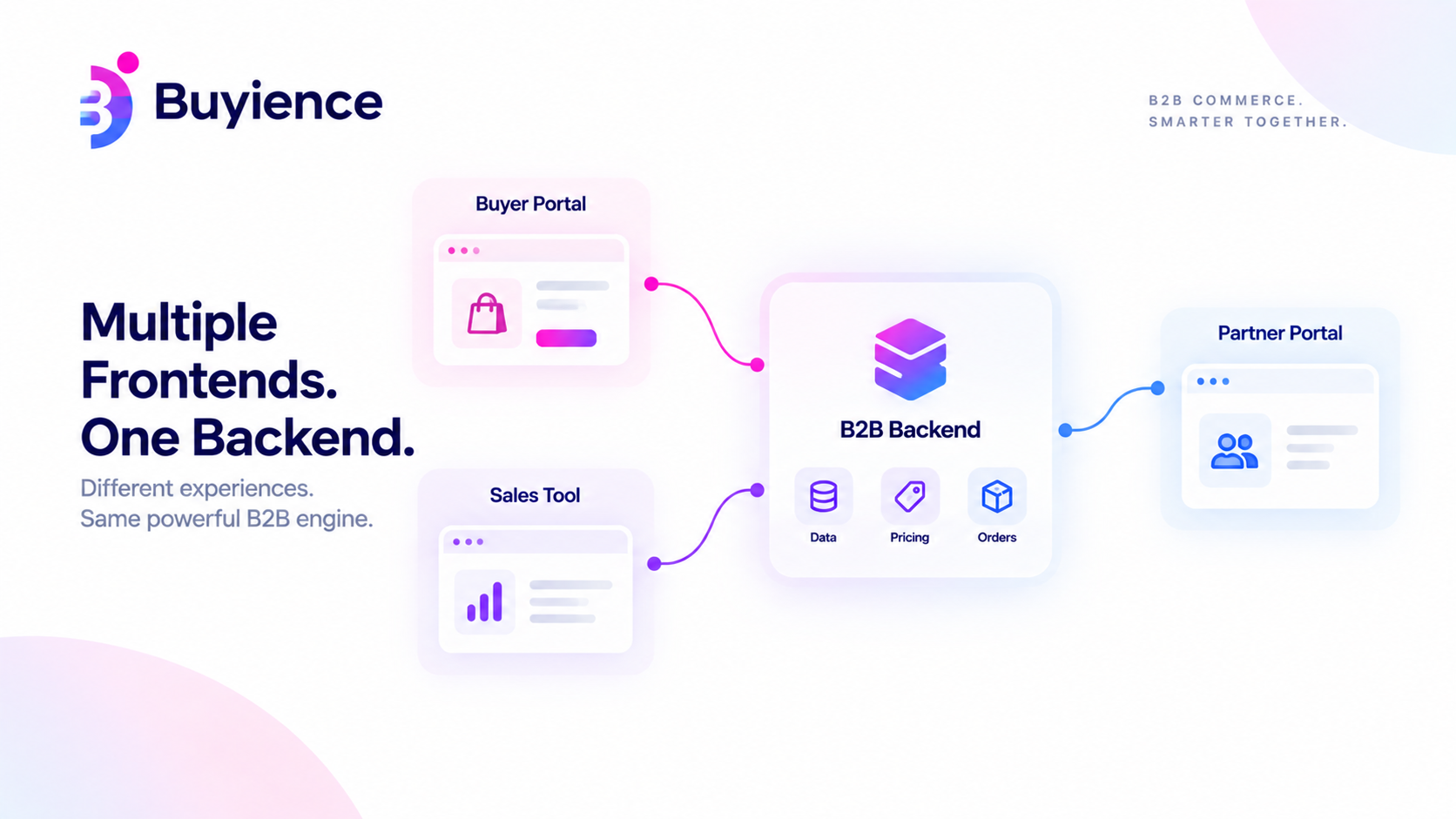
- Multi-channel requirements — A company might need a web storefront, a mobile app, a sales representative portal, and a partner ordering system—all accessing the same product, pricing, and inventory data. Building these as separate monolithic applications created data synchronization problems and duplicated business logic. Headless architecture allowed multiple frontends to share the same backend.
- Technology evolution — New frameworks and design tools emerged regularly, offering better performance or developer productivity. Businesses using monolithic platforms often could not adopt these innovations without replatforming entirely. Headless architecture allowed frontend technology updates without backend disruption.
These drivers were strongest in B2C commerce, where storefronts are the primary customer touchpoint and visual differentiation matters significantly. The question for B2B businesses is whether these same pressures apply to their operations, or whether different architectural priorities matter more.
Why Headless Alone Does Not Solve B2B Commerce
The most common misconception about headless architecture in B2B contexts is that frontend flexibility addresses the core challenges B2B businesses face. It does not.
- Pricing complexity lives in the backend — B2B businesses need pricing engines that handle customer-specific rates, volume tiers, contract terms, and time-limited promotions. Whether the frontend is coupled to the backend or accessed through APIs does not change the complexity of calculating the correct price for a given customer, product, and order volume. A headless storefront displaying prices pulled from an inadequate pricing engine delivers inaccurate information faster, which is not an improvement.
- Quote-to-order requires workflow logic — Sales representatives need systems that validate configurations, apply approval rules, route quotes to managers, and convert approved quotes into orders. These are workflow and data management challenges. Decoupling the frontend allows different interfaces to initiate quotes, but it does not create the quoting logic itself.
- Sales involvement needs backend support — Sales representatives need visibility into what customers are viewing, the ability to assist with product selection, and tools to collaborate on pricing and terms. These capabilities depend on backend systems that track customer interactions, manage sales workflows, and coordinate between self-service and assisted selling. Headless architecture enables building better sales tools, but those tools are only useful if the backend supports the workflows they need.
- Approvals and contracts are process problems — When a purchase requires approval from multiple stakeholders, when contract terms need verification before orders are accepted, or when payment terms vary by customer, these are backend concerns. A headless frontend can display approval status, but it does not create the approval workflow or enforce the business rules.
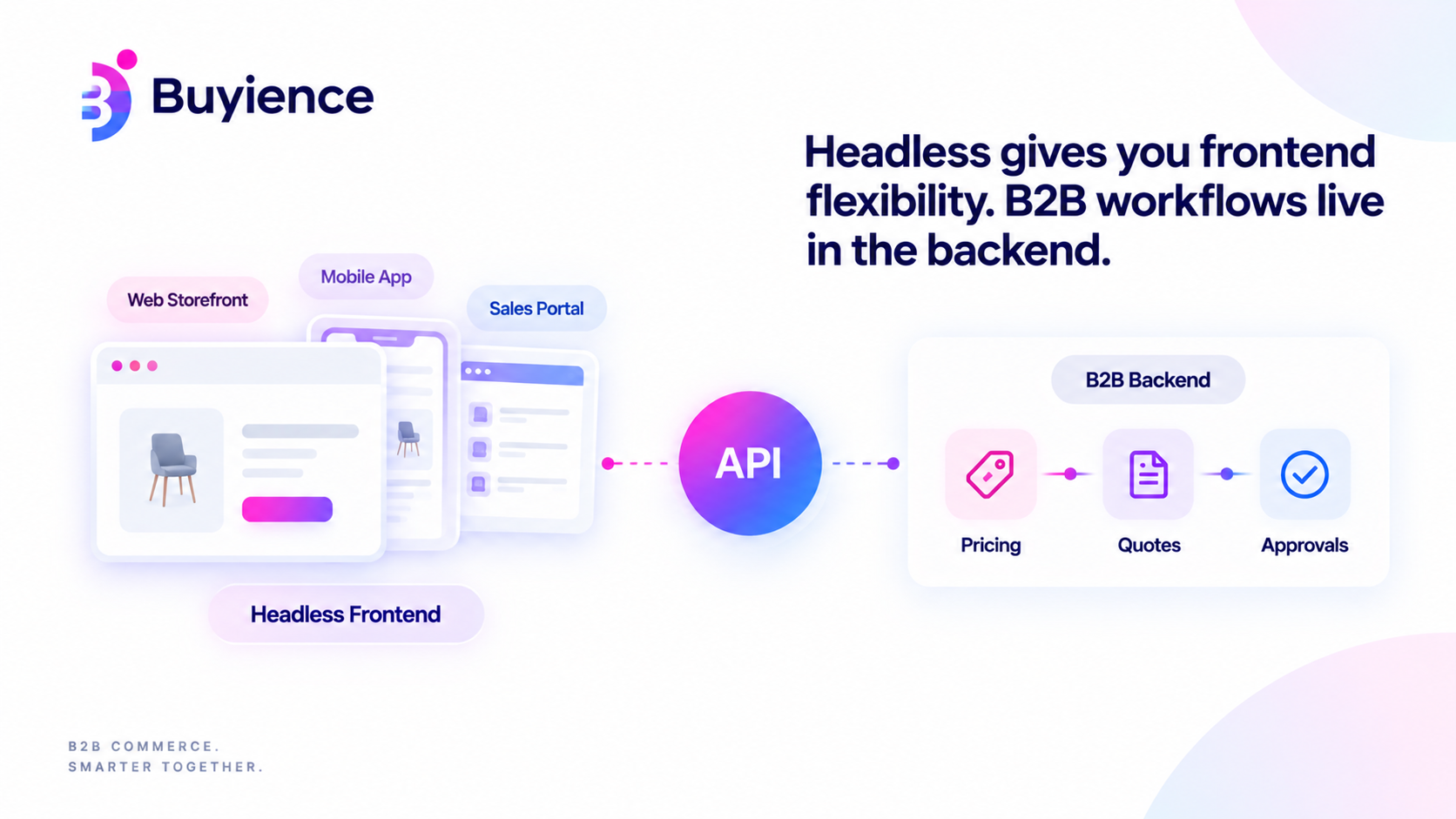
The fundamental insight: UI freedom does not equal workflow capability. Headless architecture gives businesses more control over how users interact with commerce systems, but it does not change what those systems can do operationally. For B2B businesses, the hard problems are usually workflow problems—pricing, quoting, configuration, approvals—not presentation problems.
Where Headless Does Add Value in B2B
While headless architecture does not solve core B2B workflow challenges, it provides value in specific scenarios where frontend flexibility matters operationally.
- Multiple buyer portals — A business selling to both small retailers and large distributors might want separate portals tailored to each segment's needs—different product catalogs, pricing displays, ordering workflows, or account management features. Headless architecture allows building these distinct frontends while sharing backend systems for pricing, inventory, and order processing. This avoids duplicating business logic and ensures data consistency.
- Sales tools and internal UIs — Sales representatives need interfaces optimized for speed and efficiency rather than visual polish. A sales quoting tool might prioritize information density and keyboard shortcuts over the spacious layouts that work for customer-facing storefronts. Building this as a separate headless frontend allows optimizing for representative productivity without compromising the customer experience.
- Partner portals — Partners might need access to inventory visibility, order status for their customers, commission tracking, and marketing materials. A headless architecture allows building a partner-specific portal that exposes only relevant functionality while connecting to the same backend systems that power customer transactions.
- Regional or brand-specific frontends — Rather than building entirely separate commerce systems for each region, headless architecture allows creating localized frontends that connect to shared backend infrastructure. This reduces operational complexity while accommodating regional differences in language, currency, or branding requirements.
The pattern: headless adds value when businesses need multiple interfaces serving different purposes, all accessing the same underlying data and business logic. The value comes from interface specialization, not from architectural elegance for its own sake.
Headless vs Composable vs Monolithic (Clarified)
These terms are often used interchangeably or confused, which obscures their actual meanings and relationships.
- Monolithic architecture — The entire system—frontend, business logic, and data management—is built as a single integrated application. Changes to any part potentially affect other parts. Deployment is all-or-nothing. Scaling means scaling the entire application. Monolithic systems can be simpler to operate when they match business requirements, but they become constraints when customization needs grow or when different parts of the system need to evolve at different speeds.
- Headless architecture — Specifically refers to decoupling the frontend presentation layer from backend systems. It does not prescribe how the backend is structured—a headless system can have a monolithic backend with a decoupled frontend, or it can have a composable backend with multiple decoupled frontends. Headless addresses frontend flexibility but is neutral on backend architecture.
- Composable architecture — Building systems from independent, interchangeable components that connect through APIs. Unlike headless, which focuses on frontend/backend separation, composable applies to the entire system. In composable commerce, the pricing engine, catalog, order management, and payment processing might all be separate components that can be selected, replaced, or modified independently. Headless can be part of a composable architecture—the frontend is one of the composable components—but composable extends beyond the frontend.
These are architectural tools, not goals. The relevant question is not which architecture is theoretically superior but which addresses the specific constraints a business faces. A business struggling with pricing complexity benefits more from a capable pricing engine (backend capability) than from headless architecture (frontend flexibility). A business needing multiple customer interfaces benefits from headless. A business anticipating frequent changes across multiple capabilities benefits from composable architecture.
The overlap is that composable systems are typically headless, because frontend decoupling aligns with the broader principle of component independence. But headless systems are not necessarily composable if the backend remains monolithic.
How Buyience Thinks About Headless
Buyience is built as a backend B2B layer that extends existing e-commerce platforms. The architecture prioritizes workflows—quote-to-order, pricing, CPQ, sales collaboration—over frontend flexibility.
Headless principles are supported in the sense that Buyience exposes functionality through APIs that can be accessed by different frontends. Businesses using Buyience can build custom buyer portals, sales tools, or partner interfaces that connect to Buyience's backend capabilities. But headless is an enabler rather than the centerpiece of the value proposition.
The philosophy is workflow-first. B2B businesses adopt Buyience to solve operational problems: pricing that is too complex for manual management, quoting processes that create bottlenecks, configuration logic that requires validation, sales collaboration that needs structure. These are backend challenges. Whether the frontend accessing these capabilities is coupled to the backend or decoupled through APIs matters less than whether the backend can handle the workflow complexity.
This reflects mid-market reality. Most mid-market B2B businesses are not building multiple custom frontends. They need one solid buyer portal, one effective sales tool, and integration with their existing systems. Frontend flexibility is useful when it enables incremental improvements—updating the interface without touching backend logic, adding a mobile experience alongside the web portal—but it is not the primary driver of value.
The approach allows incremental adoption of headless principles as needs evolve. A business might start with standard frontends that work well for their use case, then later build specialized interfaces for specific customer segments or internal tools for sales operations, connecting to the same backend capabilities they have already implemented.
When a B2B Business Actually Needs Headless
Headless architecture is not appropriate for every business at every stage, and recognizing when it provides value helps avoid unnecessary complexity.
Clear indicators headless adds value:
- Needing multiple distinct frontends for different user types
- Planning significant customization that standard platform templates cannot accommodate
- Operating across regions or brands requiring different interfaces with shared backend systems
- Having development resources capable of building and maintaining custom frontends
When headless is often overkill:
- Standard storefront templates meet customer needs
- No need for specialized sales tools or partner portals
- Limited development resources to build custom frontends
- Backend workflow capabilities are the primary constraint
Cost and complexity tradeoffs matter significantly. Headless architecture requires frontend development expertise, ongoing maintenance of APIs, and coordination between teams working on different layers of the system. For businesses with small technical teams or limited budgets, these costs may outweigh the flexibility benefits.
The decision should be driven by specific operational requirements, not architectural ideology. If you can articulate concrete reasons why you need frontend flexibility—multiple customer segments requiring different interfaces, plans to build specialized tools, anticipated frequent changes to customer-facing experiences—headless makes sense. If the rationale is primarily that headless is modern or that industry trends favor it, the investment may not be justified.
The Future of Headless in B2B Commerce
Headless architecture will become table stakes rather than a differentiator as API-first design becomes standard practice across commerce platforms.
Most modern B2B commerce systems will expose their functionality through well-documented APIs regardless of whether businesses use them for headless frontends. This means the option for frontend flexibility will be available, but it will not be the primary value proposition. The systems will be judged on what their backend capabilities can do—pricing logic, workflow management, integration with other systems—not on whether they support headless architecture.
The real value in B2B commerce will continue to reside in backend workflows. Businesses will differentiate based on how well their systems handle customer-specific pricing, how efficiently they process quotes, how effectively they support sales collaboration, and how smoothly they integrate with ERP and other business systems. Headless architecture enables building better interfaces to these capabilities, but it does not create the capabilities themselves.
Architecture will increasingly be positioned in service of operations rather than as an end goal. The question will not be "should we be headless?" but "what workflows do we need to support, and what architectural choices help us support them effectively?" For some businesses, that will include headless frontends. For others, it will not.
This shift reflects maturity in how B2B businesses think about technology. Early in the adoption curve, architectural concepts like headless generate attention because they represent change. As adoption becomes widespread, attention shifts to outcomes. Businesses will care less about whether a platform is headless and more about whether it solves their operational problems.
Conclusion
Headless is about frontend options, not backend solutions. It provides architectural flexibility for businesses that need multiple interfaces or significant customization, but it does not address the workflow complexity that defines B2B commerce—pricing engines, quote management, sales collaboration, approval processes.
For mid-market B2B companies, the question is not whether to be headless but whether frontend flexibility solves a problem you actually have. Most businesses benefit more from capable backend systems that handle their operational workflows than from the ability to build custom frontends. Headless becomes relevant when interface requirements justify the investment, not because architectural trends suggest it should.
The platforms that matter in B2B will be judged on their ability to handle complex workflows, not on whether they separate the frontend from the backend. Headless will be available as an option, but success will depend on solving the hard operational problems regardless of architectural choices.
FAQ
Questions, answered
What is headless B2B commerce?
Headless B2B commerce refers to systems where the customer-facing frontend is decoupled from backend business logic through APIs. This allows businesses to build custom frontends—buyer portals, sales tools, partner interfaces—while connecting to shared backend systems for pricing, inventory, orders, and other core commerce functions. Headless provides frontend flexibility but does not inherently address B2B workflow complexity.
Is headless architecture required for B2B commerce?
No. Headless is valuable when businesses need multiple distinct frontends or significant customization of customer-facing interfaces, but many B2B businesses operate effectively with coupled frontends that standard platforms provide. The decision should be based on specific operational needs rather than architectural trends. Backend workflow capabilities—pricing, quoting, sales collaboration—typically matter more than frontend architecture.
How is headless different from composable architecture?
Headless specifically refers to decoupling the frontend from the backend, while composable refers to building the entire system from independent, interchangeable components. A system can be headless without being fully composable if the backend is still monolithic. Composable systems are typically headless because frontend decoupling aligns with component independence, but headless alone does not make a system composable.
Does headless architecture improve B2B sales workflows?
Not directly. Headless allows building better interfaces for sales tools, but the workflows themselves—quote generation, approval routing, configuration validation—depend on backend capabilities, not frontend architecture. Headless enables creating specialized sales interfaces optimized for representative productivity, which can improve workflow efficiency, but only if the underlying backend supports the necessary workflow logic.
Is implementing headless architecture expensive?
Headless architecture requires frontend development resources to build and maintain custom interfaces, API maintenance to ensure reliable communication between frontend and backend, and coordination between teams working on different system layers. For businesses with limited technical resources or straightforward interface requirements, these costs may exceed the benefits. The expense depends on how much customization is needed and what development capabilities are available.
When should a B2B business consider headless architecture?
B2B businesses should consider headless when they need multiple distinct frontends for different customer segments, when they plan significant customization that standard templates cannot provide, when they operate across regions requiring different interfaces with shared backend systems, or when they have development resources to build and maintain custom frontends. If standard interfaces meet needs and technical resources are limited, headless may not be justified.
Related articles
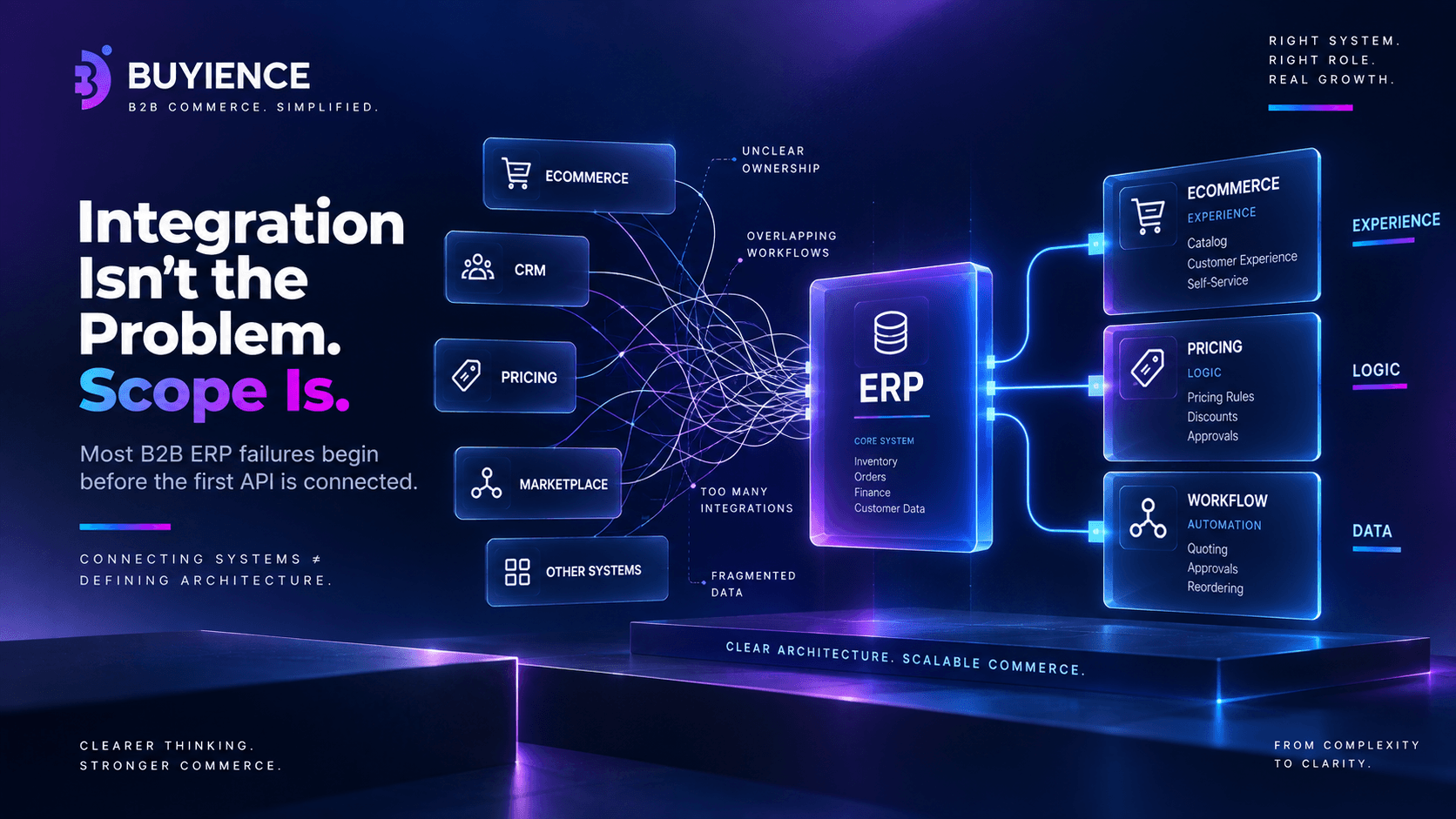
Why Most B2B ERP Integrations Fail
B2B ERP integration challenges refer to the difficulties of connecting ERP systems with ecommerce, pricing, and workflow tools—often resulting in slow performance, inconsistent data, and failed implementations due to poor planning and unclear system responsibilities.
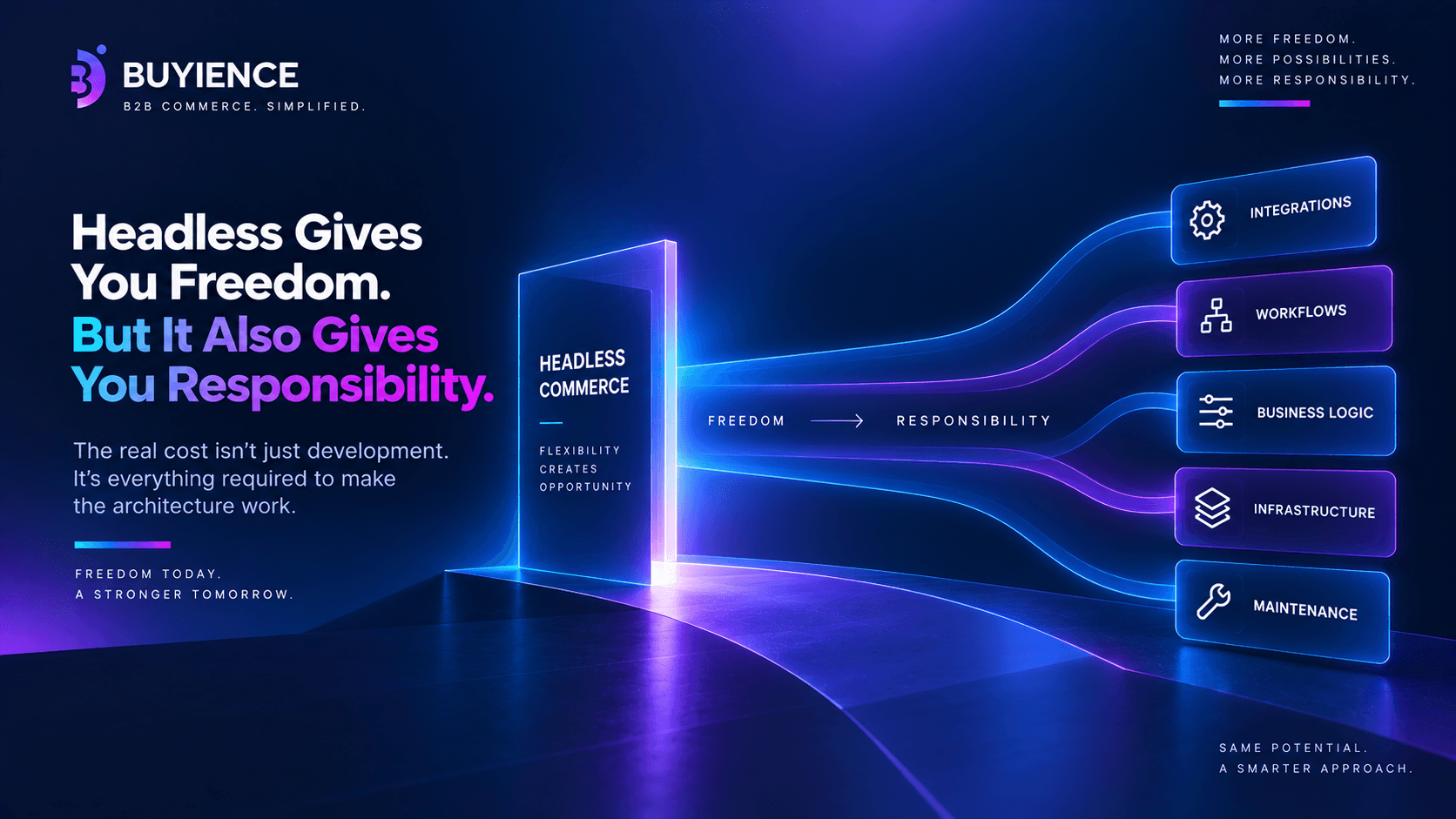
The Real Cost of Headless Commerce for B2B Companies
The cost of headless commerce in B2B includes not just development and infrastructure, but also ongoing expenses from integration complexity.
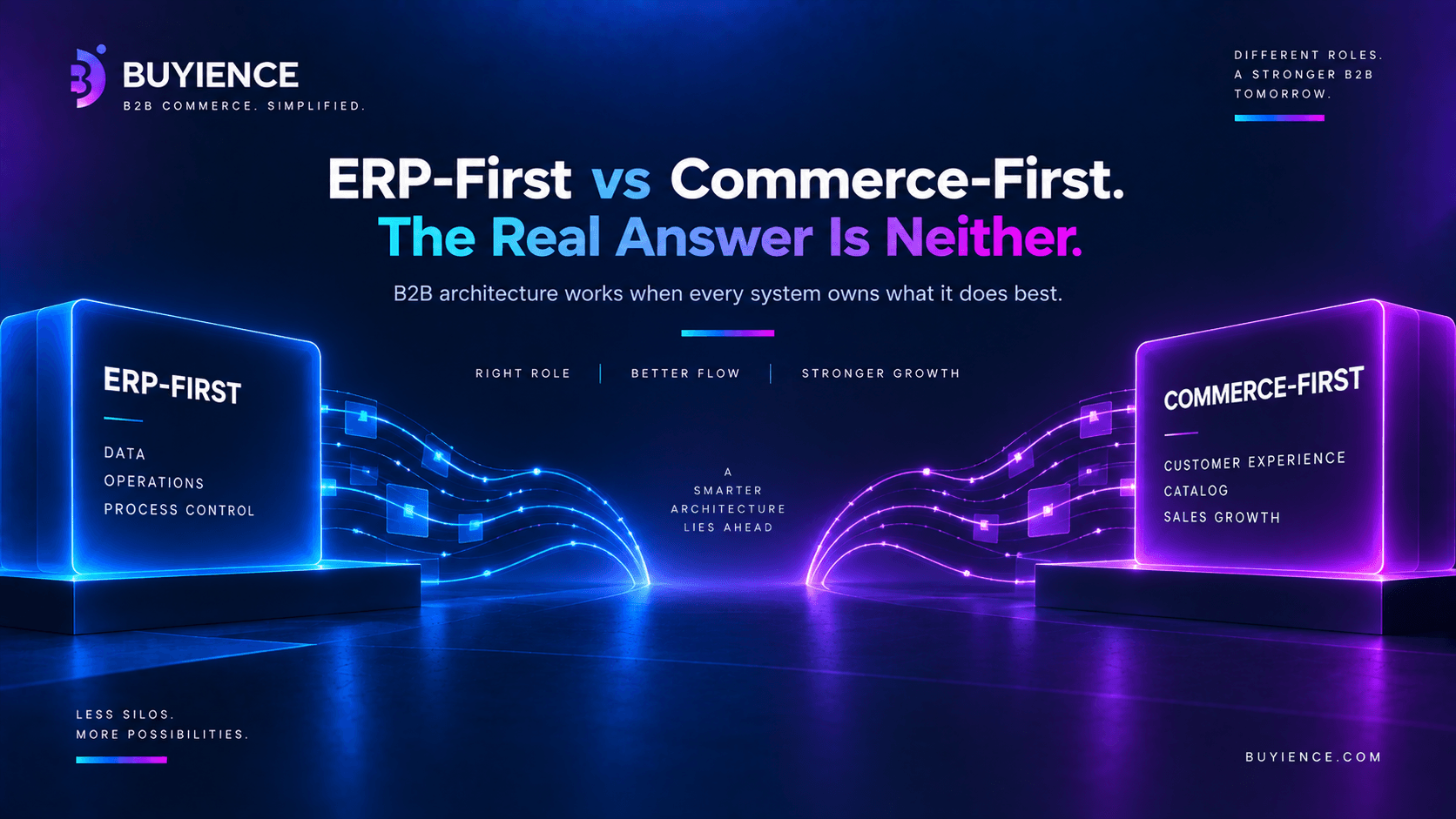
ERP-First vs Commerce-First Architecture in B2B — What Actually Works
ERP ecommerce integration in B2B is the process of connecting your ERP system with your ecommerce platform to sync data like pricing, inventory, orders, and customers—while enabling real-time workflows across systems.