
The Best B2B Commerce Platforms for SMB Distributors in 2026
Most "best B2B platform" lists are published by vendors who rank themselves first. This one is too — we build Buyience — so the useful thing we can offer is published pricing where it exists, honest placement of where each platform actually fits, and a clear statement of which distributors should rule us out. For SMB distributors the real shortlist is short: BigCommerce B2B or Shopify for catalogue-led wholesale, Sana or an ERP-led option if your ERP governs pricing, OroCommerce if you have genuine enterprise complexity and the budget, and quoting-led platforms including ours if your revenue arrives through negotiated quotes.

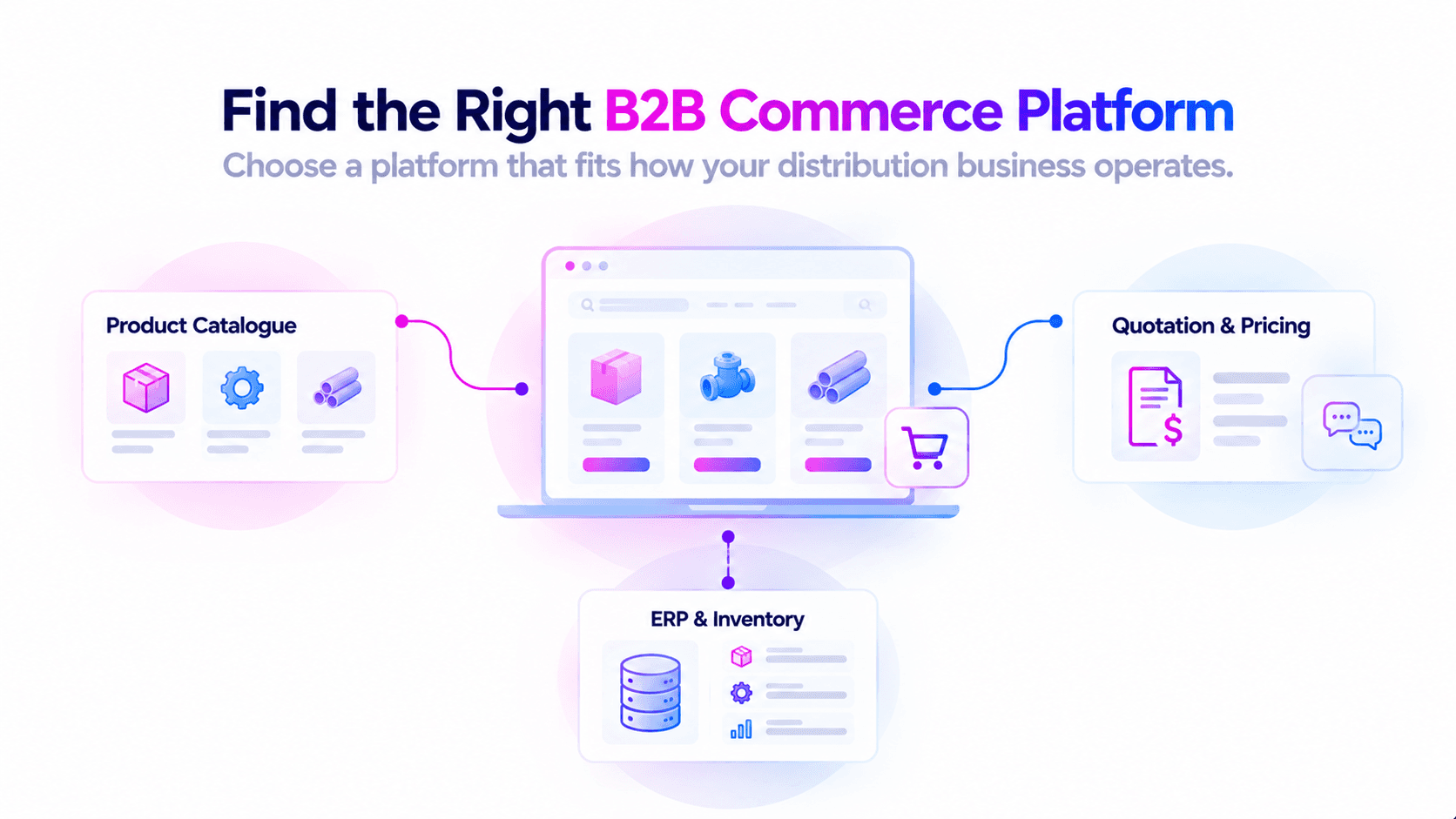
Search "best B2B ecommerce platform" and you'll find a dozen lists. Read the footer of each and you'll notice something: OroCommerce's comparison concludes OroCommerce is the standout choice. Shopify's list features Shopify prominently. Vendor-published comparisons are marketing documents.
This one is no different in that respect — we build Buyience, and we'd like you to consider it. What we can do is be straight about the parts most lists obscure: what things actually cost, and which platforms a small distributor should eliminate immediately rather than spending three weeks in demos discovering they're out of budget.
The pricing problem nobody states plainly
The first genuine obstacle in evaluating B2B platforms is that most of them won't tell you the price. Shopify's B2B page lists no price at all. Adobe Commerce publishes no public pricing. Salesforce, commercetools, Kibo, and most enterprise options are all "contact us."
Here's what is actually published, as of late 2026:
| Platform | Published entry price |
|---|---|
| BigCommerce | Core $39/mo, Growth $105/mo, Scale $399/mo; Performance from $1,499/mo |
| Shopify Plus | From $2,300/mo on a 3-year term, $2,500/mo on 1-year |
| Shopware Evolve (B2B) | From $2,400/mo |
| B2B Wave | Pro and Scale at £135/mo |
| OroCommerce | ~$22,000/yr on-premise, ~$40,000/yr cloud, scaling to $200,000+/yr |
| Virto Commerce | 0.5% of GMV, or $2 per order, at 10K SKUs |
| WooCommerce | Plugin free; B2B behaviour via separately licensed extensions |
| Adobe Commerce | No public price; free Open Source tier exists |
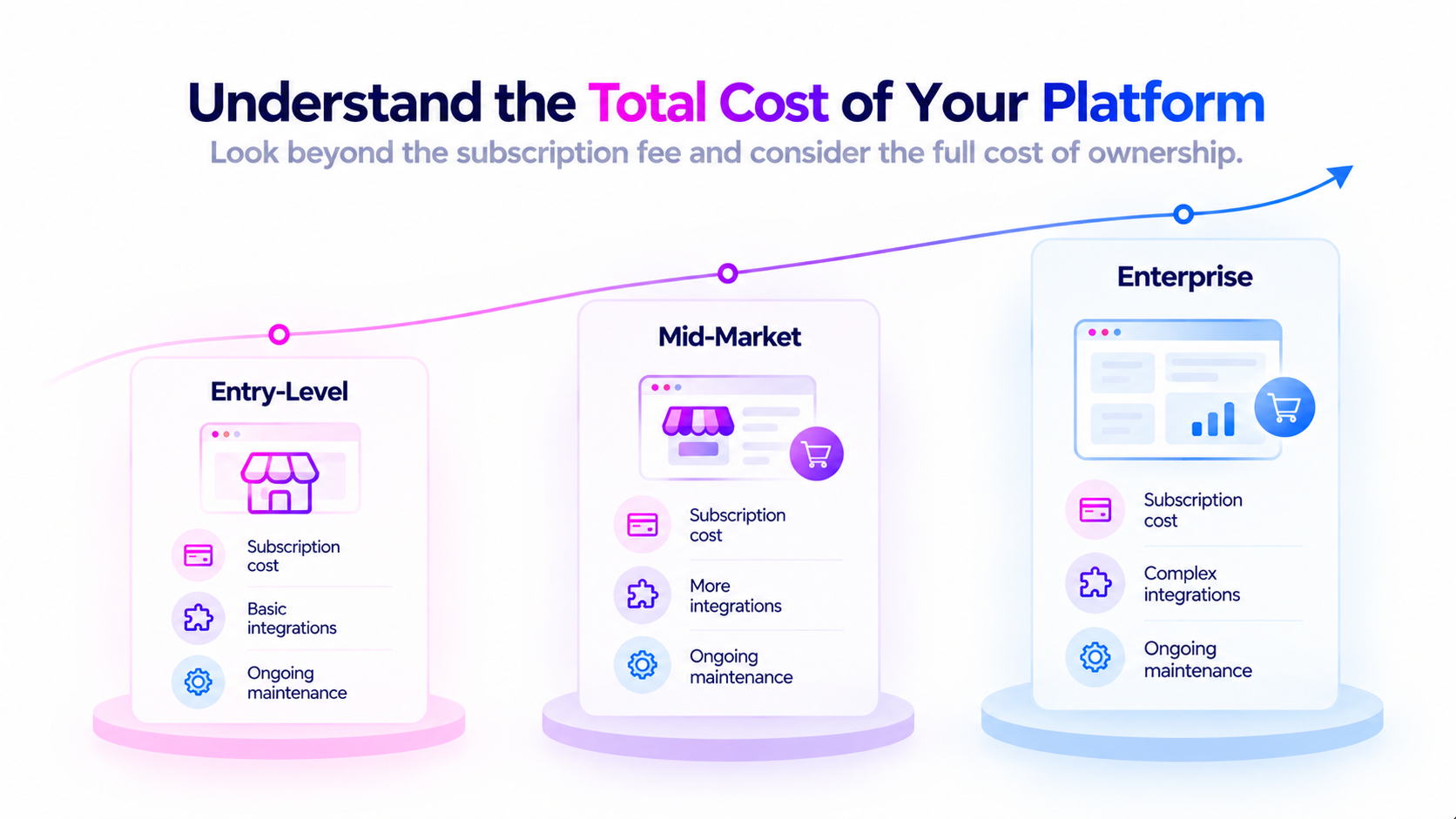
Two things fall out of this table immediately.
The gap between tiers is enormous. Entry B2B tooling runs $39–£135/month. Mid-market runs $1,499–$2,500/month. Enterprise runs $40,000+/year before implementation. There is no gentle slope — there are three bands with large gaps between them.
"Custom pricing" usually means expensive. If a platform won't publish a number, it's rarely because the number is low.
For an SMB distributor, this means the practical question isn't "which platform is best" but "which band am I actually in, and what's genuinely available there."
How to narrow the field fast
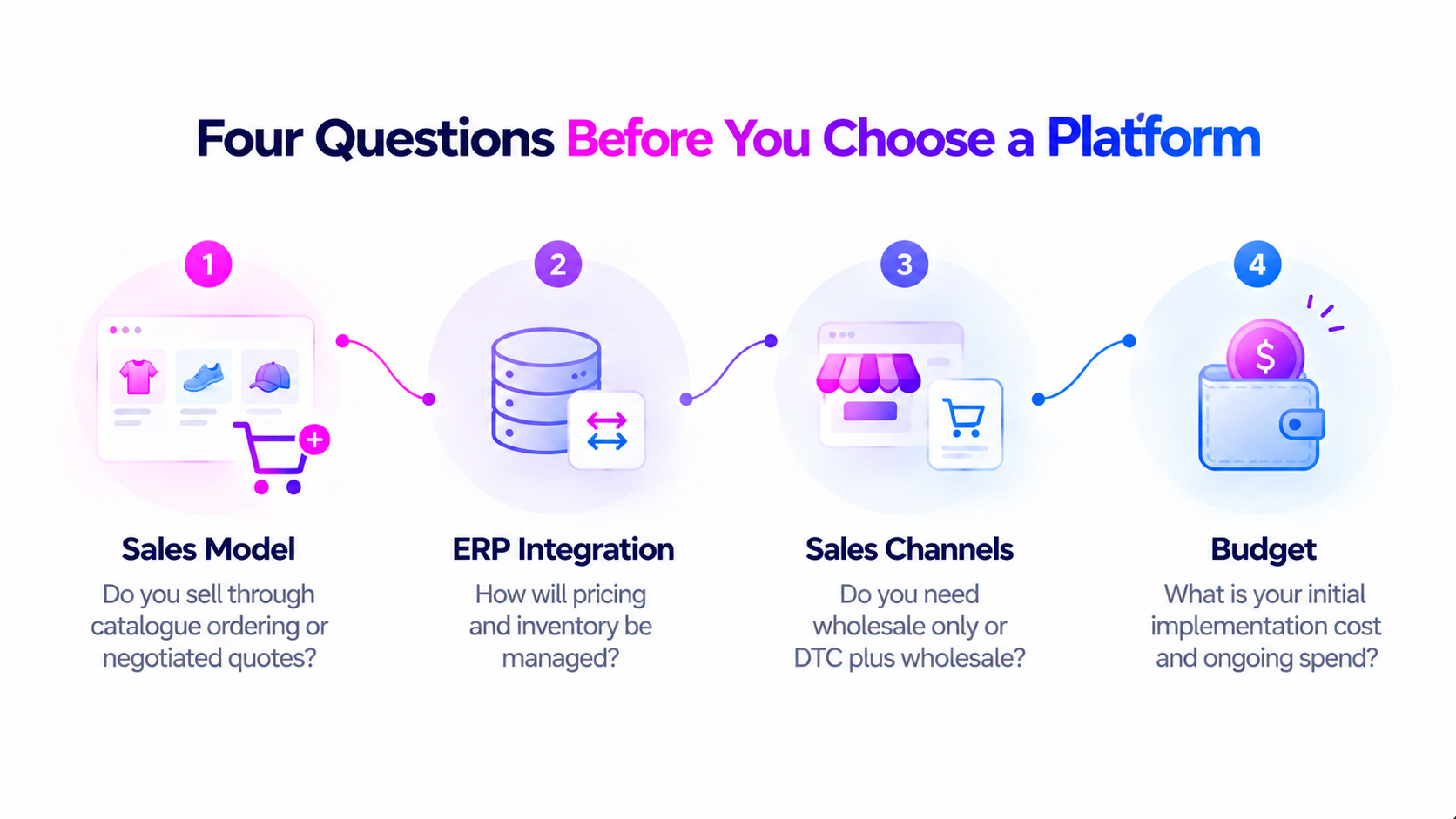
Four questions eliminate most of the market in about ten minutes.
- Does your revenue arrive through a catalogue or a quote? If buyers log in and order known products at agreed prices, you want catalogue-led commerce. If customers describe a requirement and you send a quote that gets negotiated, you want quoting-led commerce. This single distinction matters more than any feature comparison, and most platforms are clearly one or the other.
- Does your ERP govern pricing and credit? If your ERP is the source of truth and the storefront should reflect it rather than hold its own logic, that points toward ERP-led platforms such as Sana Commerce, and away from platforms expecting to own pricing themselves.
- Do you sell DTC as well as wholesale? If yes, platforms that run both from one catalogue and inventory pool — Shopify and BigCommerce — have a structural advantage that B2B-only platforms can't match.
- What's your realistic monthly budget? Honestly. If it's under $500/month, enterprise platforms are not a long shot, they're out, and demos with them waste weeks.
The shortlist by fit
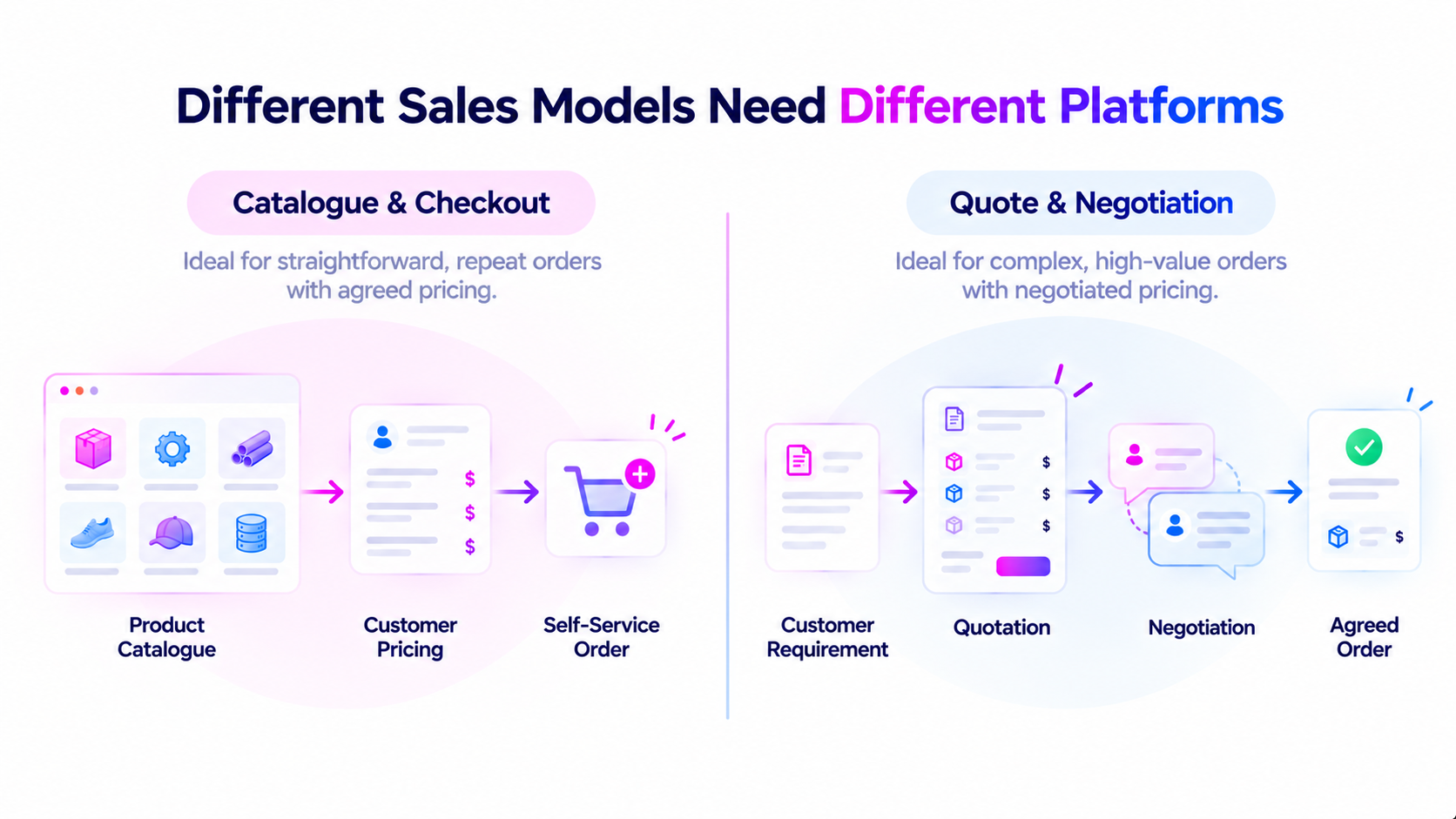
Catalogue-led wholesale: BigCommerce B2B or Shopify
If your buyers order from a catalogue at their agreed prices, these two are the default and the competition between them is close.
BigCommerce has the distinction of publishing its pricing, and its B2B capabilities include price lists, quotes, approvals and ERP connectivity. The B2B-ready Performance tier starts at $1,499/month, with custom pricing above $1M in annual sales.
Shopify became substantially more credible for B2B in 2026, when company accounts, customer-specific pricing catalogues, net payment terms, PO numbers and quick order lists moved to every paid plan rather than remaining Plus-only. If you're already on Shopify for DTC, this is now a genuinely strong option without a Plus upgrade, depending on your requirements. For a deeper look at where Shopify fits versus quoting-led platforms, see our Buyience vs Shopify Plus comparison.
Rule these in if wholesale means self-service ordering. Rule them out if your deals are negotiated line by line.
ERP-governed distribution: Sana Commerce and similar
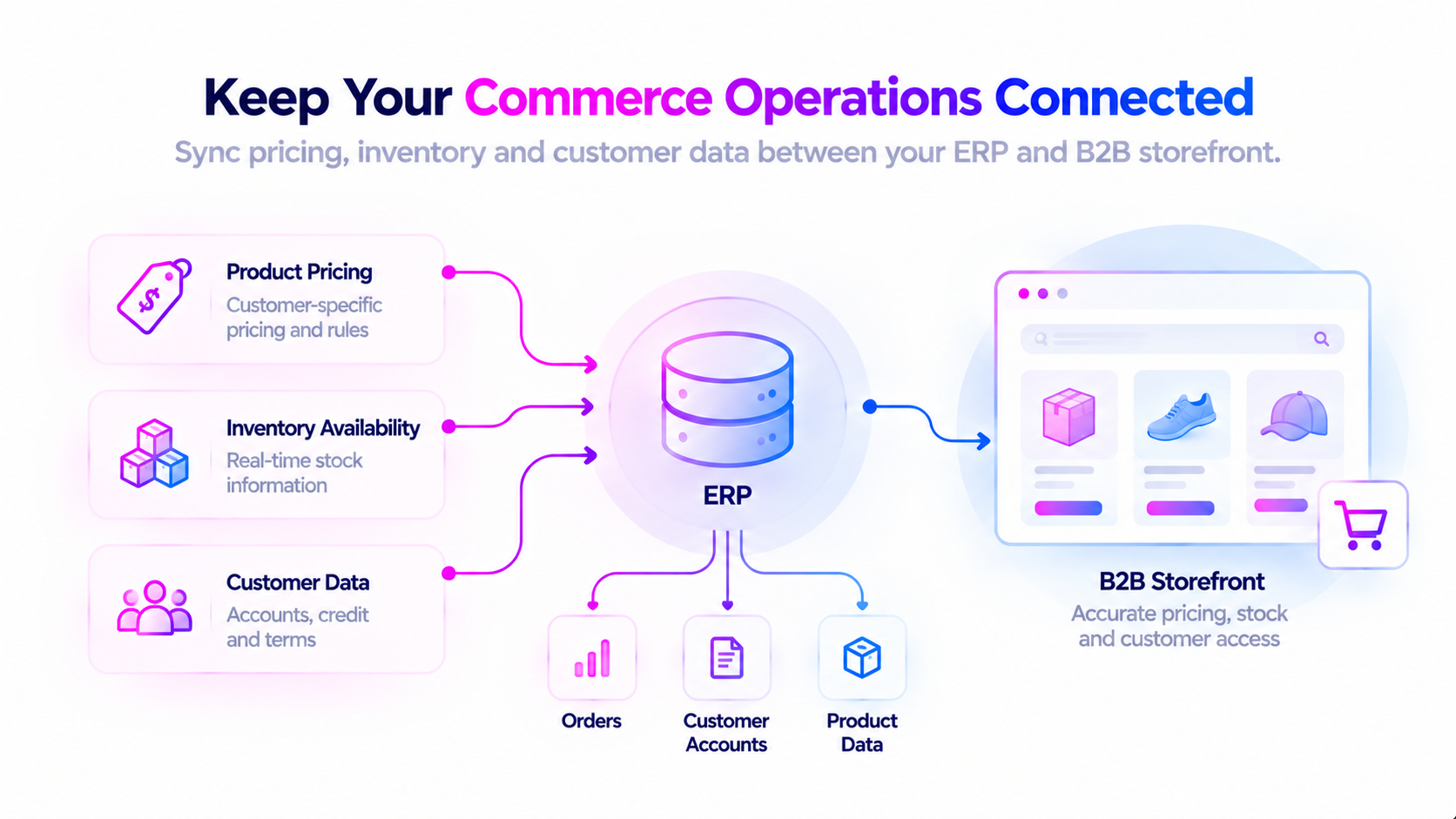
If your ERP already holds pricing, credit limits, and inventory as the single source of truth, platforms built to surface ERP data rather than duplicate it reduce integration pain considerably. This is a genuinely different architecture, and for distributors with a mature ERP it's often the right answer regardless of what the storefront looks like.
Enterprise complexity with budget: OroCommerce, Adobe Commerce
OroCommerce is built around RFQ, account hierarchies and multi-org structures, and is widely recommended for distributors with complex account relationships. Adobe Commerce offers deep native workflows for quoting, approvals and requisition lists.
Both are credible for genuine enterprise complexity. Both are out of reach for most SMB distributors — Oro starts around $22,000/year on-premise and scales well past $200,000, and Adobe Commerce implementations are substantial projects, not configurations.
If you're an SMB distributor, the useful thing to know about these platforms is that they exist and you probably can't afford them yet. That's not a criticism of either product.
Budget-constrained: WooCommerce plus extensions, B2B Wave
If budget is the binding constraint, WooCommerce with wholesale extensions is the low-cost route — free core plugin, with B2B behaviour added through separately licensed extensions. B2B Wave publishes £135/month for its Pro and Scale tiers.
The honest trade-off is that you're assembling capability from parts and accepting more maintenance work in exchange for lower cost. For a distributor with simple pricing and a small catalogue, that can be entirely reasonable.
Quoting-led distribution: Buyience and the CPQ-first category
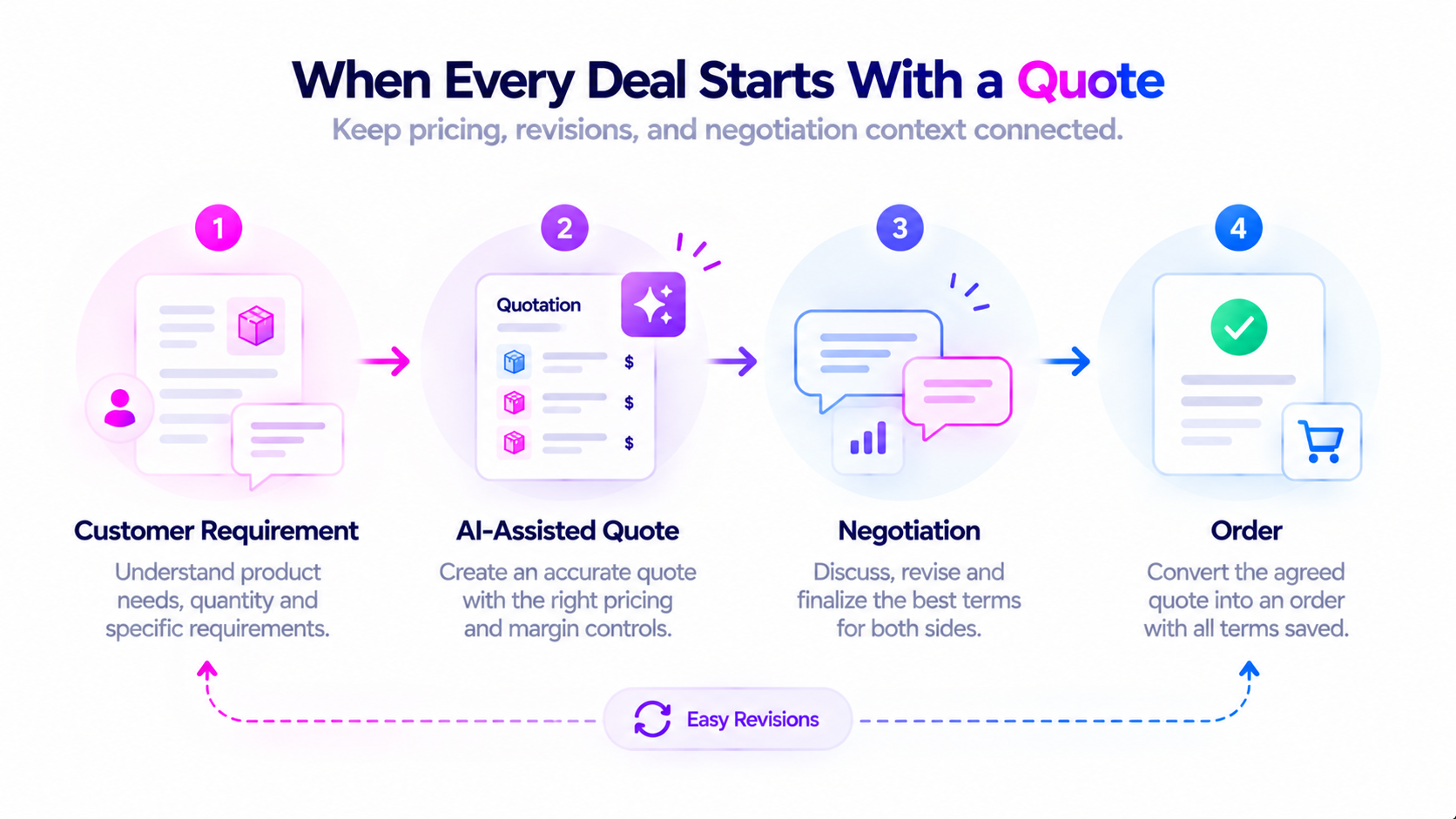
This is where we sit, and the honest framing is narrow rather than broad.
If most of your revenue arrives through quotes that get negotiated — common in fastener and MRO distribution, industrial supply, and custom or configured products — then catalogue-led platforms leave your actual sales process outside the system. The negotiation happens in email, the margin decisions happen on instinct, and the platform records outcomes rather than supporting the work. That gap is the same one we cover in why manual B2B quoting costs you deals.
Buyience's Nova Core is built around quoting and negotiation as the primary path: tier, volume and contract pricing resolving per line item, margin floors enforced before a quote is sent, and a Digital Sales Room for live negotiation with preserved history. It's priced for SMB rather than enterprise.
Rule us out if: you need DTC and wholesale on one platform, you need a large app ecosystem or a specific existing integration, your wholesale is pure catalogue ordering with no negotiation, or you want a long vendor track record. Those are real reasons to choose something else, and we'd rather you knew now.
What to ignore while evaluating
G2 scores in isolation. Most platforms cluster between 4.0 and 4.5. The spread is noise relative to fit.
Feature-count comparisons. Every platform lists company accounts, custom pricing and net terms. The question is whether the architecture matches your sales motion, which a feature table cannot show you.
Any list — including this one — that concludes its own publisher is best overall. Read for the facts, discount the verdict.
The one question that matters most
Pull last quarter's orders. What share came from a buyer selecting known products at known prices, versus a buyer describing a requirement and receiving a quote that was then discussed?
That ratio points at your platform category more reliably than any comparison table, and it's the question most evaluation processes skip.
Start your free trial → — 14 days, no card required.
Questions, answered
How much do B2B ecommerce platforms actually cost?
Published entry points as of late 2026 include BigCommerce Core at $39/month and its B2B-ready Performance tier from $1,499/month, Shopify Plus from $2,300/month on a 3-year term, Shopware Evolve from $2,400/month, and B2B Wave at £135/month. Enterprise platforms like OroCommerce start around $22,000/year and scale well beyond that.
Why won't most B2B platforms publish their pricing?
Many use custom enterprise pricing tied to GMV, order volume or account size. Practically, an unpublished price is rarely a low one, which is useful information when you're deciding where to spend evaluation time.
What's the best B2B platform for a small distributor?
It depends on whether your sales are catalogue-led or quote-led. For catalogue-led wholesale, BigCommerce B2B and Shopify are the usual shortlist. For quote-led distribution, CPQ-first platforms fit better. For ERP-governed pricing, ERP-led platforms reduce integration work.
Can I run DTC and wholesale on the same platform?
Yes, and this is a genuine strength of Shopify and BigCommerce — one catalogue, one inventory pool, one order stream. B2B-only platforms generally don't offer this.
Is OroCommerce or Adobe Commerce worth considering for an SMB?
Both are strong for genuine enterprise complexity, but pricing puts them out of range for most small distributors. Knowing they exist and are not yet your tier saves weeks of evaluation.
How do I evaluate platforms without wasting months?
Answer four questions first: catalogue-led or quote-led, does your ERP govern pricing, do you sell DTC alongside wholesale, and what's your genuine monthly budget. Those eliminate most of the market before you book a single demo.
Want a straight answer on whether we're a fit? Request a demo — we'll tell you if you'd be better served elsewhere.
Related articles
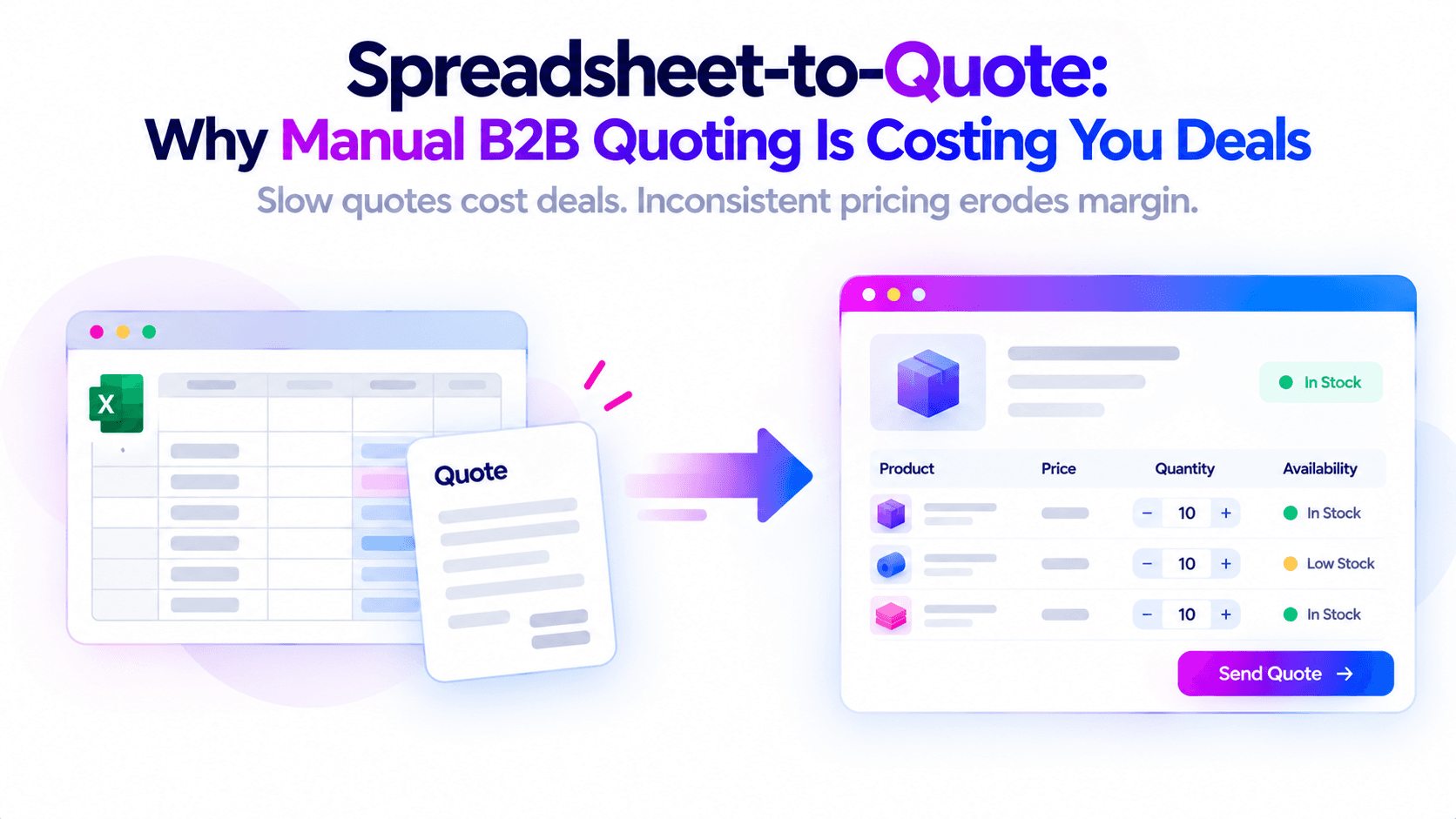
Spreadsheet-to-Quote: Why Manual B2B Quoting Is Costing You Deals
Manual quoting rarely loses a deal in a way anyone records. It loses deals through delay — the quote that arrives after the buyer decided — and it loses margin through inconsistency nobody traces back. The cost is invisible precisely because the failures look like normal business: a slow week, a competitive loss, a thin month. This post maps the five stages where a spreadsheet quote leaks, and which one to fix first.

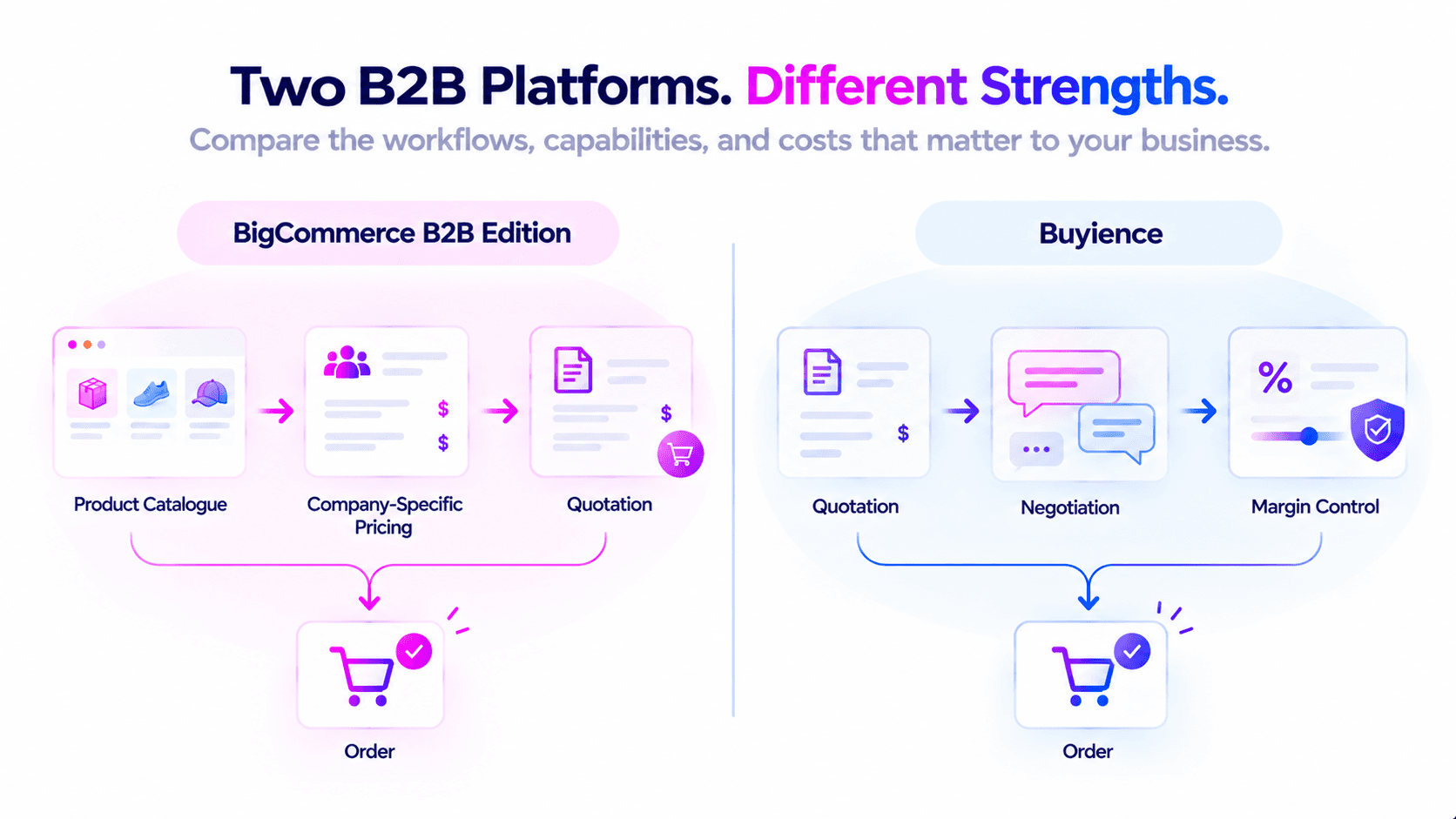
Buyience vs BigCommerce B2B Edition: A Side-by-Side Comparison
BigCommerce B2B Edition is a genuinely capable B2B platform with native quoting, company accounts, price lists and purchase order workflows — it is not a consumer cart with wholesale bolted on. The honest comparison with Buyience comes down to two things: cost tier, since B2B Edition is Enterprise-only with custom pricing, and what happens during negotiation rather than during quoting. If you have the budget and your quoting is structured rather than negotiated, B2B Edition is a strong choice.
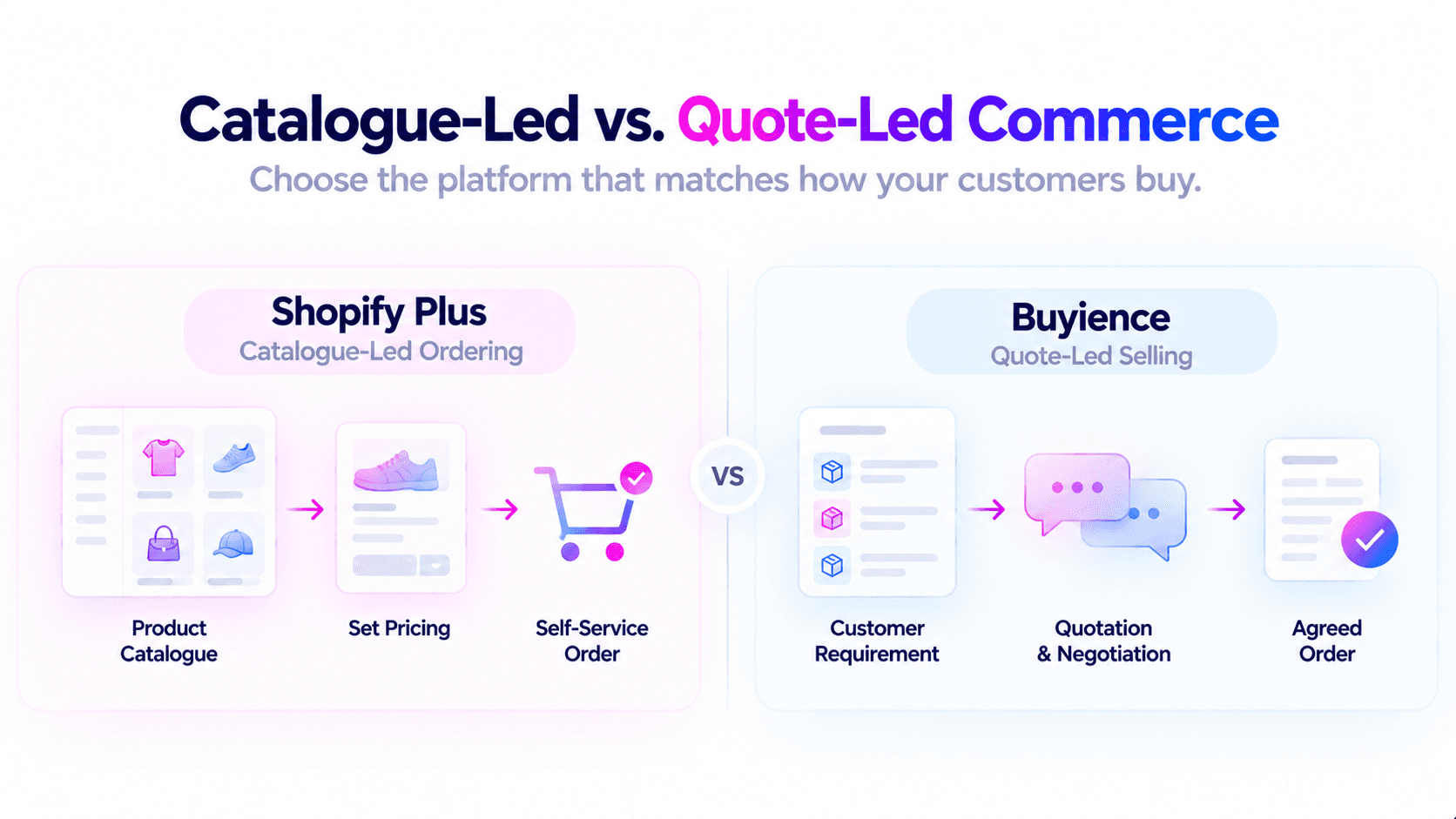
Buyience vs Shopify Plus for B2B: Which Fits Wholesale Distributors
Shopify Plus and Buyience solve different problems. Shopify is catalogue-and-checkout commerce with a strong B2B layer added — excellent if your wholesale motion is buyers logging in and ordering from a catalogue at their agreed prices. Buyience is quoting-and-negotiation commerce — built for distributors whose deals are won or lost on how fast and how accurately they can quote, revise, and negotiate. If most of your revenue arrives through self-service reordering, Shopify is likely the better fit. If most of it arrives through quotes, it probably isn't.