
Corporate Gifting RFPs: Streamlining the Quote-to-Order Process
Corporate gifting RFPs are expensive to respond to and easy to lose for reasons unrelated to your actual capability — a missed compliance requirement, a slow response, or pricing that couldn't be revised fast enough during evaluation. The businesses that win consistently qualify hard before responding, build responses from reusable components rather than from scratch, and treat the gap between award and first order as a defined process rather than an improvisation.


Larger programmes for corporate gifting at scale increasingly arrive as formal RFPs rather than a phone call. A company running employee recognition across several offices, or an annual client gifting programme with a defined budget, will often put it out to competitive tender — with a requirements document, a submission deadline, and a scoring process you don't get to see.
This changes the shape of the sale. An RFP response is a substantial investment of unpaid time, made before you know whether you're competitive, against criteria that may not be the ones you'd have emphasised. Winning consistently is less about writing better prose and more about deciding which ones to enter and having the operational infrastructure to respond quickly and accurately.
Qualify before you invest the time
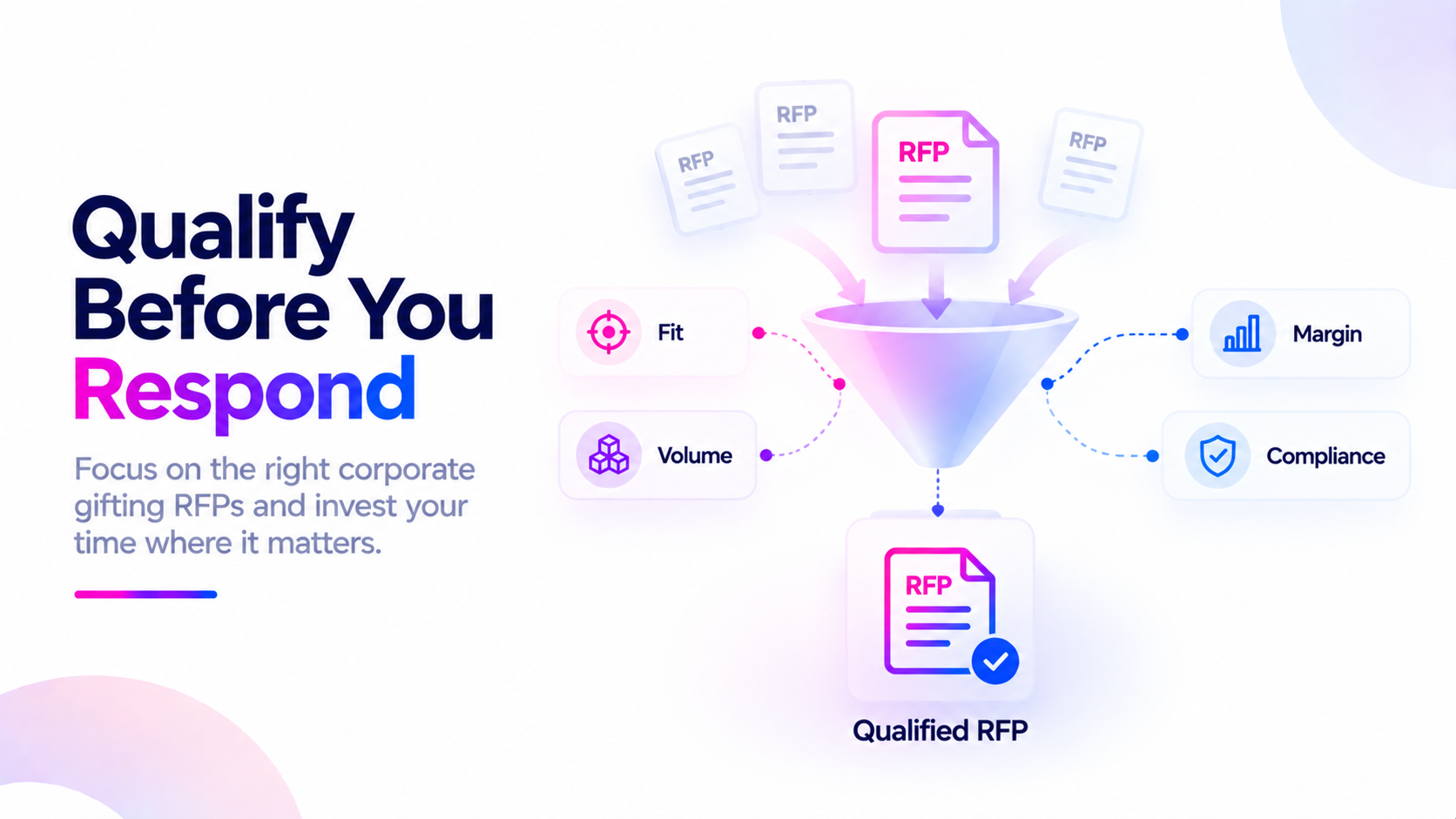
The most valuable RFP discipline is declining the wrong ones. A serious response consumes real hours across sales, operations, and often design — and a business that responds to everything ends up under-investing in the ones it could actually win.
Questions worth answering honestly before committing:
- Is there an incumbent, and is this a genuine re-evaluation? Some RFPs exist to satisfy a procurement requirement to test the market, with the incumbent expected to retain the work. Not always disqualifying, but it changes the expected return on your effort.
- Did you have any relationship before the RFP appeared? An RFP that arrives cold, with no prior conversation, generally has worse odds than one where you've been in dialogue and the RFP formalises an existing interest.
- Do the requirements match what you actually do well? If the specification centres on categories, decoration methods, or fulfilment models outside your strength, a response is more likely to expose gaps than showcase capability.
- Are the volume and margin worth the operational commitment? Large gifting programmes can carry demanding service requirements, tight SLAs, and heavy administrative overhead. Revenue alone isn't the measure.
- Can you meet the compliance requirements? Insurance levels, data protection terms, ethical sourcing documentation, supplier codes of conduct. If a mandatory requirement can't be met, that's a disqualification regardless of how strong the rest of the response is — better to know on day one than after forty hours of work.
Build responses from components, not from scratch
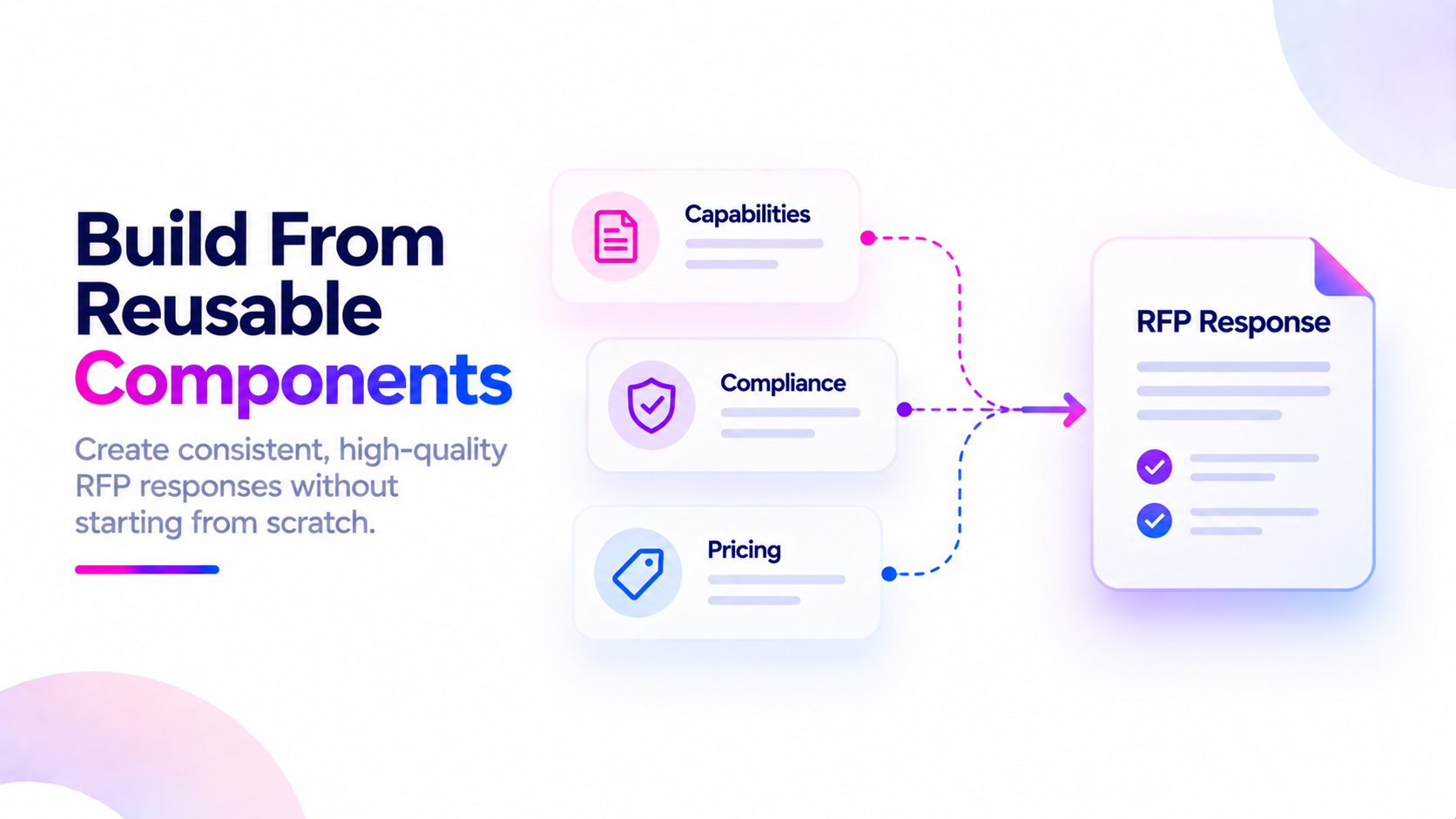
Most RFPs ask overlapping questions. Company background, fulfilment capability, quality control, sustainability practices, data handling, account management structure, references. Rewriting these each time is slow and produces inconsistent answers across submissions.
Maintaining a current library of reusable response components changes the economics of responding:
- Capability statements per category and decoration method
- Process descriptions for order intake, proofing, production, fulfilment, and issue resolution
- Compliance and policy documentation — insurance certificates, data protection terms, sourcing policies
- Case examples, with permission secured in advance for client references
- Standard pricing frameworks that can be adapted rather than reconstructed
The important discipline is keeping the library current. A response library that's two years stale produces answers that are subtly wrong — referencing capacity you no longer have or omitting capability you've since added. Review it on a schedule, not when you next need it under deadline.
Tailoring still matters. Reusable components should be the starting draft, not the final answer — the sections that respond directly to the specific programme's stated priorities are where a response differentiates.
Price for a programme, not a single order
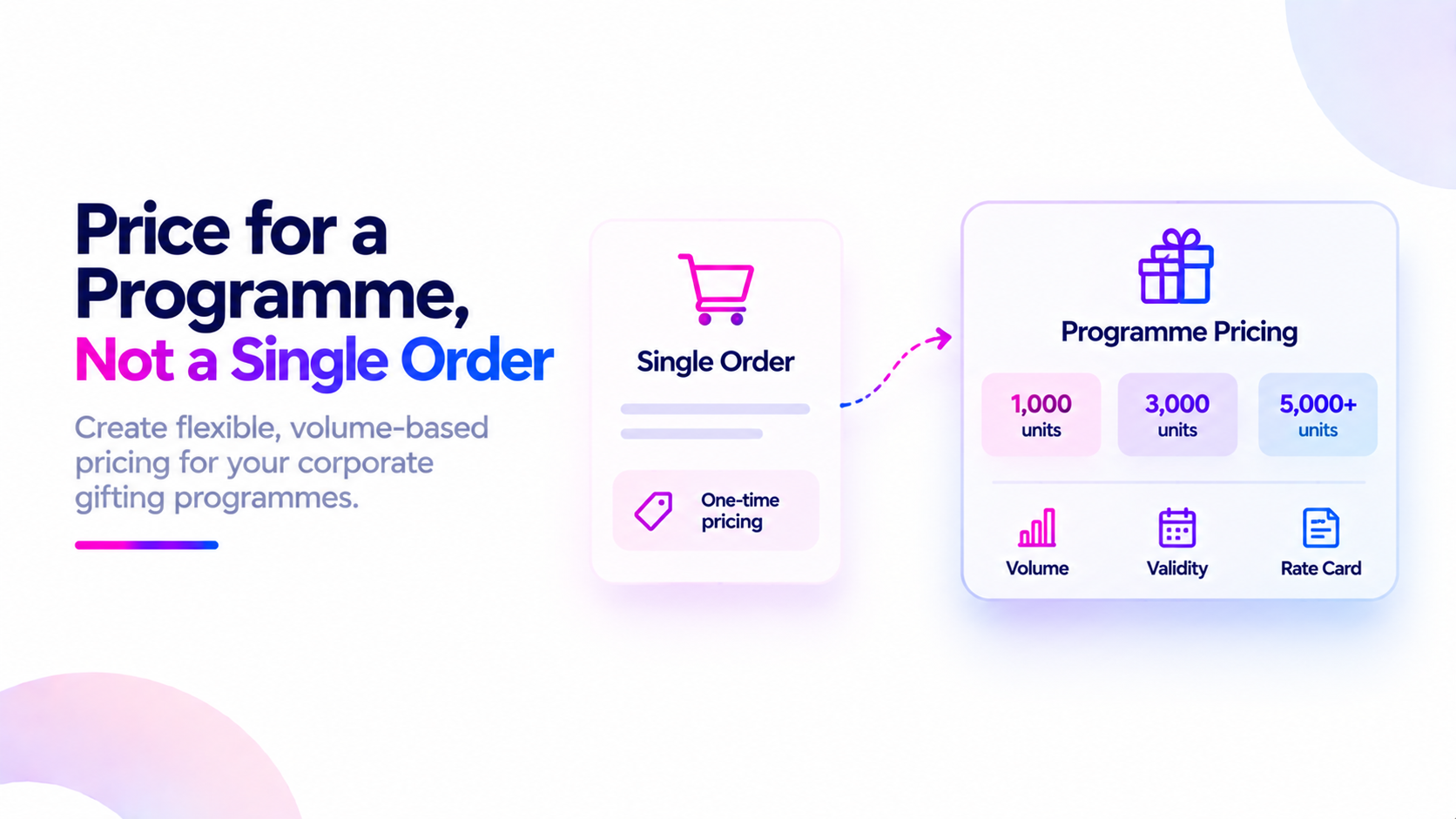
Gifting RFPs usually cover a programme rather than a transaction — a year of recognition awards, a recurring client gifting cycle, multiple events across a calendar. That has pricing implications a single-order quote doesn't:
- Volume commitments are often indicative, not guaranteed — An RFP stating "approximately 5,000 units annually" is a forecast. Pricing as though it's contractual, and then receiving 2,000, damages margin on every unit. Structuring programme pricing rules with volume bands rather than one committed rate protects both parties.
- Programme costs need to be visible — Dedicated account management, a branded ordering portal, warehousing of programme stock, reporting. These are real costs, and burying them in unit prices makes your per-unit look uncompetitive against a bidder who quoted them separately.
- Price validity periods matter — Programmes run for months or years while input costs move. A fixed price for twenty-four months without a review mechanism is a bet on stable costs. An explicit review clause tied to a defined trigger is more defensible than a price that quietly becomes unprofitable.
- Rate cards need to cover foreseeable variation — Programmes generate requests that weren't in the original specification — an unplanned event, a new decoration method, an urgent turnaround. Providing a rate card for these upfront prevents every variation becoming a fresh negotiation.
Respond fast enough to stay in the evaluation
RFPs have deadlines, but the more consequential timing is what happens after submission. Evaluators come back with clarification questions, revised quantities, and alternative scenarios — and they're usually working to their own internal deadline.
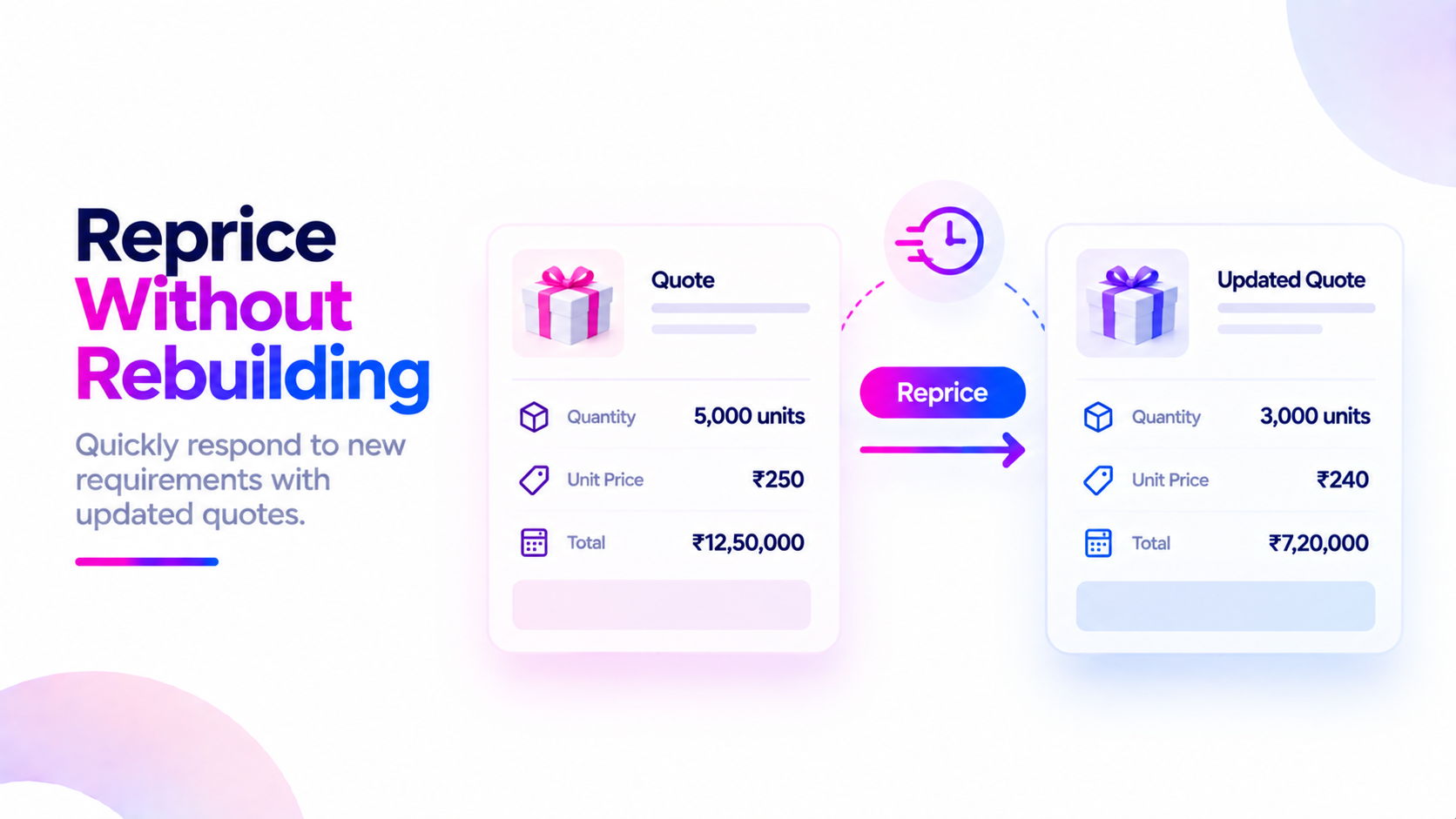
A shortlisted bidder who takes four days to reprice a revised scenario is at a real disadvantage against one who returns it the same day. This is where the underlying quoting infrastructure shows up in outcomes: if repricing a changed configuration means rebuilding a spreadsheet, response speed is capped by manual capacity precisely when responsiveness is being evaluated.
The practical requirement is being able to answer "what would this cost at 3,000 units instead of 5,000, with the alternative product, in two colours" without a multi-day turnaround. That's a configuration change, not a new quote — and it should be priced like one.
Treat award-to-first-order as a defined process
Winning is not the end of the risk. The gap between award and the first successful delivery is where gifting programmes most often start badly, because the person who wrote the response is frequently not the person who runs the programme.
What needs to transfer deliberately:
- Every commitment made in the response, including turnaround times, service levels, reporting cadence, and any capability claimed. These are now obligations.
- Agreed pricing structure, including volume bands, programme costs, rate card items, and review triggers — as structured pricing rules, not a PDF someone has to interpret.
- Compliance and process requirements the client specified, particularly approval workflows and any restrictions on sourcing or decoration.
- The named contacts on both sides, and who approves what.
Running a structured kickoff before the first order — covering order intake and proofing as well as fulfilment — rather than discovering these details when the first order is already in production — is the single most effective way to avoid an early failure that colours the whole programme.
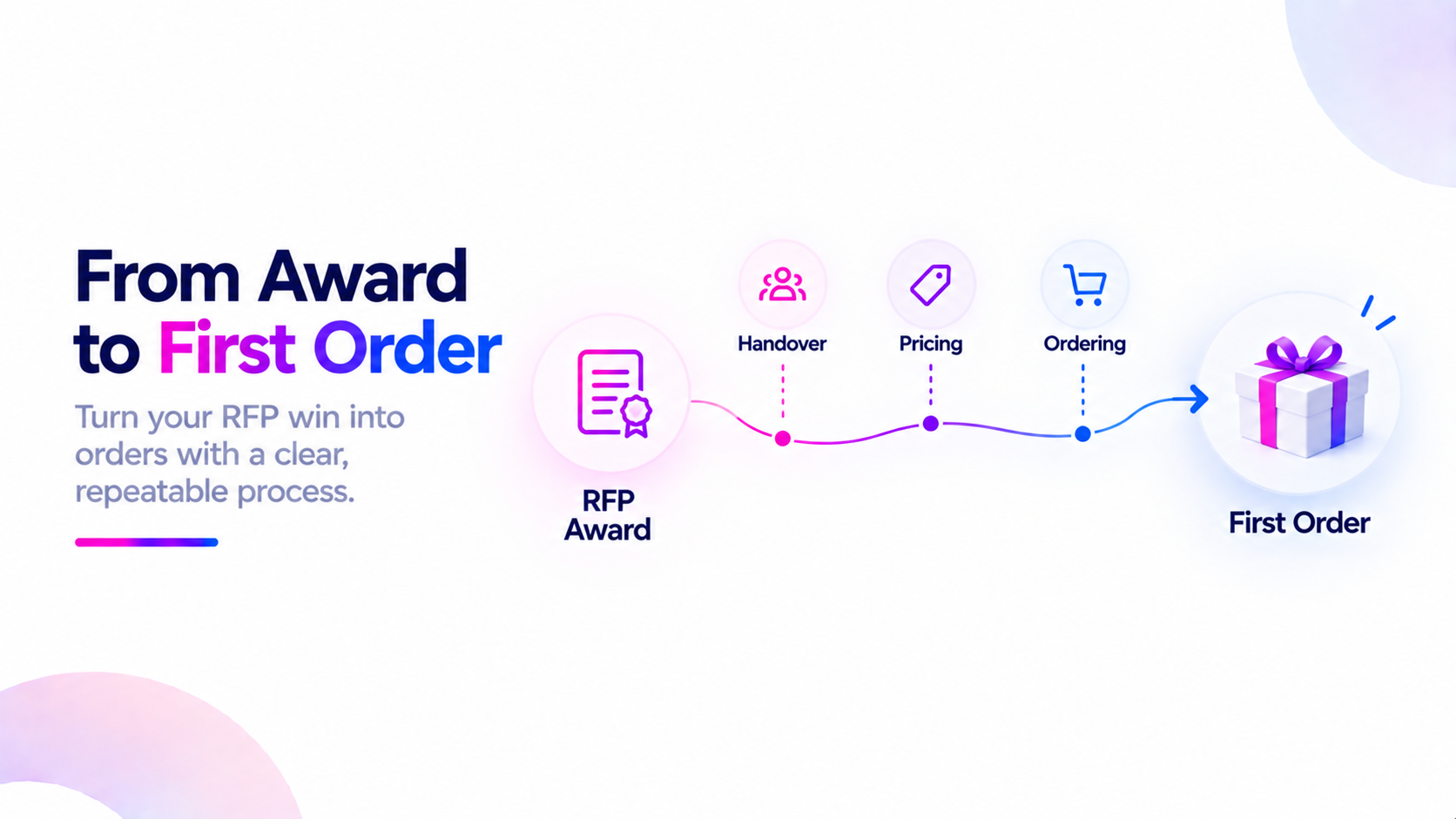
Set up the ordering mechanism early
Most gifting programmes involve repeat ordering, often by multiple people across the client's organisation. Establishing how that works before volume arrives prevents the programme becoming an email-driven administrative burden:
- Who is authorised to place orders, and up to what value
- Whether ordering happens through a portal, a nominated contact, or both
- How programme pricing is applied automatically, so an ordering user sees the correct rate without anyone calculating it
- What reporting the client receives, and how often
A self-service ordering portal with programme pricing applied automatically converts what would be a continuous stream of quote requests into a system the client operates themselves — which is both cheaper to serve and, generally, what the client prefers.
How Nova Core supports gifting programmes
Nova Core's CPQ handles configuration changes as rule-driven repricing rather than rebuilds, so revised scenarios during RFP evaluation can be returned quickly. Programme pricing — volume bands, client-specific rates, rate card items — is stored as structured pricing rules that apply automatically once the programme is live, and the self-service portal lets authorised client contacts order at correct programme pricing without a quote request each time.
Start your free trial → — 14 days, no card required.
Responding to gifting programme RFPs? Request a demo and we'll show how programme pricing and repeat ordering work in practice.
Questions, answered
How do I decide which gifting RFPs are worth responding to?
Assess whether there's an incumbent likely to retain the work, whether you had a relationship before the RFP appeared, whether the requirements match your genuine strengths, whether volume and margin justify the operational commitment, and whether you can meet all mandatory compliance requirements.
What should be in a reusable RFP response library?
Capability statements per category and decoration method, process descriptions for intake through fulfilment, compliance and policy documentation, pre-cleared case examples and references, and adaptable pricing frameworks — reviewed on a schedule so they don't go stale.
How should pricing be structured for a gifting programme rather than a single order?
With volume bands rather than a single rate tied to indicative forecasts, programme costs shown separately from unit prices, an explicit price validity period with a review mechanism, and a rate card covering foreseeable variations.
Why does response speed matter after the RFP deadline has passed?
Because evaluators return with clarification questions and revised scenarios while working to their own timeline. A bidder who can reprice a changed configuration the same day has a meaningful advantage over one who needs several days to rebuild it.
What's the biggest risk after winning a gifting RFP?
The handover between the people who wrote the response and the people who run the programme. Commitments, pricing structure, and process requirements need to transfer deliberately through a structured kickoff before the first order enters production.
How should repeat ordering work on a gifting programme?
Define authorised orderers and approval limits upfront, and where possible provide a self-service portal that applies programme pricing automatically — which reduces administrative load for both sides compared with handling every order as a fresh quote request.
Related articles
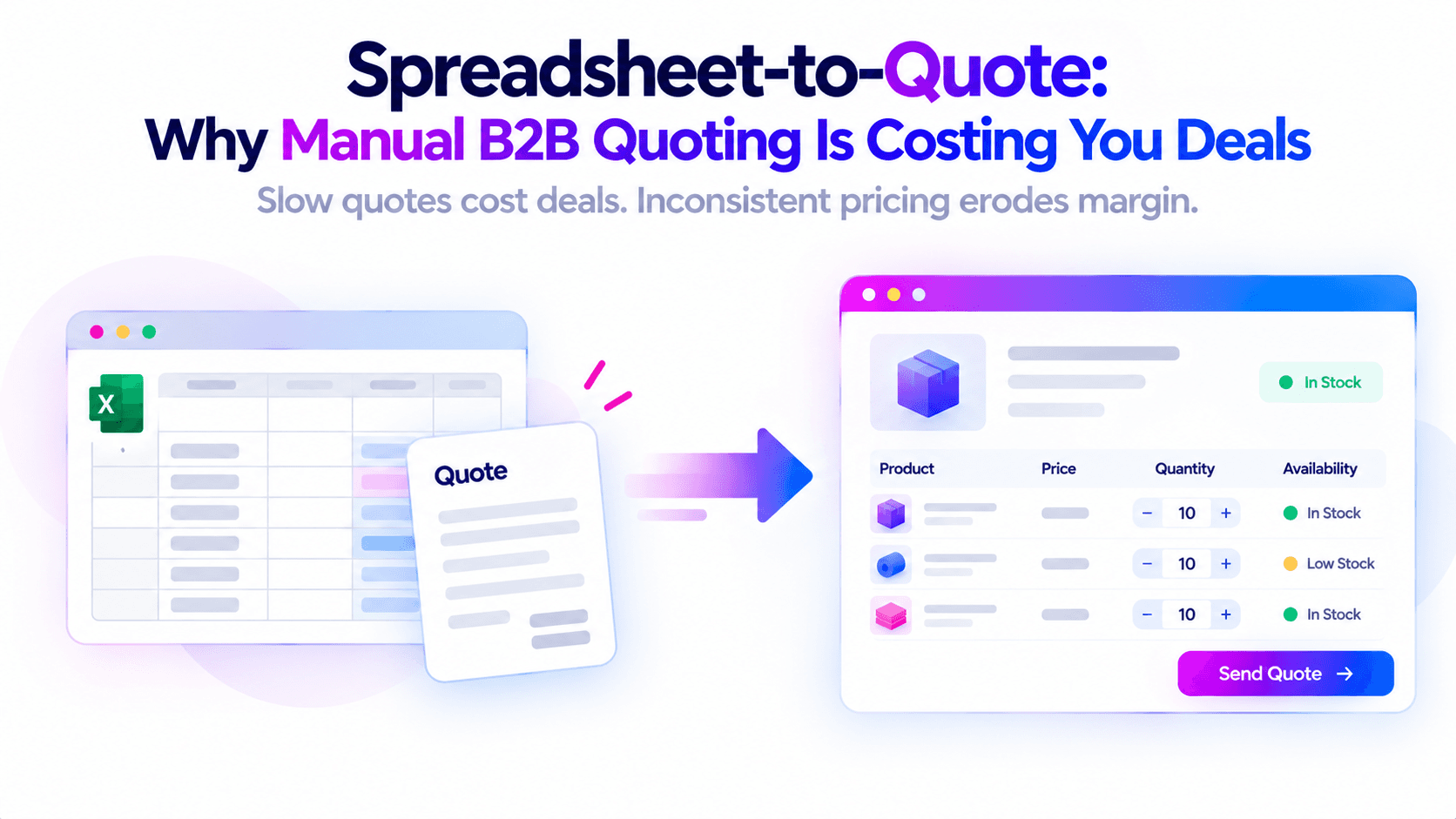
Spreadsheet-to-Quote: Why Manual B2B Quoting Is Costing You Deals
Manual quoting rarely loses a deal in a way anyone records. It loses deals through delay — the quote that arrives after the buyer decided — and it loses margin through inconsistency nobody traces back. The cost is invisible precisely because the failures look like normal business: a slow week, a competitive loss, a thin month. This post maps the five stages where a spreadsheet quote leaks, and which one to fix first.

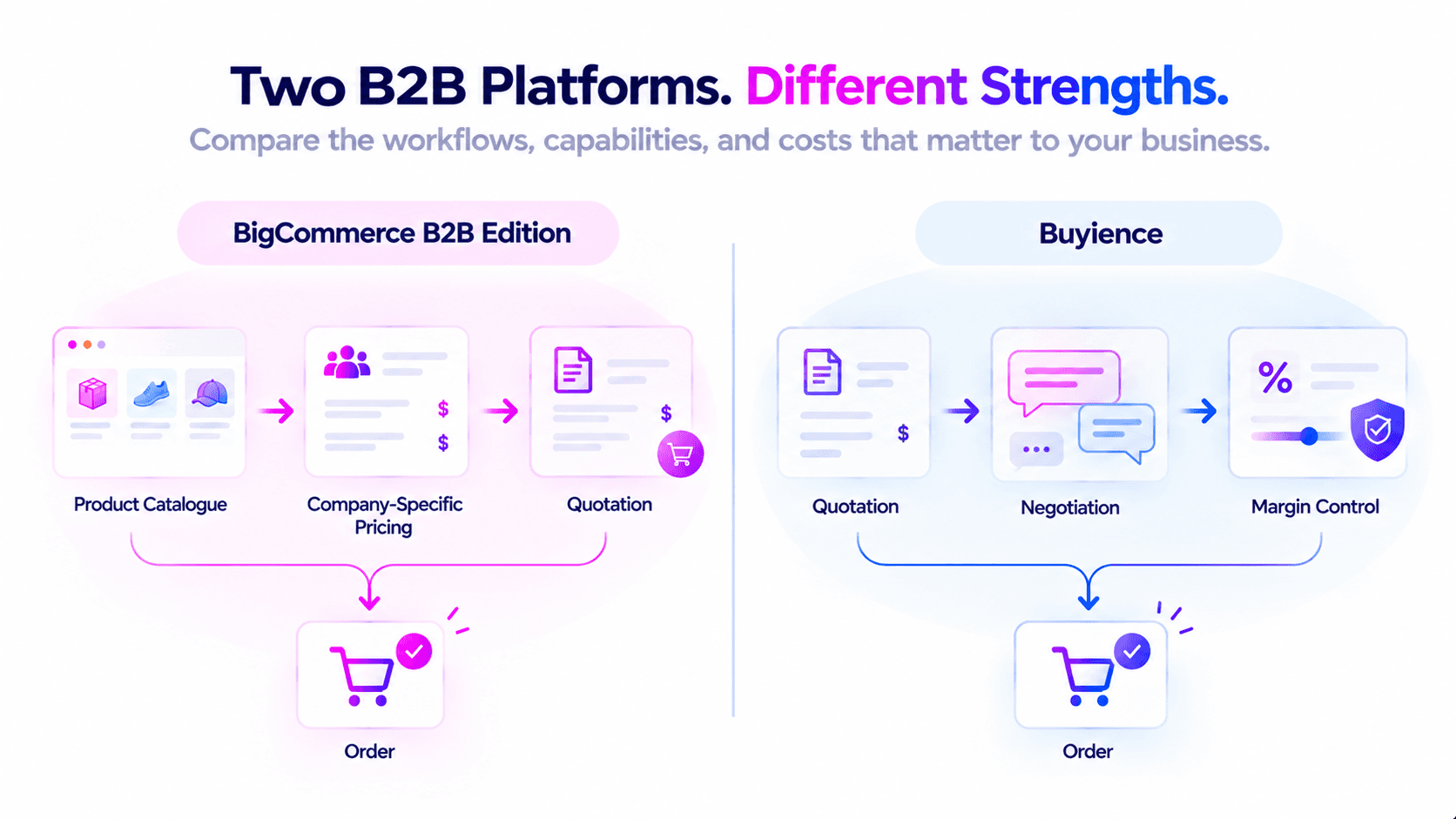
Buyience vs BigCommerce B2B Edition: A Side-by-Side Comparison
BigCommerce B2B Edition is a genuinely capable B2B platform with native quoting, company accounts, price lists and purchase order workflows — it is not a consumer cart with wholesale bolted on. The honest comparison with Buyience comes down to two things: cost tier, since B2B Edition is Enterprise-only with custom pricing, and what happens during negotiation rather than during quoting. If you have the budget and your quoting is structured rather than negotiated, B2B Edition is a strong choice.
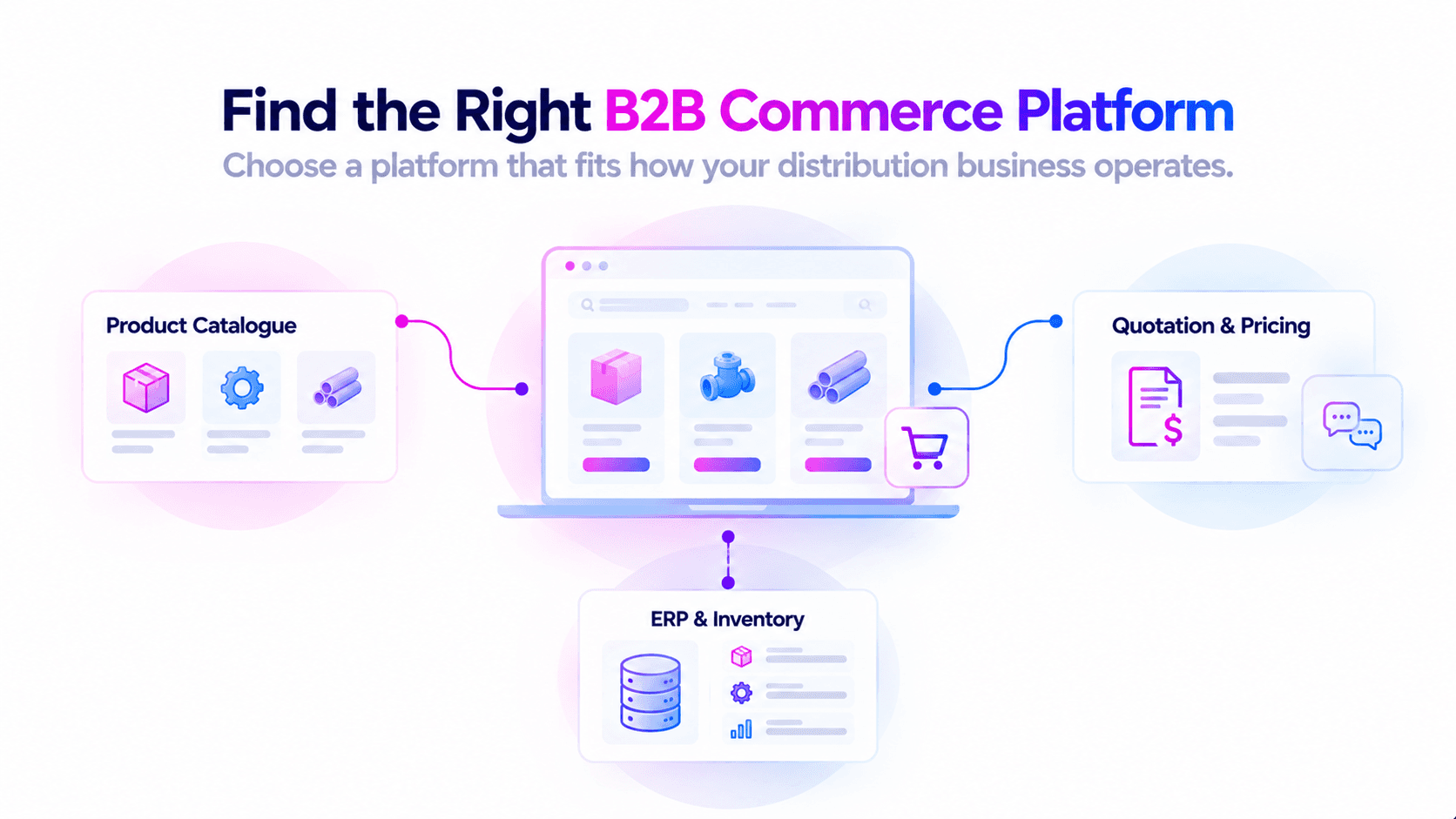
The Best B2B Commerce Platforms for SMB Distributors in 2026
Most "best B2B platform" lists are published by vendors who rank themselves first. This one is too — we build Buyience — so the useful thing we can offer is published pricing where it exists, honest placement of where each platform actually fits, and a clear statement of which distributors should rule us out. For SMB distributors the real shortlist is short: BigCommerce B2B or Shopify for catalogue-led wholesale, Sana or an ERP-led option if your ERP governs pricing, OroCommerce if you have genuine enterprise complexity and the budget, and quoting-led platforms including ours if your revenue arrives through negotiated quotes.