
Seasonal Demand Spikes: Inventory Planning for Corporate Gifting Brands
Corporate gifting demand doesn't spread evenly across the year — it concentrates heavily into a handful of weeks, which means annual averages are close to useless for planning. Effective planning works backward from peak-week capacity rather than forward from annual volume, commits inventory early enough to clear supplier lead times, and separates what genuinely must be pre-committed from what can stay flexible. This guide covers how to build that plan.

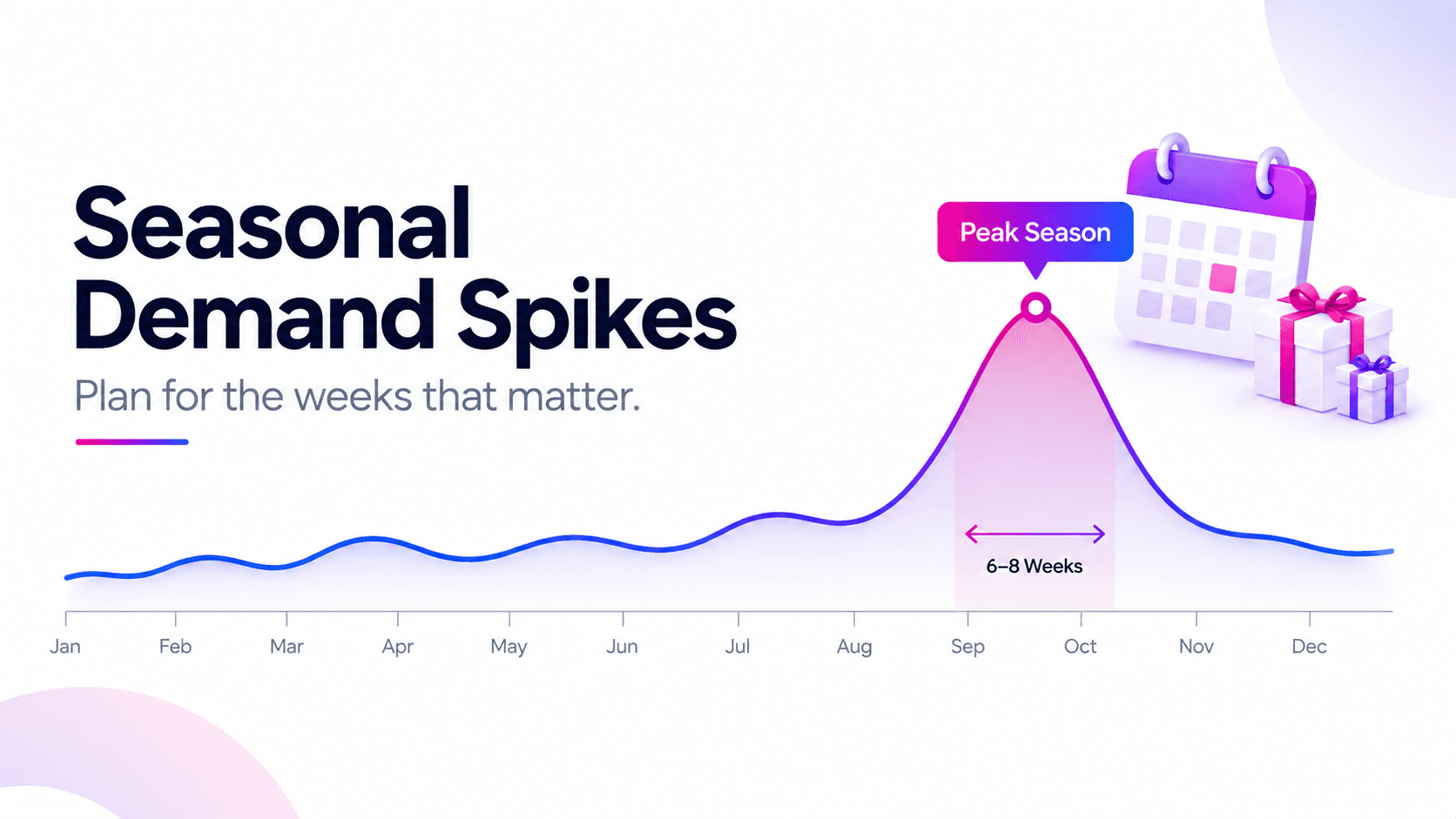
Most inventory planning advice assumes reasonably steady demand — a rate that fluctuates but doesn't swing wildly from month to month. Corporate gifting doesn't work that way. A large share of annual volume can land in a six-to-eight week window around year-end, with smaller concentrations around other event periods, meaning the business spends most of the year at one operating tempo and a few weeks at a completely different one.
That shape creates a specific planning problem: the numbers that describe your business on average describe almost none of the weeks you actually need to plan for.
Why annual averages mislead in gifting
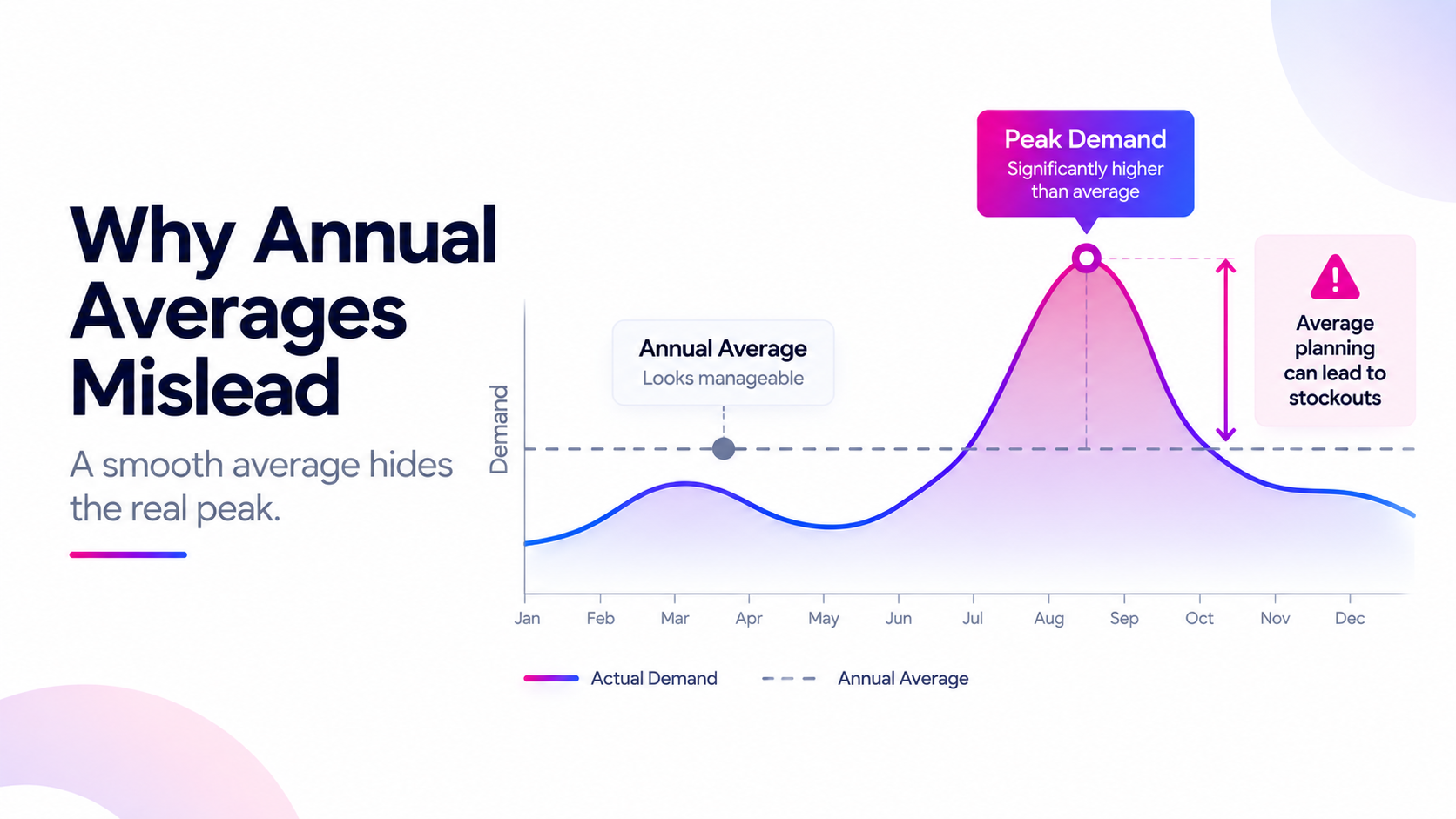
If a gifting business does most of its volume in a short window, then an average monthly demand figure describes a month that essentially never happens. Planning inventory, staffing, or supplier commitments against that average produces two failures simultaneously — too much capacity sitting idle for most of the year, and nowhere near enough during the weeks that actually matter.
The practical consequence is that peak-period capacity, not annual volume, is the constraint that should drive planning decisions. The question isn't "how many units do we move in a year" but "what's the maximum we can quote, produce, customize, and ship in our busiest single week — and what happens to orders beyond that."
Step 1: Establish what your peak actually looks like
Before planning against a peak, quantify it from your own history rather than assumption:
- What share of annual order volume falls in your top 8 weeks? Not a rough sense — the actual figure from last year's data.
- When do orders get placed versus when do they need to arrive? These are different curves, and the gap between them is your production window. Clients often place gifting orders much closer to their deadline than would be comfortable.
- What did you turn away, delay, or scramble to fulfill last peak? Orders declined or nearly missed are the clearest signal of where capacity ran out, and they rarely show up in revenue data.
- Which SKUs concentrated most heavily? Peak demand is usually not evenly spread across the catalog — a handful of items typically account for a disproportionate share.
That last point matters most for inventory decisions, because it tells you where pre-commitment is worth the carrying cost and where it isn't.
Step 2: Work backward from arrival dates through supplier lead times
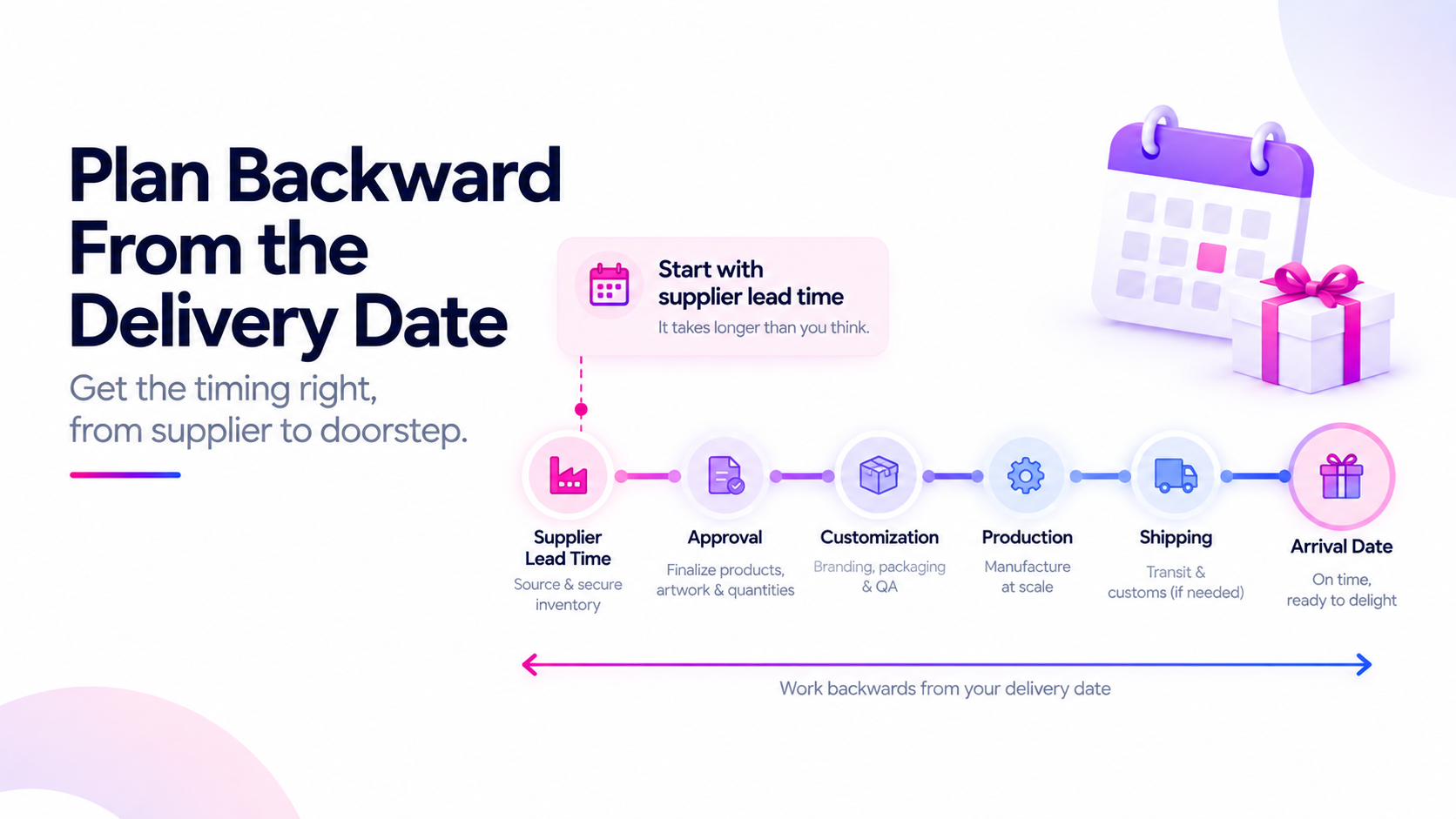
Corporate gifting deadlines are externally fixed — a client event or holiday doesn't move. That makes backward scheduling the only reliable approach, and it needs to extend all the way back through your supply chain, not just your own production:
Arrive-by date → shipping transit time → production and customization time → proofing and approval time → order finalization deadline → and behind all of that, supplier lead time for the underlying stock.
The last link is the one most commonly underestimated. If a supplier needs 8 weeks to deliver a base product, and your peak orders finalize 4 weeks before their deadline, then any stock you didn't already commit to months earlier simply isn't available for that peak — regardless of how efficient your own operation is.
This is why gifting inventory decisions get made uncomfortably early, often before there's much order visibility to justify them.
Step 3: Separate what must be pre-committed from what can stay flexible
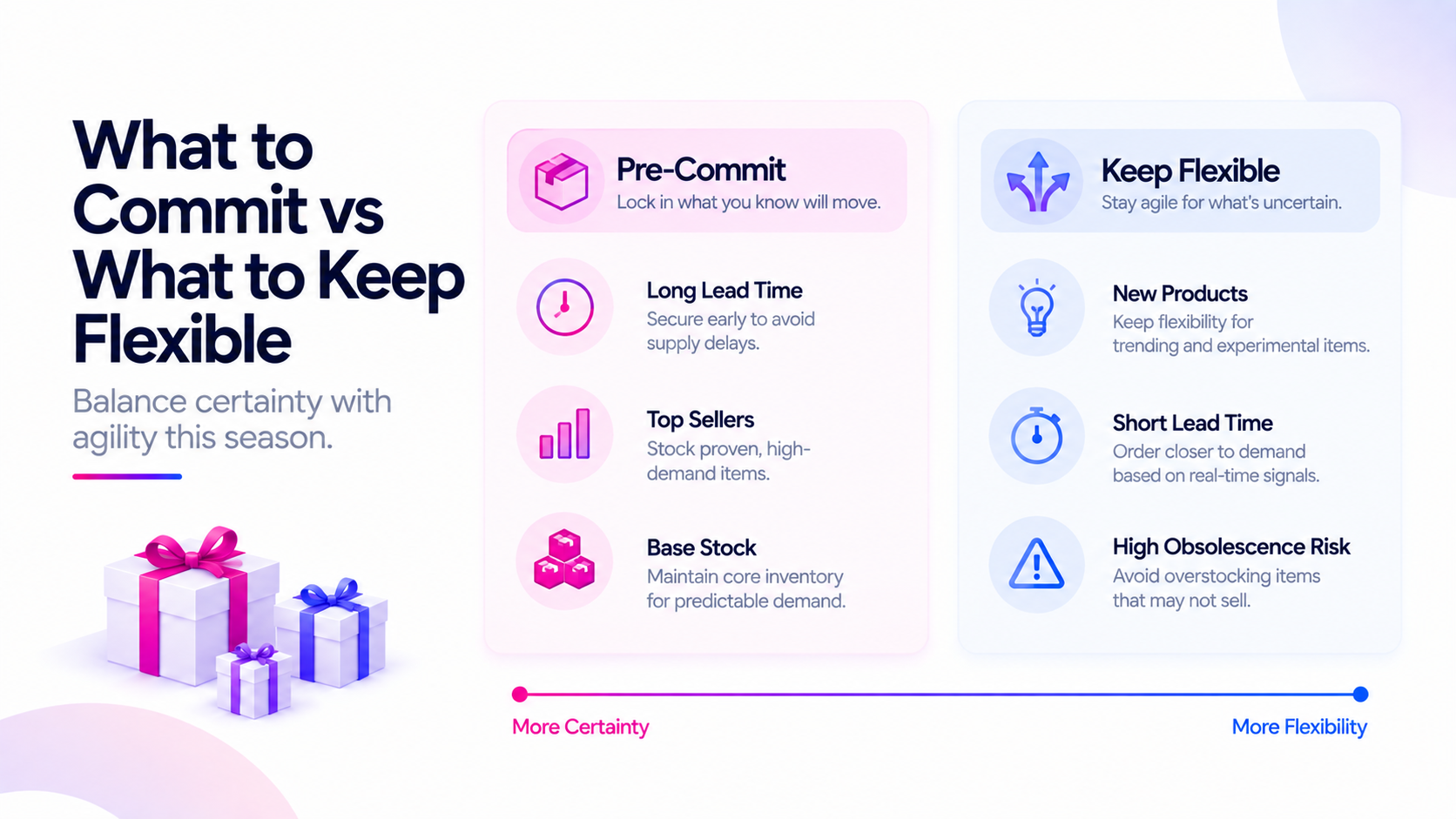
Pre-committing inventory carries real cost and real risk — cash tied up, warehouse space consumed, and exposure if demand lands differently than forecast. The goal isn't to pre-commit everything, but to be deliberate about which items justify it.
Strong candidates for early commitment:
- Items with long supplier lead times that can't be sourced reactively during peak
- Historically consistent top sellers with reliable year-over-year demand
- Base products used across multiple gift configurations, where demand aggregates across several SKUs rather than depending on one
- Anything requiring custom production runs from a supplier
Better kept flexible:
- Items with short, reliable lead times that can be sourced during the season
- New or unproven products without demand history
- Highly specific items tied to a single client's program, unless that program is already contracted
- Anything with meaningful obsolescence risk if it doesn't sell in this peak
Base products versus finished goods is the useful distinction here. Committing to undecorated base stock that can be customized several different ways preserves flexibility in a way that committing to finished, branded goods doesn't — a blank item can serve whichever client program materializes, while a decorated one can't.
Step 4: Plan capacity, not just inventory
Having the stock and being able to process orders against it are different problems. Peak planning needs to cover both:
- Quoting capacity — Peak season generates a surge of quote requests, often with tight decision windows. If quoting is manual, the team's capacity to respond quickly becomes a real constraint on how much business can be won — and it degrades exactly when volume is highest. This is where quoting automation shows its value most clearly, since it removes a bottleneck that would otherwise scale with headcount.
- Customization and production capacity — Whether in-house or through a partner, decoration capacity has a ceiling. Knowing that ceiling in units-per-week, and booking against it, prevents accepting orders that can't physically be produced in time.
- Fulfillment and shipping capacity — Multi-recipient bulk orders are labor-intensive to pack and ship. Carrier cutoff dates around holidays also compress the usable window further than the calendar suggests.
- Staffing — Seasonal capacity often requires temporary staff, which requires hiring and training before the peak, not during it.
Step 5: Build a decision point for when demand diverges from forecast
Forecasts are wrong to some degree every year. What separates a manageable miss from a damaging one is having a defined point at which you check actual demand against forecast and adjust while adjustment is still possible.
Set that checkpoint early enough in the season that a reorder can still clear supplier lead time — which, for many gifting products, means checking in weeks before the peak actually arrives, based on early order signals rather than waiting for the full picture. A late checkpoint that confirms you're short of stock is just an accurate description of a problem you can no longer solve.
Step 6: Do the infrastructure work in the off-season
The corollary to all of this: any operational change — new quoting process, new inventory system, new fulfillment workflow — should happen during a slow period, never in the run-up to peak. The temptation runs the other way, because the pain is most visible during peak and the motivation to fix it is highest right after. Acting on that motivation during the following slow period, rather than deferring until the pain returns, is what actually breaks the cycle.
How Nova Core supports seasonal planning
Nova Core's multi-warehouse inventory tracks available-to-promise stock in real time, so quoting during peak reflects what's genuinely available rather than a stale snapshot — and large orders in negotiation can be flagged against inventory before they're confirmed. The AI Quote Engine removes manual pricing work from the quoting path, which matters most during peak weeks when quote volume and time pressure are both highest and manual capacity is the binding constraint. Start your free trial → — 14 days, no card required.
Planning for next peak season? Request a demo and we'll walk through how quoting and inventory would hold up at your peak volume.
Questions, answered
Why don't annual demand averages work for corporate gifting planning?
Because a large share of volume typically concentrates into a few weeks, an average monthly figure describes a month that rarely occurs. Peak-week capacity, not annual volume, is the constraint that should drive planning.
How far in advance should gifting inventory be committed?
Far enough to clear supplier lead time before your order-finalization deadline. If a supplier needs eight weeks and orders finalize four weeks before client deadlines, stock not already committed months earlier won't be available for that peak.
Which items should be pre-committed versus sourced reactively?
Pre-commit long-lead-time items, consistent historical top sellers, and base products used across multiple configurations. Keep short-lead-time items, unproven products, and anything with high obsolescence risk flexible.
Is it better to pre-commit blank base products or finished decorated goods?
Blank base stock generally preserves more flexibility, since it can be customized for whichever client program materializes, while decorated finished goods are committed to a specific use before demand is known.
What capacity constraints matter besides inventory during peak season?
Quoting capacity, customization and production capacity, fulfillment and shipping labor, and seasonal staffing — all of which need to be planned and, where relevant, hired and trained before the peak rather than during it.
When should a gifting business change its operational systems?
During a slow period, not in the run-up to peak. The motivation to fix problems is highest right after a difficult season, and acting on it then rather than deferring is what prevents the same problems recurring.
Related articles
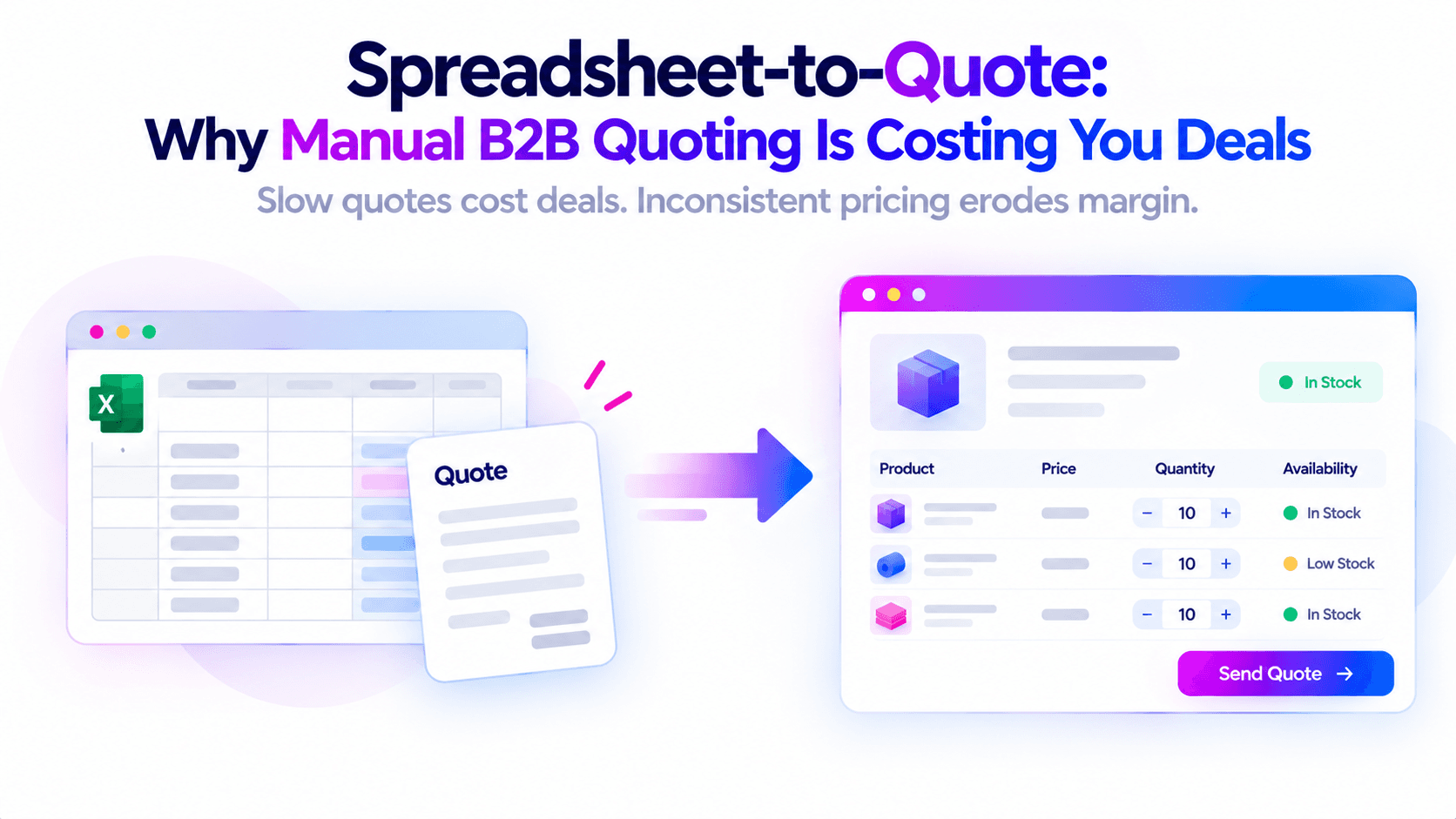
Spreadsheet-to-Quote: Why Manual B2B Quoting Is Costing You Deals
Manual quoting rarely loses a deal in a way anyone records. It loses deals through delay — the quote that arrives after the buyer decided — and it loses margin through inconsistency nobody traces back. The cost is invisible precisely because the failures look like normal business: a slow week, a competitive loss, a thin month. This post maps the five stages where a spreadsheet quote leaks, and which one to fix first.

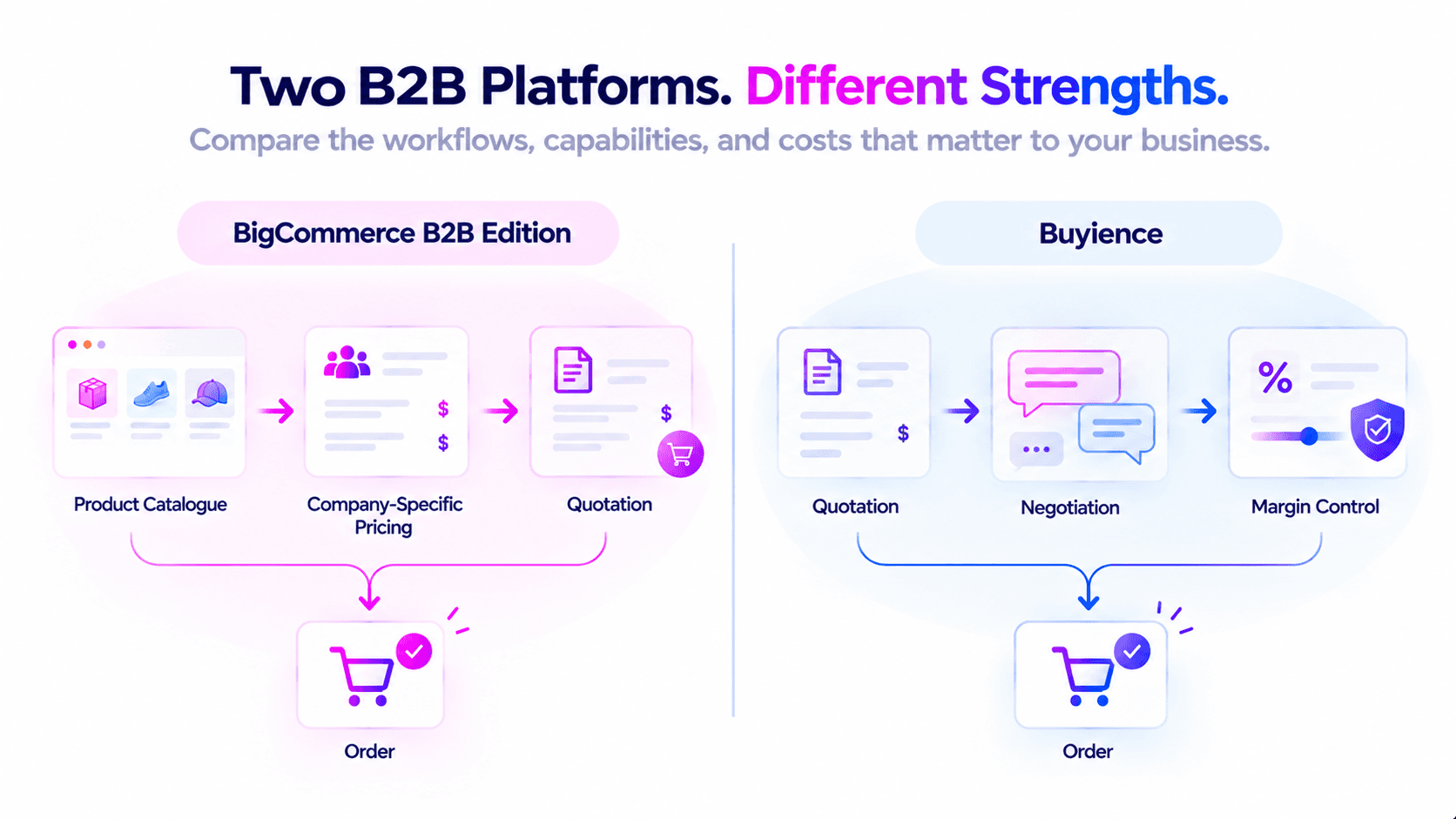
Buyience vs BigCommerce B2B Edition: A Side-by-Side Comparison
BigCommerce B2B Edition is a genuinely capable B2B platform with native quoting, company accounts, price lists and purchase order workflows — it is not a consumer cart with wholesale bolted on. The honest comparison with Buyience comes down to two things: cost tier, since B2B Edition is Enterprise-only with custom pricing, and what happens during negotiation rather than during quoting. If you have the budget and your quoting is structured rather than negotiated, B2B Edition is a strong choice.
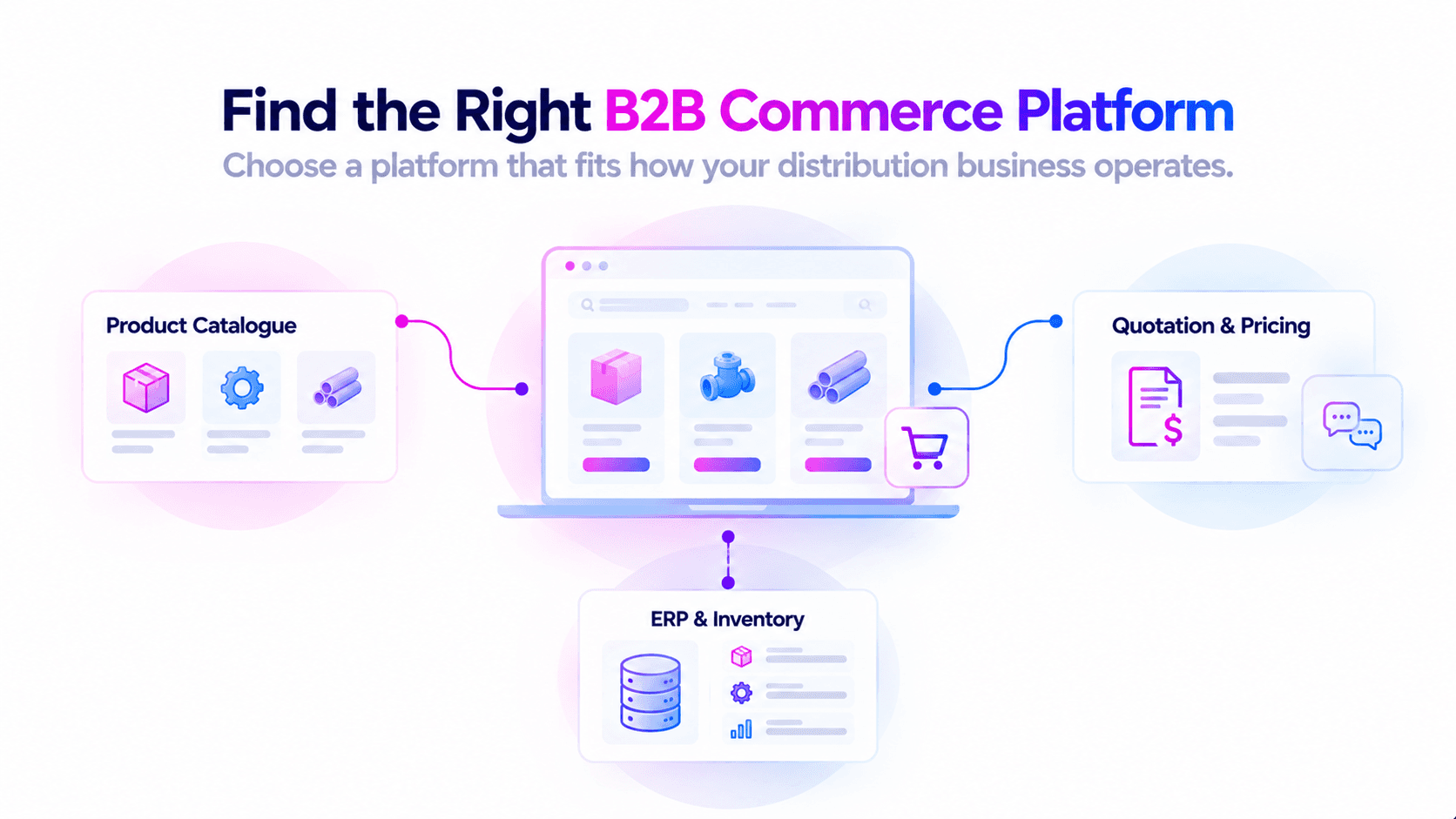
The Best B2B Commerce Platforms for SMB Distributors in 2026
Most "best B2B platform" lists are published by vendors who rank themselves first. This one is too — we build Buyience — so the useful thing we can offer is published pricing where it exists, honest placement of where each platform actually fits, and a clear statement of which distributors should rule us out. For SMB distributors the real shortlist is short: BigCommerce B2B or Shopify for catalogue-led wholesale, Sana or an ERP-led option if your ERP governs pricing, OroCommerce if you have genuine enterprise complexity and the budget, and quoting-led platforms including ours if your revenue arrives through negotiated quotes.