
Managing Custom and Bulk Orders for Corporate Gift Programs
Corporate gift programs fail operationally in a specific, predictable place: the handoff between what was agreed during the sale and what actually gets produced and shipped. Custom specifications live in email threads, recipient lists arrive as loose spreadsheets, and proofing happens informally. The fix is treating custom requirements as structured order data rather than conversational context — captured once, at intake, and visible to everyone downstream.

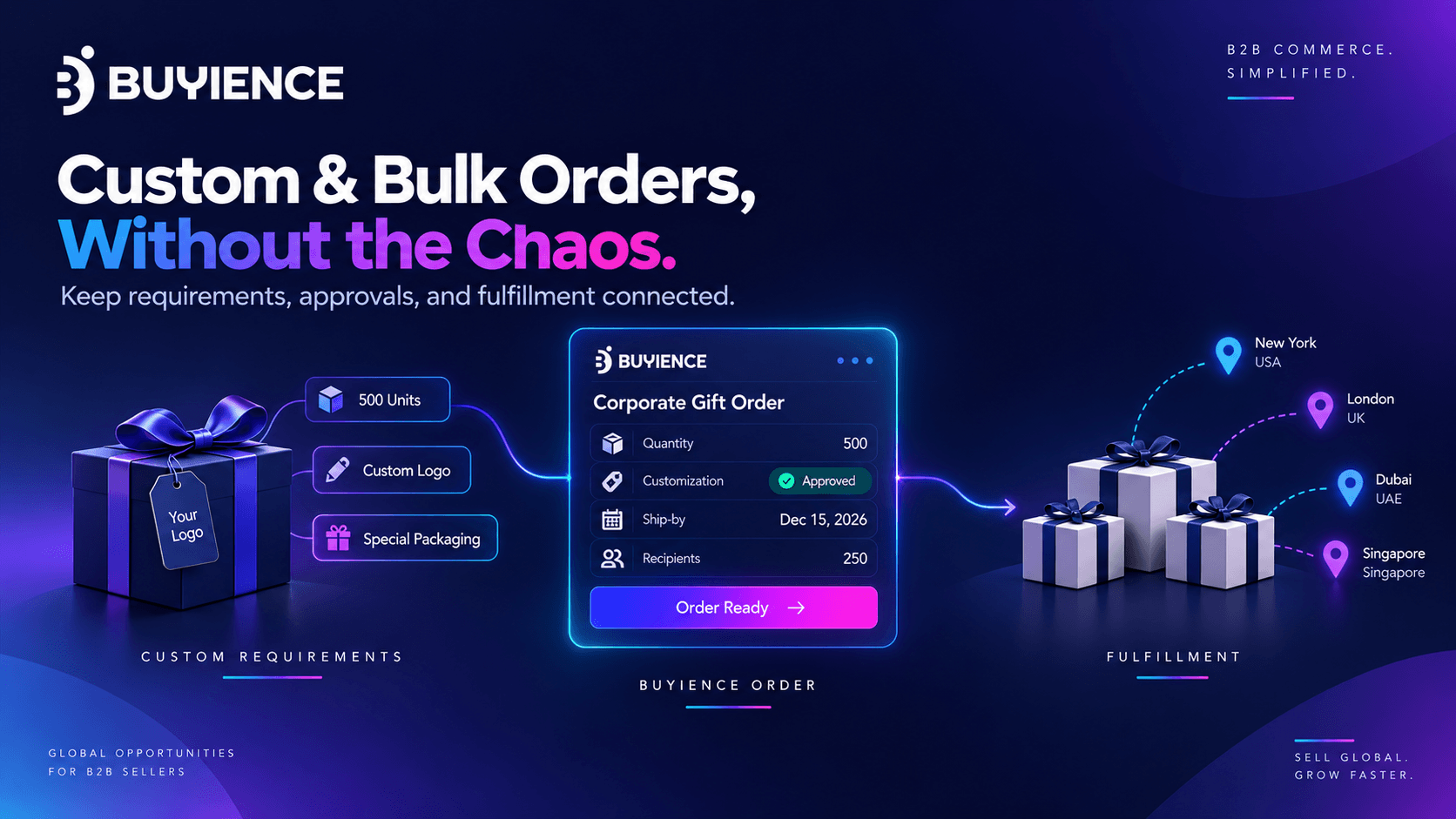
Corporate gifting at scale is rarely just a large order. It's a large order with a logo placed a specific way, packaged to a particular standard, shipping to a list of recipients that may or may not be finalized, needing to arrive before a specific date that isn't negotiable because it's tied to an event or a holiday. Every one of those variables is a place where a detail can get lost between the sale and the delivery.
Most gifting companies handle this through diligence and memory — someone who was on the original call also oversees fulfillment, and catches discrepancies because they remember what was agreed. That works until order volume grows past what any one person can hold in their head, or until the person who took the order isn't the person who fulfills it.
Where custom and bulk gift orders actually go wrong
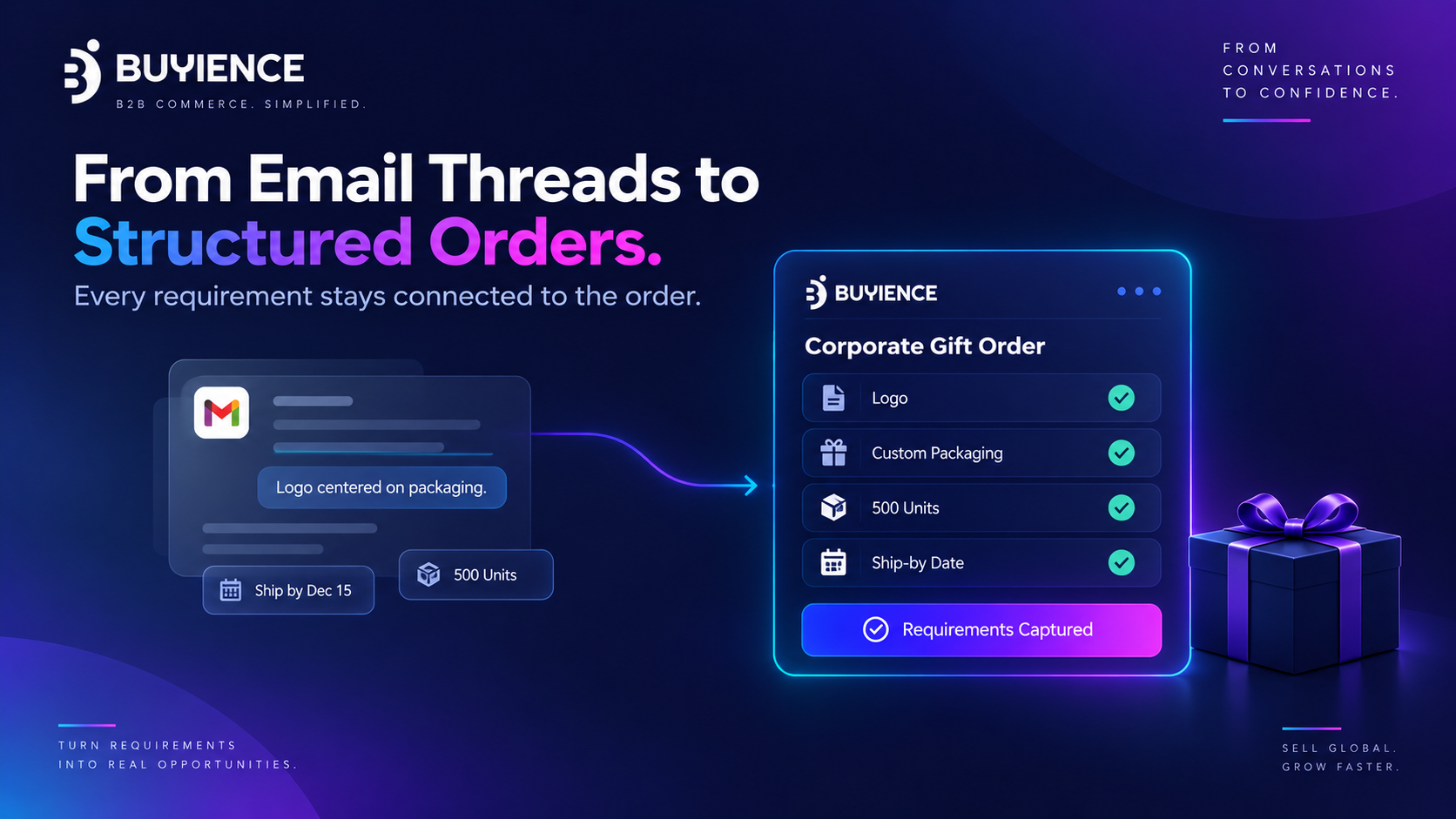
- Specifications live in email, not in the order. The client asked for the logo centered rather than on the corner, and mentioned it in a reply three messages deep in a thread. Whoever prepares the production file never sees that message.
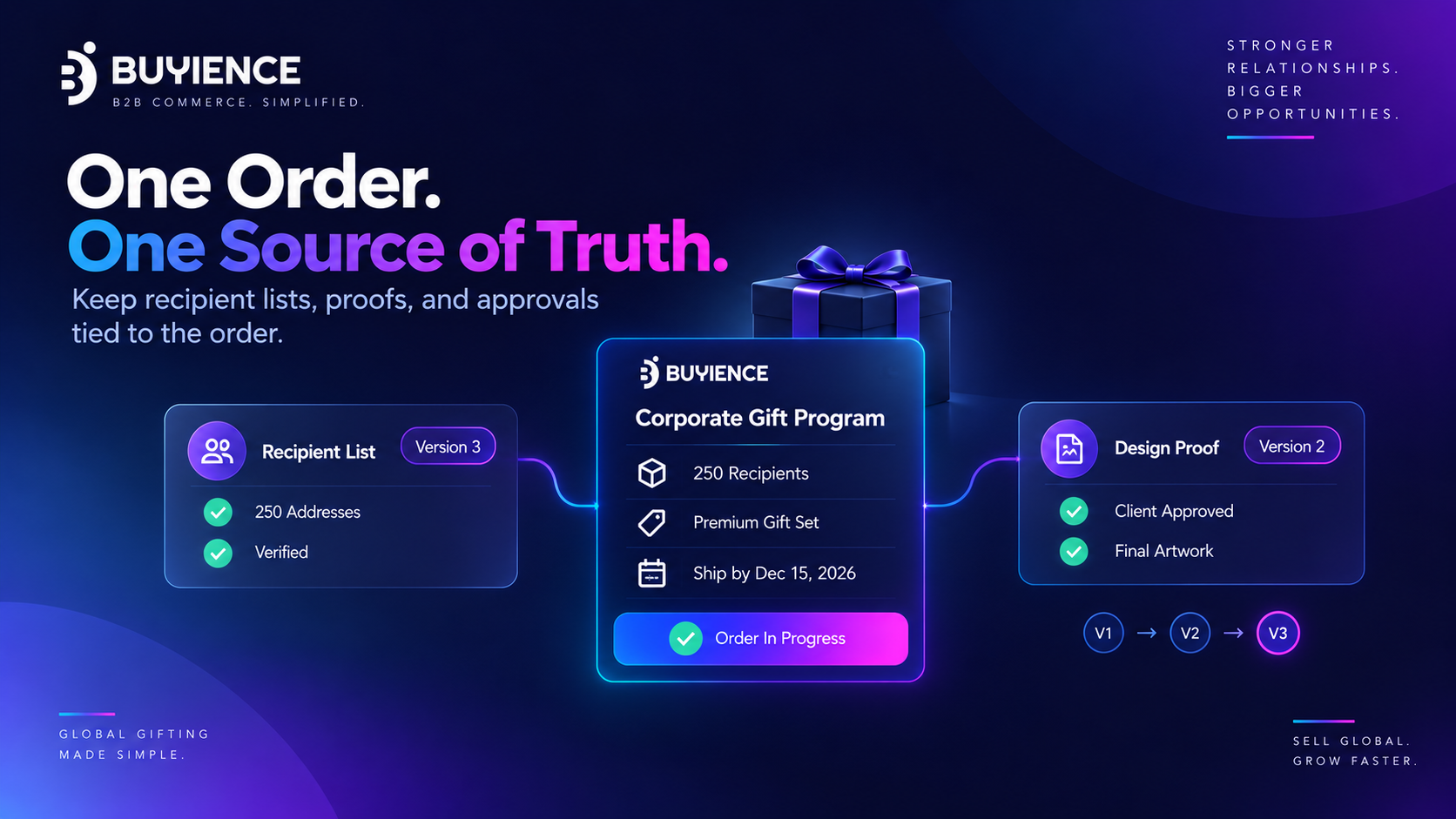
- Recipient lists change after the order is placed. A client sends a list of 250 names, then updates it twice before production — a new hire added, two people who left, three corrected addresses. Without a defined process for versioning that list, it's genuinely unclear at production time which version is authoritative.
- Proofing is informal. A client approves a design over email or verbally on a call, without a recorded approval tied to the specific version being produced. When the finished product doesn't match what the client believed they approved, there's no clean record to resolve the disagreement.
- Ship-by dates are treated as targets, not constraints. A corporate gift arriving after the holiday party or the client event isn't late — it's failed. But if the date lives as a note rather than a hard constraint that drives production scheduling, it competes for attention with every other order in the queue.
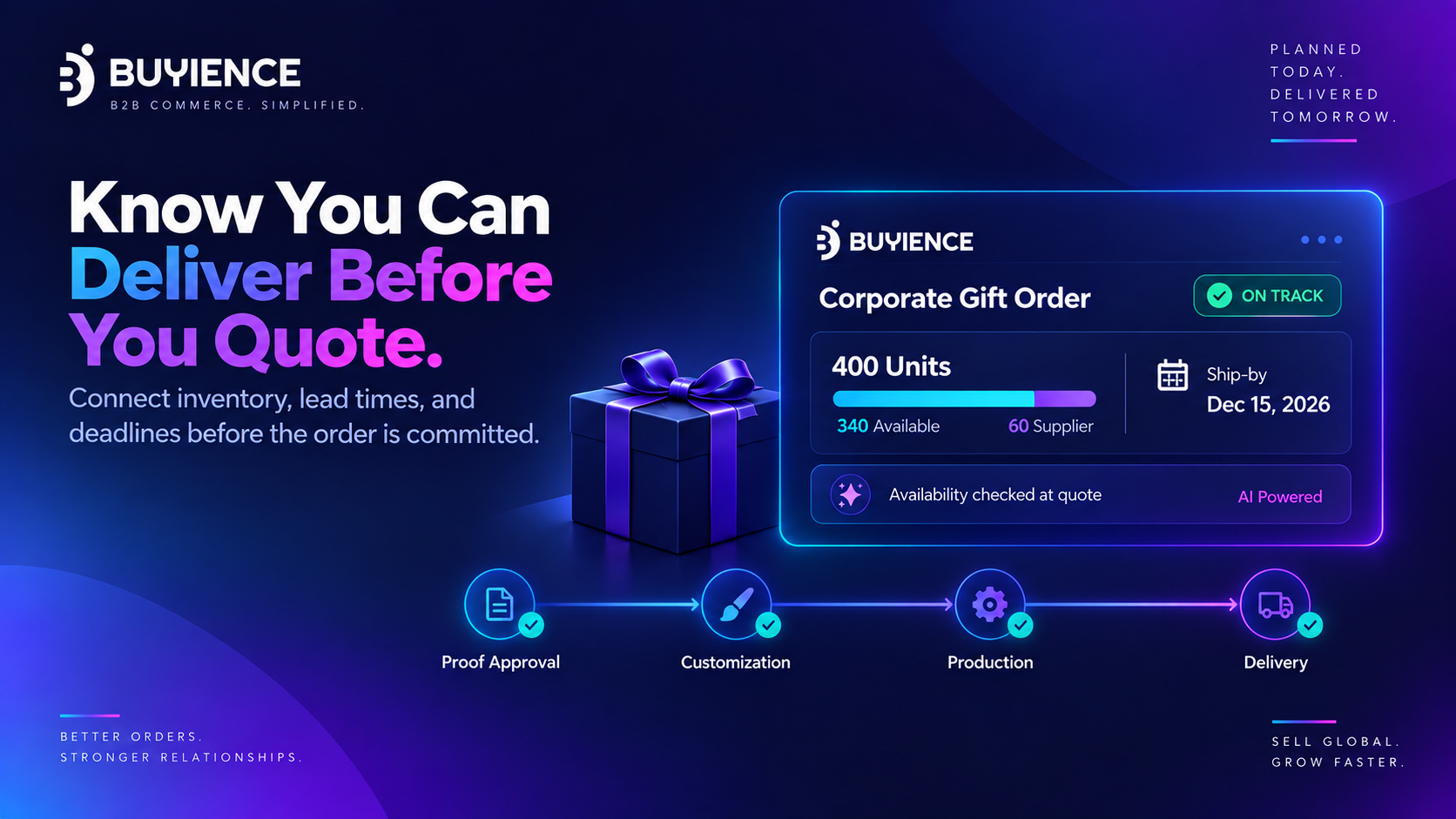
- Partial availability isn't caught early. A bulk order requires 400 units; 340 are in stock and the rest need a supplier lead time that runs past the client's deadline. If this surfaces during fulfillment rather than at quoting, the options for fixing it are much worse.
Structure order intake so nothing depends on memory
The single highest-leverage change is capturing custom requirements as structured fields at intake, not as prose in a conversation. Concretely, that means a defined set of things every custom gift order must specify before it's considered complete:
- Product and quantity, including any per-variant breakdown (sizes, colors, assortments)
- Customization specification — logo file, placement, method (print, embroidery, engraving), color matching requirements
- Packaging requirements — custom box, insert card, gift message, individual versus bulk packing
- Recipient handling — single ship-to address, or a multi-recipient list
- Hard ship-by or arrive-by date, flagged distinctly from a soft preference
- Approval requirements — who on the client side signs off on proofs, and by when
The point isn't bureaucracy for its own sake. It's that each of these has caused a real failure somewhere when left implicit, and capturing them at intake costs minutes while catching them at fulfillment costs a reshipment or a lost client.
Handle recipient lists as versioned data, not attachments
Multi-recipient orders deserve their own process, because a recipient list is data that changes, not a static document. A few practices that prevent the common failures:
- Set a list-lock deadline tied to production, communicated to the client at order confirmation. Changes after that date are handled as exceptions with a cost and schedule implication, rather than absorbed silently.
- Validate addresses at intake, not at shipping. Running address validation when the list arrives surfaces problems while there's still time to ask the client to correct them, rather than generating undeliverable packages after production.
- Treat the list as attached to the order record, with a clear current version, rather than as an email attachment that exists in several slightly different copies across a thread.
- Define handling for exceptions in advance — what happens to a package that's undeliverable, or a recipient who's left the company between list submission and shipping. Deciding this upfront is much easier than improvising it during a holiday shipping crunch.
Build proofing into the order, with recorded approval
Proofing is where a surprising share of corporate gifting disputes originate, and almost all of them are preventable with a recorded approval step:
- Produce a proof tied to a specific version of the customization spec
- Get explicit, recorded approval of that version from the named client contact, before production begins
- Treat any change after approval as a new version requiring new approval, rather than a minor adjustment absorbed informally
This is not about being adversarial with clients. It's that "I thought we agreed on the other version" is a genuinely ambiguous situation when nothing was recorded, and both sides usually believe they're right. A recorded approval removes the ambiguity entirely and is faster than the conversation that happens without it.
Check availability against the deadline at quoting, not at fulfillment
Bulk gift orders frequently require quantities large enough to exceed current stock, and the relevant question isn't just "can we get these" but "can we get these in time." That check belongs at quoting:
- Confirm available-to-promise inventory, excluding stock already committed to other orders
- For any shortfall, confirm supplier lead time against the client's hard date, with buffer for customization and shipping time
- Reserve or flag stock for an order in active negotiation, so a second large quote doesn't get built against the same units
Catching a timing problem at quoting means offering the client an alternative product or an adjusted quantity while they're still deciding. Catching it during fulfillment means a difficult call about a deadline you can no longer meet.
Sequence production backward from the arrival date
Corporate gifting deadlines are usually fixed and externally imposed. That makes backward scheduling the natural approach: start from the arrive-by date, subtract shipping transit time, subtract production and customization time, subtract proofing and approval time, and the result is the real deadline for finalizing the order — which is often meaningfully earlier than clients expect.
Communicating that date explicitly at order confirmation, rather than assuming the client understands the lead time implications of their own deadline, prevents the common situation where a client submits final approvals a week before their event and expects delivery on time.
How Nova Core supports custom and bulk gift orders
Nova Core's CPQ handles custom configuration as structured line-item data — customization options, packaging, and per-variant quantities captured through the quote-to-order process and carried through to the order record rather than living in a separate email thread. Multi-warehouse inventory shows available-to-promise stock at the moment of quoting, so timing problems surface while alternatives still exist, and order management keeps ship-by dates, recipient handling, and custom specifications attached to the order for whoever handles fulfillment.
Buyience offers a 14-day free trial with full access to every feature — no credit card required to start. Visit buyience.com to start your free trial — or request a demo.
Questions, answered
What's the most common cause of custom gift order errors?
Specifications that live in email threads or verbal conversations rather than as structured fields on the order record — meaning whoever handles production never sees a requirement that was genuinely agreed during the sale.
How should recipient lists for bulk gift orders be handled?
As versioned data attached to the order with a clear current version and a defined list-lock deadline, rather than as email attachments. Address validation should happen at intake, while there's still time to correct problems.
Why is recorded proof approval important for corporate gifting?
Because disputes about what was approved are genuinely ambiguous when nothing was recorded, and both parties usually believe they're right. Tying explicit approval to a specific proof version removes the ambiguity before production starts.
When should inventory availability be checked for a bulk gift order?
At quoting, not fulfillment — including available-to-promise stock and supplier lead time against the client's hard deadline. Catching a shortfall while the client is still deciding allows alternatives that aren't available later.
How should production be scheduled for a fixed client event date?
Backward from the arrive-by date: subtract shipping transit, production and customization time, and proofing and approval time. The resulting order-finalization deadline is often earlier than clients expect and should be communicated explicitly.
What should happen when a client changes the recipient list after production has started?
Handle it as a defined exception with clear cost and schedule implications, communicated against a list-lock deadline set at order confirmation — rather than absorbing changes silently and discovering the impact during fulfillment.
Related articles
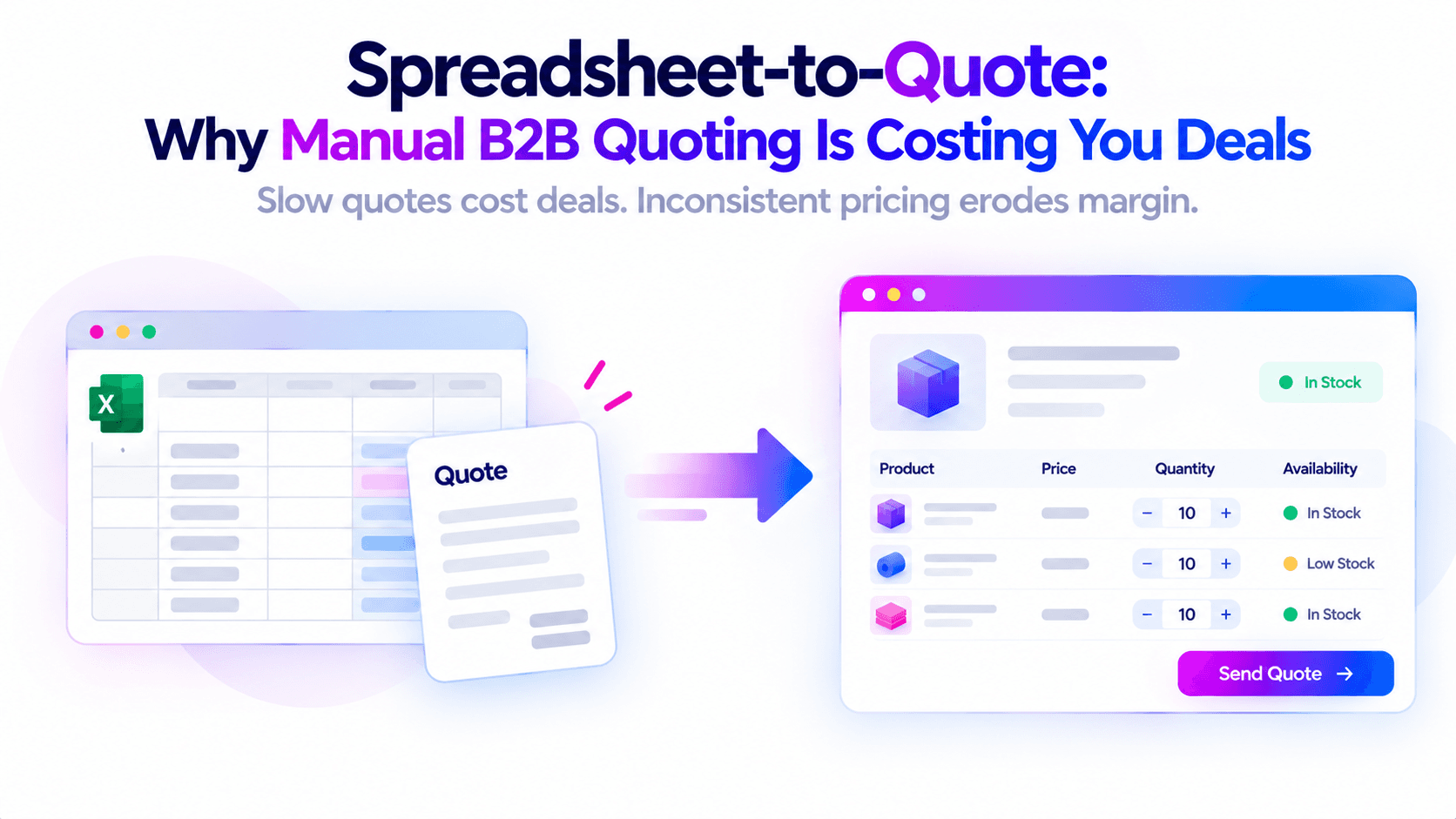
Spreadsheet-to-Quote: Why Manual B2B Quoting Is Costing You Deals
Manual quoting rarely loses a deal in a way anyone records. It loses deals through delay — the quote that arrives after the buyer decided — and it loses margin through inconsistency nobody traces back. The cost is invisible precisely because the failures look like normal business: a slow week, a competitive loss, a thin month. This post maps the five stages where a spreadsheet quote leaks, and which one to fix first.

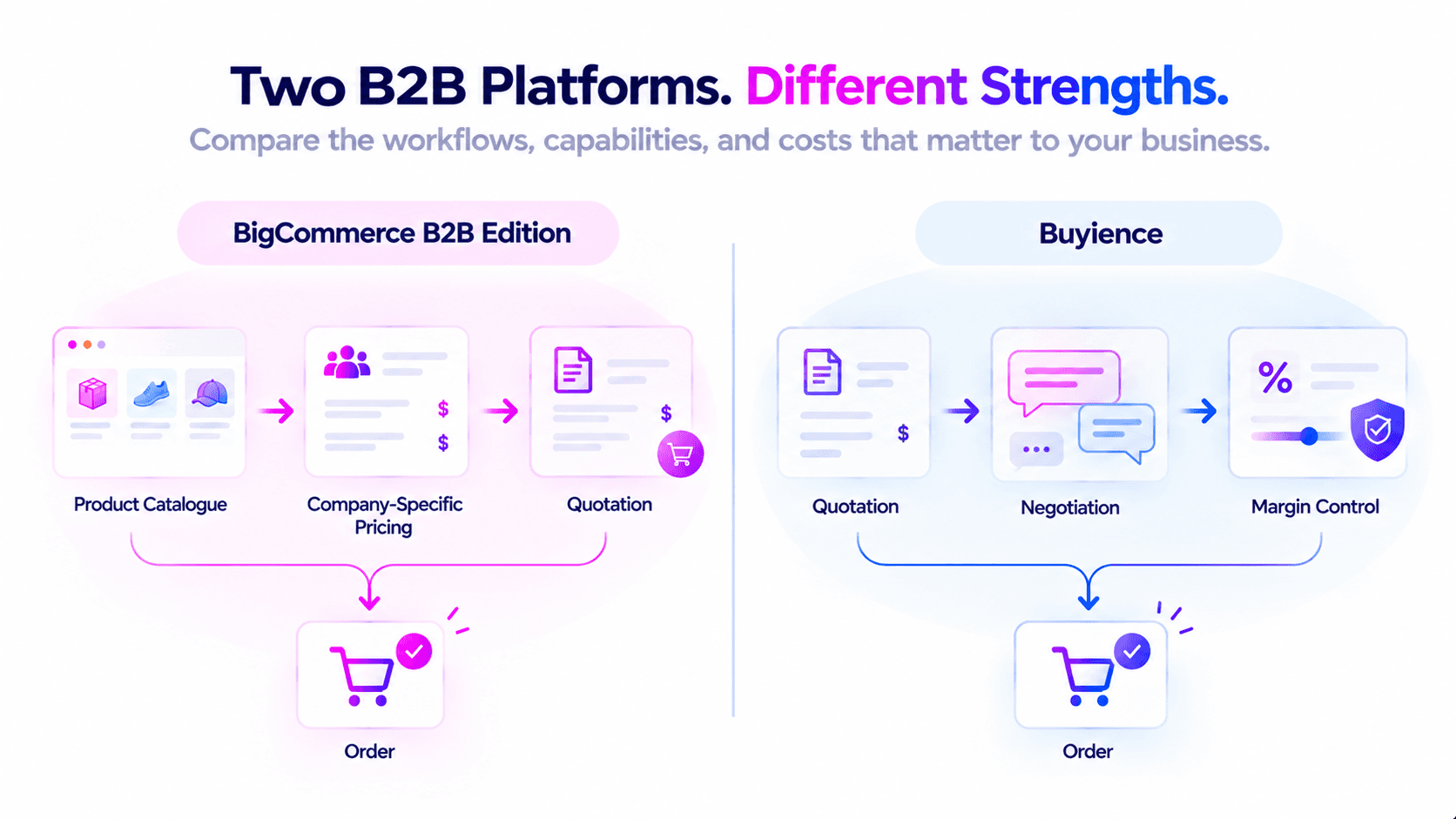
Buyience vs BigCommerce B2B Edition: A Side-by-Side Comparison
BigCommerce B2B Edition is a genuinely capable B2B platform with native quoting, company accounts, price lists and purchase order workflows — it is not a consumer cart with wholesale bolted on. The honest comparison with Buyience comes down to two things: cost tier, since B2B Edition is Enterprise-only with custom pricing, and what happens during negotiation rather than during quoting. If you have the budget and your quoting is structured rather than negotiated, B2B Edition is a strong choice.
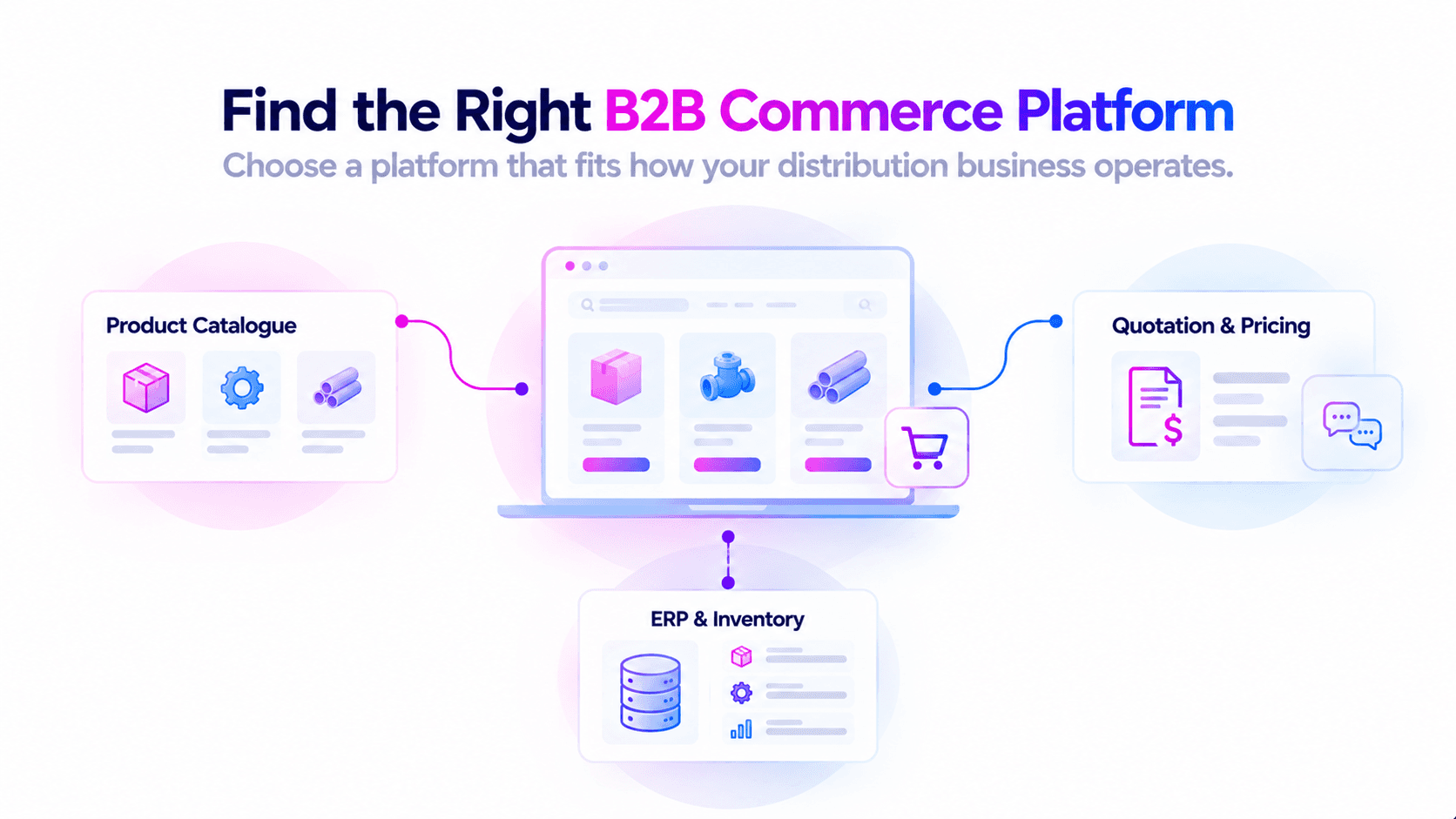
The Best B2B Commerce Platforms for SMB Distributors in 2026
Most "best B2B platform" lists are published by vendors who rank themselves first. This one is too — we build Buyience — so the useful thing we can offer is published pricing where it exists, honest placement of where each platform actually fits, and a clear statement of which distributors should rule us out. For SMB distributors the real shortlist is short: BigCommerce B2B or Shopify for catalogue-led wholesale, Sana or an ERP-led option if your ERP governs pricing, OroCommerce if you have genuine enterprise complexity and the budget, and quoting-led platforms including ours if your revenue arrives through negotiated quotes.