
Why Corporate Gifting Companies Outgrow Shopify (and What to Use Instead)
Shopify is a genuinely good starting point for a corporate gifting business — fast to launch, easy to run, well-documented. The problem isn't Shopify itself; it's that it was built for consumer checkout, not B2B quoting, bulk pricing, and account-based ordering. Most gifting companies feel the mismatch first in quoting speed and pricing consistency, then in order and fulfillment complexity as B2B accounts grow. This post covers exactly where that mismatch shows up and what a purpose-built B2B alternative needs to handle instead.

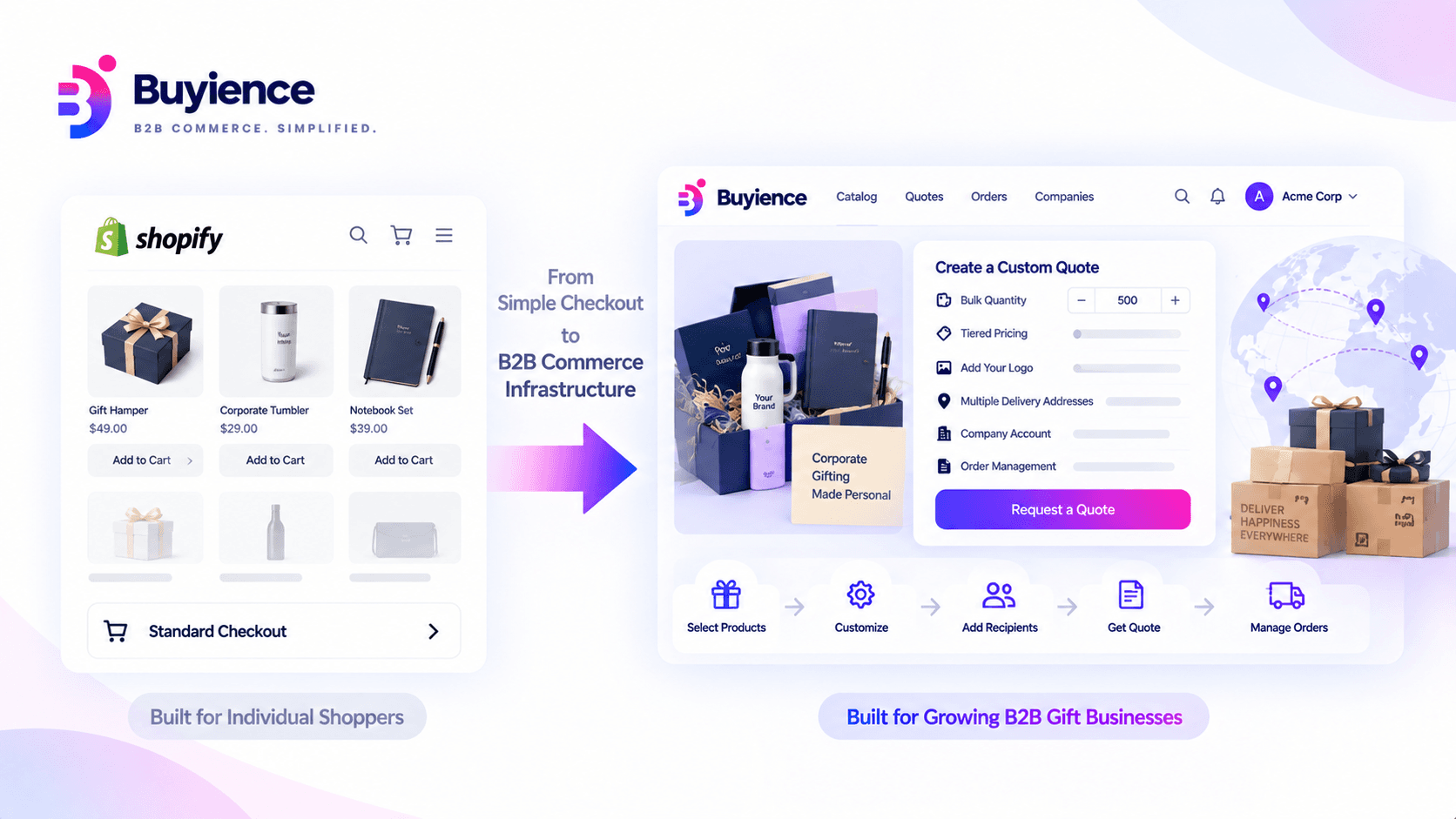
Shopify is often the right first choice for corporate gifting at scale. It's fast to set up, well-supported, and lets a small team start taking orders without engineering effort. None of that changes as the business grows — but the kind of selling a corporate gifting company does tends to change substantially, and Shopify's core architecture doesn't bend easily to follow it.
This isn't a case against Shopify generally — it's excellent at what it was built for: consumer-facing, cart-and-checkout ecommerce. The mismatch shows up specifically when a gifting business's revenue mix shifts toward B2B accounts: corporate clients who need custom quotes, bulk pricing, negotiated terms, and order coordination that looks nothing like a consumer adding items to a cart.
Where the mismatch first becomes visible
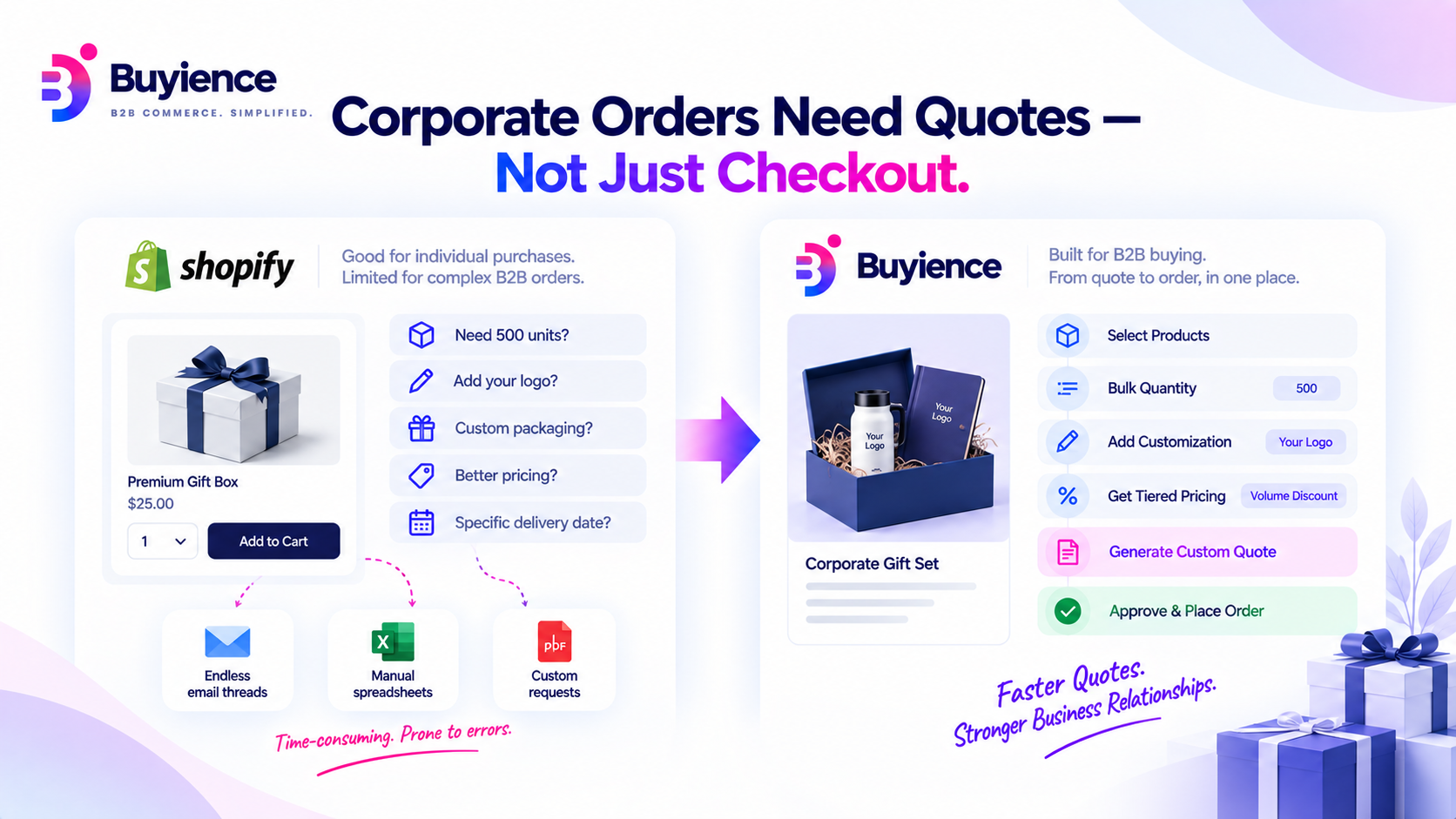
- Quoting doesn't fit Shopify's checkout model. Shopify is built around fixed prices and instant checkout — a customer sees a price, adds to cart, pays. Corporate gifting B2B sales usually work the opposite way: a client describes what they need, gets a custom quote based on quantity and customization, negotiates, and then orders. Shopify has no native concept of a negotiable quote that becomes an order — most gifting companies end up handling quoting entirely outside Shopify, in email or a separate document, and only using the platform once a price is finally agreed and someone manually creates a matching order or discount code.
- Bulk and tiered pricing require workarounds, not native support. Shopify's pricing model is built for one price per product (with some discount-code flexibility), not layered volume breaks combined with client-specific rates. Gifting companies commonly patch this with apps, manual discount codes per client, or price lists managed outside the platform entirely — workable at low volume, increasingly fragile as the number of active B2B accounts grows.
- Custom order details get separated from the order record. A logo placement instruction, a specific ship-by date, a note about excluding certain recipients from a bulk shipment — these live in email or a support ticket, disconnected from the actual order in Shopify's system, because there's no structured place to attach B2B-specific requirements to an order.
- Account-based selling isn't how Shopify is structured. B2B relationships involve a client with a history, negotiated terms, and multiple contacts placing orders on behalf of the same company — a fundamentally different structure than Shopify's individual customer-account model, which was built around one person, one login, one order at a time.
- Multi-recipient bulk shipping is a persistent friction point. Shipping one order to 300 individual employee addresses is a common corporate gifting scenario and not a workflow Shopify's checkout was designed around — most gifting companies handle this with a combination of apps, manual CSV uploads, and a fair amount of manual double-checking.
What this actually costs, in practice
None of these gaps are catastrophic individually. Together, they add up to a specific and recognizable pattern: the team spends more time working around the platform than the platform saves them. Quoting happens somewhere else and gets manually re-entered. Pricing consistency depends on someone remembering which discount code applies to which client. Custom order details require a side conversation to confirm before fulfillment. None of this shows up as a single dramatic failure — it shows up as accumulated administrative overhead that scales roughly with order volume, meaning it gets worse exactly as the business is trying to grow.
The clearest signal that this mismatch has become a real cost, rather than a minor annoyance, is usually when quoting turnaround time starts affecting win rate — a client needs pricing within a day or two to make a decision, and the manual process to get there consistently takes longer than that.
It's also worth noting that this pattern tends to compound rather than stay flat. Each new B2B account adds another set of discount codes to maintain, another price list to keep current, another client's custom requirements to track manually. A team that could reasonably manage this overhead at ten active B2B accounts often finds it unmanageable at fifty — not because any single account got harder to serve, but because the coordination cost scales with account count in a way that outpaces the team's capacity to absorb it manually.
What to look for in a B2B-native alternative
The fix isn't a more complex Shopify setup — it's a platform actually built around how B2B gifting sales work, which means:
- Quoting as a first-class workflow, not a workaround. The ability to build a custom quote — bulk quantity, customization line items, client-specific pricing — inside the same system that becomes the order, rather than quoting in email and manually re-entering the result.
- Native tiered and volume pricing. Quantity breaks and client-specific rates that resolve automatically, without a growing list of manually maintained discount codes.
- Structured fields for customization and fulfillment requirements. Logo placement, ship-by dates, and recipient-specific instructions attached directly to the order record, visible to whoever handles fulfillment — not buried in a separate email thread.
- Real account-based structure. Support for a company account with multiple contacts, order history, and negotiated terms — matching how B2B relationships actually work, rather than treating every order as an individual consumer transaction.
- Bulk, multi-recipient fulfillment as a supported workflow, not an add-on. The ability to manage an order that ships to hundreds of individual addresses without manual CSV gymnastics for every large order.
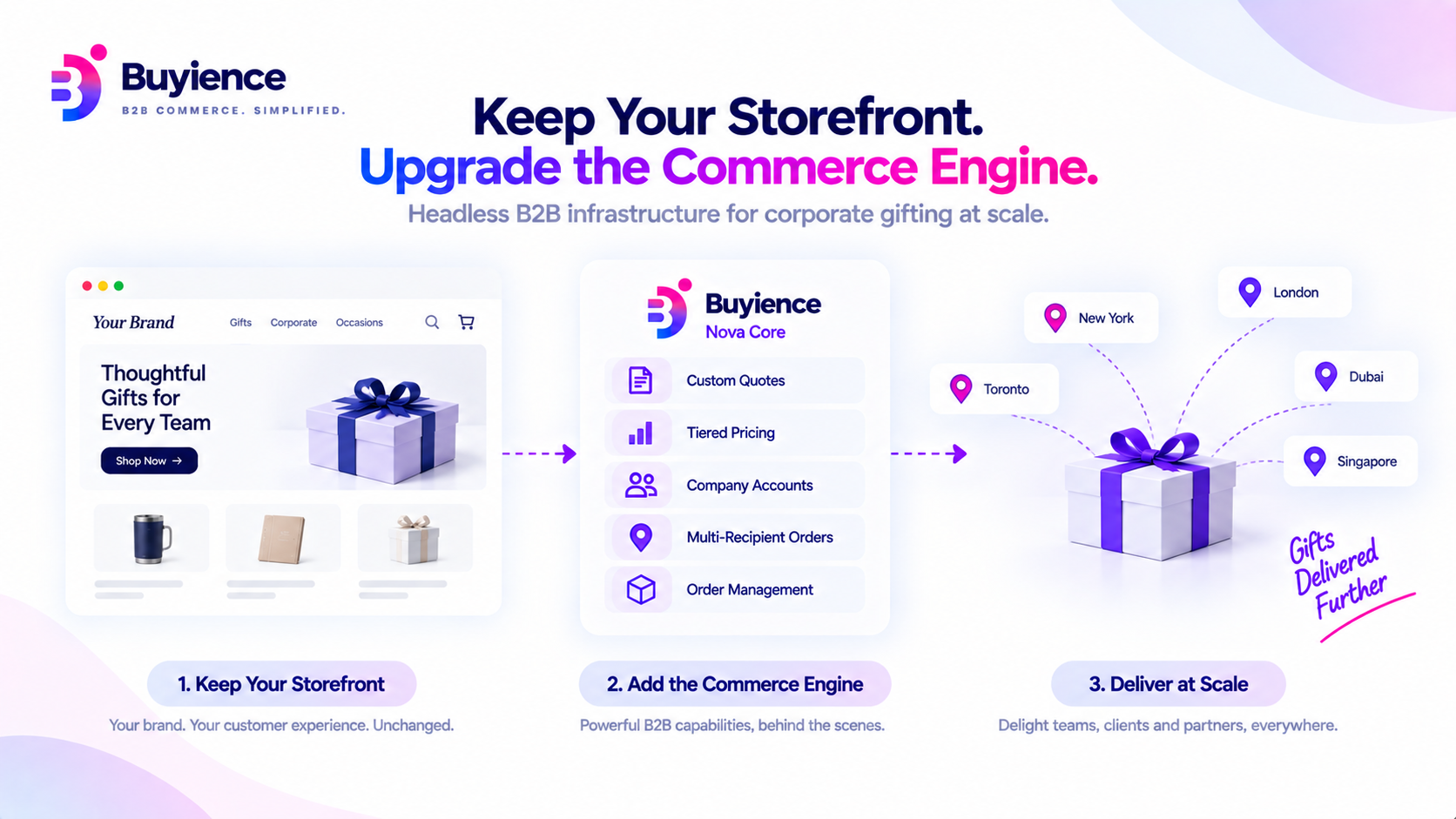
- Room to keep what works. A good B2B platform for gifting companies shouldn't mean abandoning brand storefront design or losing the parts of the ecommerce experience that already work well — headless, API-first architecture lets a gifting company keep a customized frontend while getting proper B2B infrastructure underneath it.
Making the switch without disrupting active client relationships
Migrating off Shopify is a real project, not a weekend task, and the goal should be doing it without disrupting clients mid-relationship. A few things that help:
- Migrate product catalog and historical order data first, before changing anything a client sees, so reporting and account history stay intact.
- Run quoting on the new system before fully cutting over order and fulfillment workflows, so the team gets comfortable with the new process on lower-stakes activity first.
- Time the cutover away from peak season. Given how seasonal corporate gifting demand tends to be, migrating infrastructure during a slow period rather than in the run-up to year-end avoids compounding a platform transition with the highest-stakes weeks of the year.
How Nova Core fits
Nova Core is built specifically for B2B commerce — quoting, tiered and bulk pricing, CPQ for custom orders, and order management that supports the account-based, multi-recipient reality of corporate gifting — while remaining headless and API-first, so a gifting brand can keep its existing storefront design and plug B2B infrastructure in underneath it rather than starting the frontend from scratch.
Buyience offers a 14-day free trial with full access to every feature — no credit card required to start. Visit buyience.com to start your free trial — or request a demo.
Questions, answered
Is Shopify bad for corporate gifting companies?
No — it's a strong starting point, especially at low order volume or for the consumer-facing side of a gifting business. The mismatch shows up specifically as B2B accounts, custom quoting, and bulk multi-recipient orders become a larger share of revenue.
What's the biggest limitation of Shopify for B2B gifting sales?
Its checkout model is built around fixed prices and instant purchase, not custom quotes that get negotiated before becoming an order — which is how most corporate gifting B2B sales actually work.
Can Shopify apps solve the bulk pricing and quoting gap?
Apps can partially patch some of these gaps, but they tend to be workarounds layered on top of an architecture not built for B2B quoting and account-based selling, which becomes more fragile as order volume and client count grow.
Do I have to give up my Shopify storefront design to switch to a B2B platform?
Not necessarily. A headless, API-first B2B platform can plug into an existing frontend design, meaning the switch is about the commerce infrastructure underneath, not necessarily a full redesign of the customer-facing storefront.
When is the right time to migrate off Shopify?
Before your next seasonal peak, and specifically during a slower period — migrating infrastructure and cutting over workflows during your highest-volume weeks compounds risk unnecessarily.
What should I migrate first when switching platforms?
Product catalog and historical order data first, then run quoting on the new system before fully transitioning order and fulfillment workflows, so the team adjusts to new processes on lower-stakes activity before the full cutover.
Related articles
Spreadsheet-to-Quote: Why Manual B2B Quoting Is Costing You Deals
Manual quoting rarely loses a deal in a way anyone records. It loses deals through delay — the quote that arrives after the buyer decided — and it loses margin through inconsistency nobody traces back. The cost is invisible precisely because the failures look like normal business: a slow week, a competitive loss, a thin month. This post maps the five stages where a spreadsheet quote leaks, and which one to fix first.

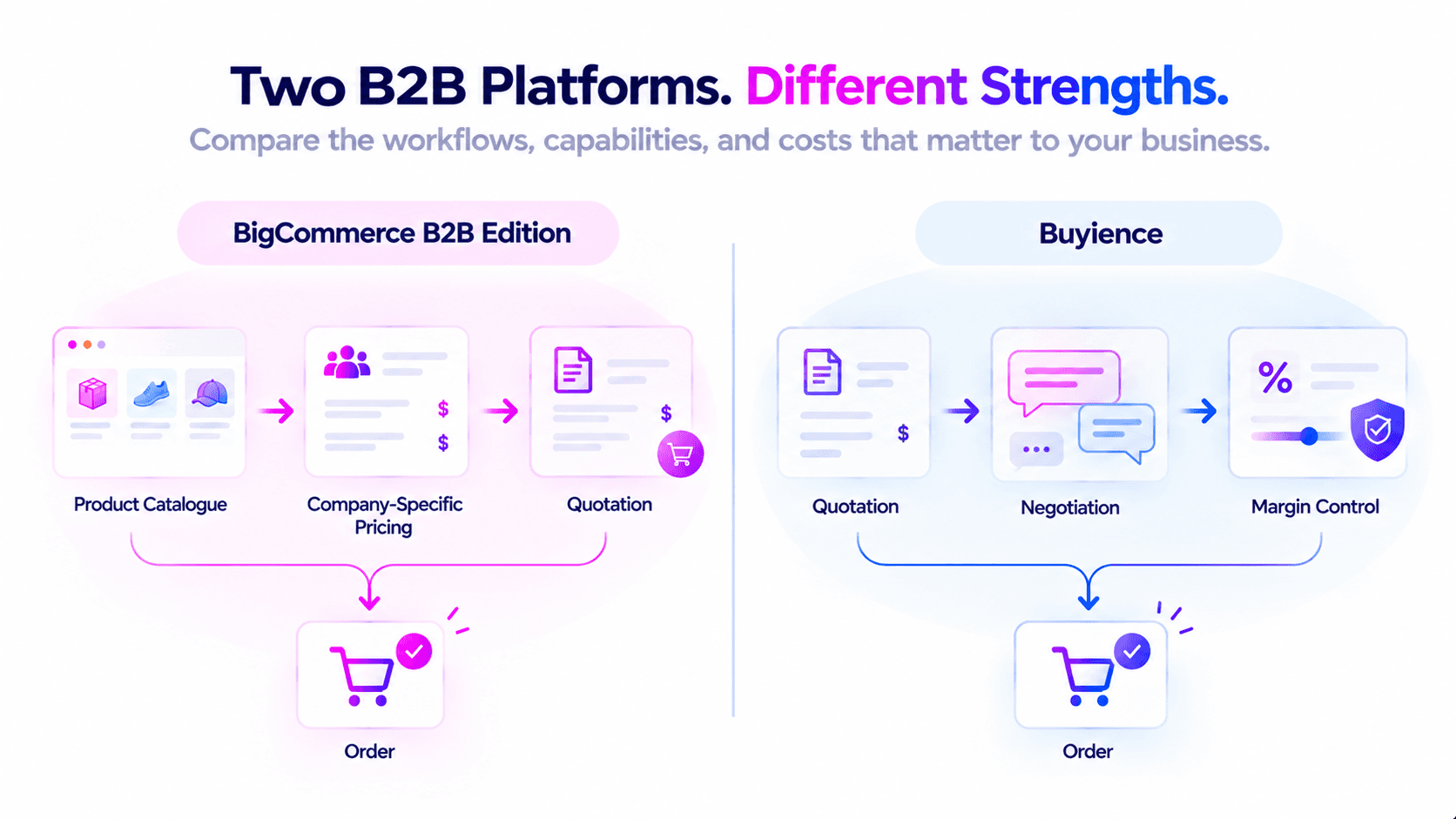
Buyience vs BigCommerce B2B Edition: A Side-by-Side Comparison
BigCommerce B2B Edition is a genuinely capable B2B platform with native quoting, company accounts, price lists and purchase order workflows — it is not a consumer cart with wholesale bolted on. The honest comparison with Buyience comes down to two things: cost tier, since B2B Edition is Enterprise-only with custom pricing, and what happens during negotiation rather than during quoting. If you have the budget and your quoting is structured rather than negotiated, B2B Edition is a strong choice.
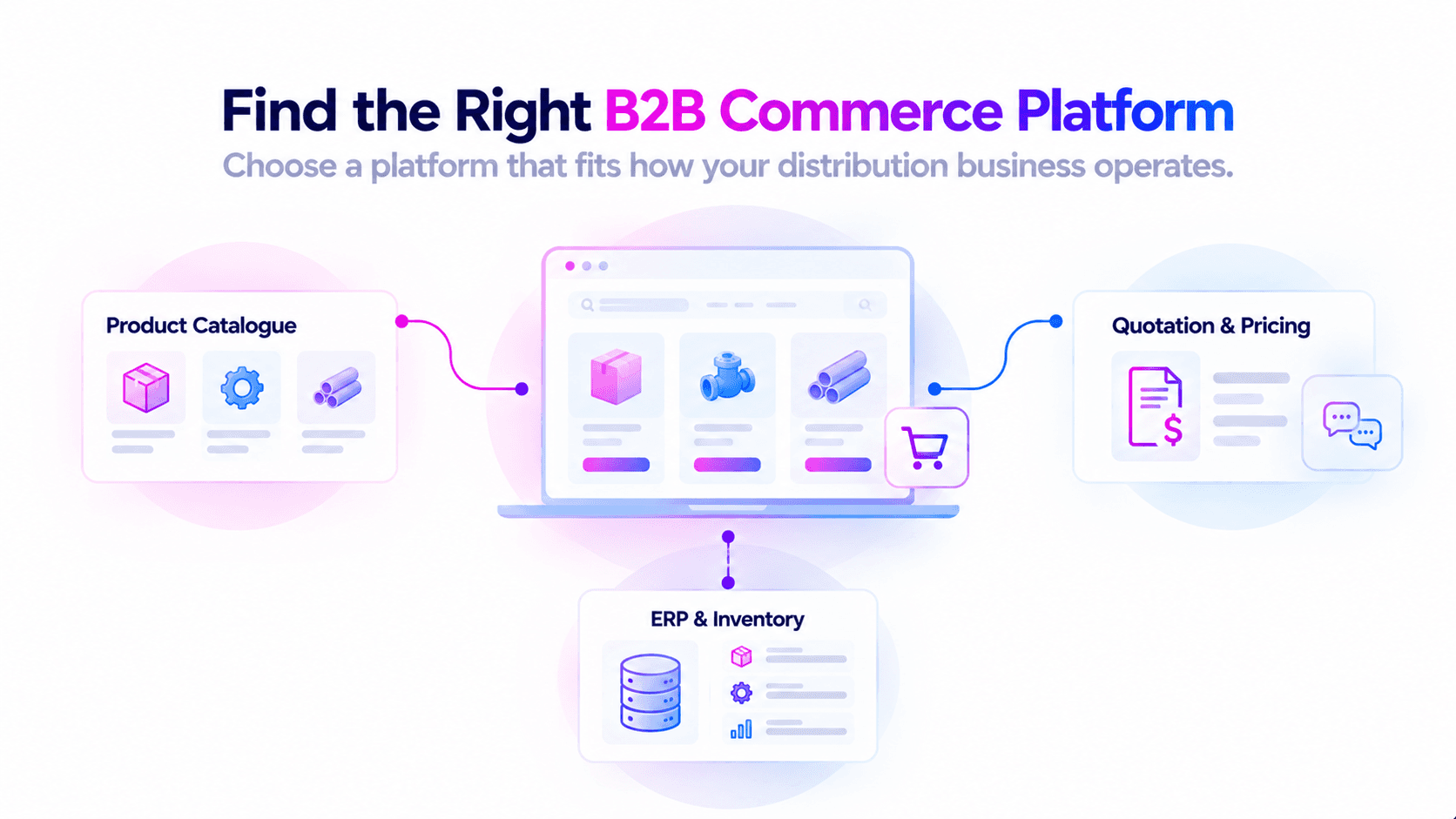
The Best B2B Commerce Platforms for SMB Distributors in 2026
Most "best B2B platform" lists are published by vendors who rank themselves first. This one is too — we build Buyience — so the useful thing we can offer is published pricing where it exists, honest placement of where each platform actually fits, and a clear statement of which distributors should rule us out. For SMB distributors the real shortlist is short: BigCommerce B2B or Shopify for catalogue-led wholesale, Sana or an ERP-led option if your ERP governs pricing, OroCommerce if you have genuine enterprise complexity and the budget, and quoting-led platforms including ours if your revenue arrives through negotiated quotes.