
Why Manufacturers Need a Modern B2B Ecommerce Platform in 2026
Here's an uncomfortable truth for anyone running a manufacturing business in 2026: your best customer might already be shopping for a replacement supplier — and you won't hear a word about it until the orders stop coming.

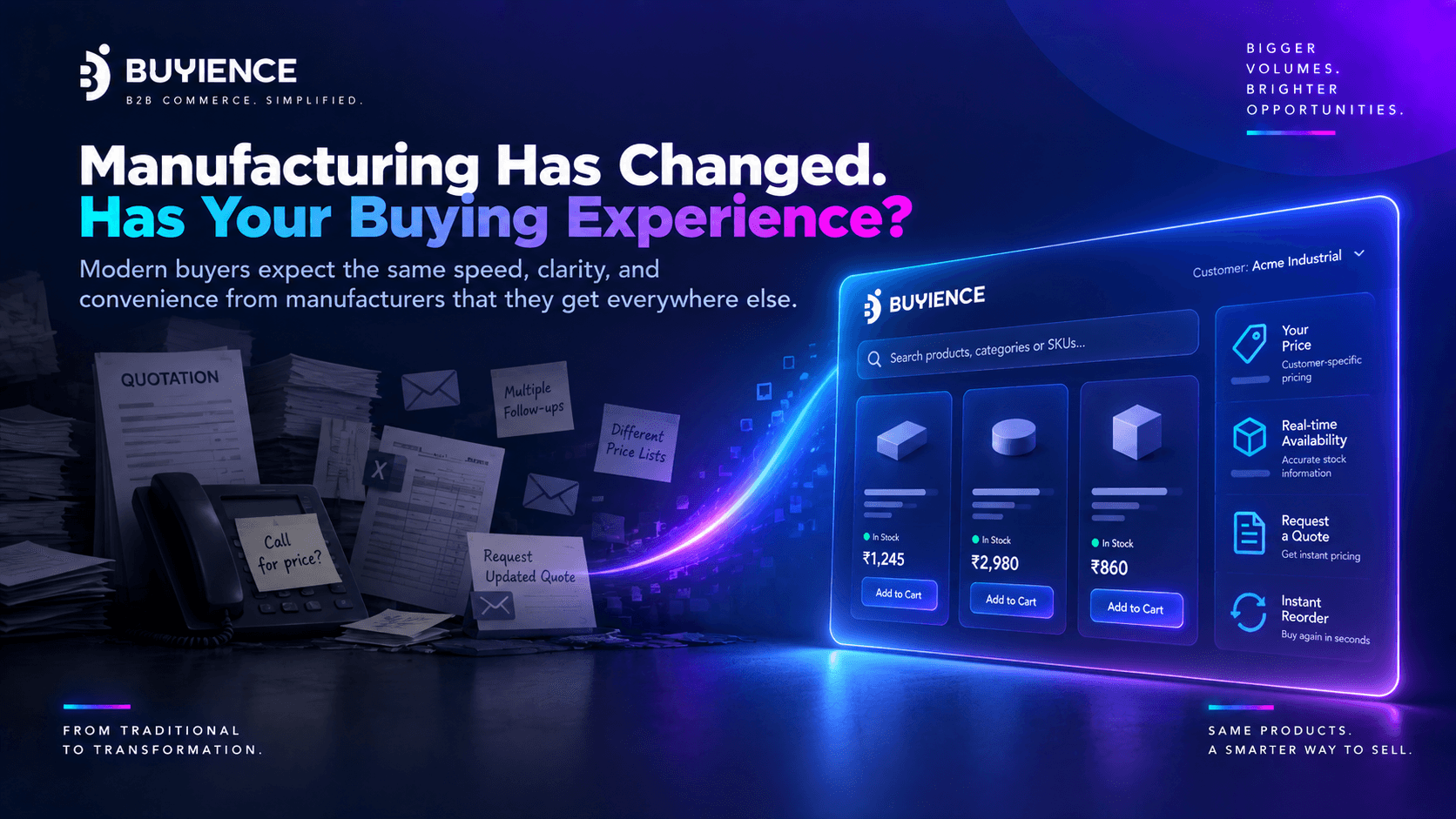
That's not fear-mongering. It's the new reality of B2B buying. Research shows 44% of B2B buyers are willing to switch suppliers if the digital buying experience falls short, and supplier changes now happen quietly, quickly, and often without warning — simply because a competitor made the buying process more convenient.
If you're a manufacturer still quoting by email, taking orders over the phone, and tracking inventory in spreadsheets, you're not just inefficient. You're exposed. This article breaks down exactly why B2B ecommerce for manufacturers has shifted from "nice to have" to "non-negotiable," what modern buyers actually expect, and how you can close the gap in weeks instead of the year-long implementation cycles you've been warned about.
The Market Has Already Moved — With or Without You
Let's start with the numbers, because they leave little room for debate.
The global B2B ecommerce market is enormous and compounding. Depending on how you measure it, estimates for 2026 range from roughly $28 trillion to $36 trillion in transaction value, growing at double-digit annual rates. In the United States, B2B ecommerce site sales reached $2.297 trillion in 2024, a 10.5% year-over-year increase, and are projected to surpass $3 trillion by 2028.
But the headline figure that should matter most to a manufacturer isn't the total market size. It's this: 56% of U.S. B2B revenue now comes from digital channels, up from 45% in 2023. For organizations that offer ecommerce, it generates more than one-third of total revenue — the highest of any single channel. The shift is no longer "ecommerce as a convenience channel." It's "ecommerce as the primary revenue engine."
Manufacturing specifically sits at the center of this. Heavy industries such as advanced manufacturing, energy, and healthcare drive the majority of B2B ecommerce value, significantly outpacing traditional sales channels. Manufacturing captured roughly a quarter of all B2B ecommerce revenue in 2025.
And here's the kicker that separates winners from losers: in one industry survey, just 20% of B2B sellers said they feel prepared for the future of digital selling. That's not a threat — that's an opening. The manufacturers who move now are competing against a field where four out of five rivals are unprepared.
Why Your Buyers Changed (Even If Your Sales Process Didn't)
To understand why a modern platform matters, you have to understand who's actually placing orders now. The person on the other end of your quote request is not the buyer you sold to a decade ago.
The buying committee grew up on Amazon
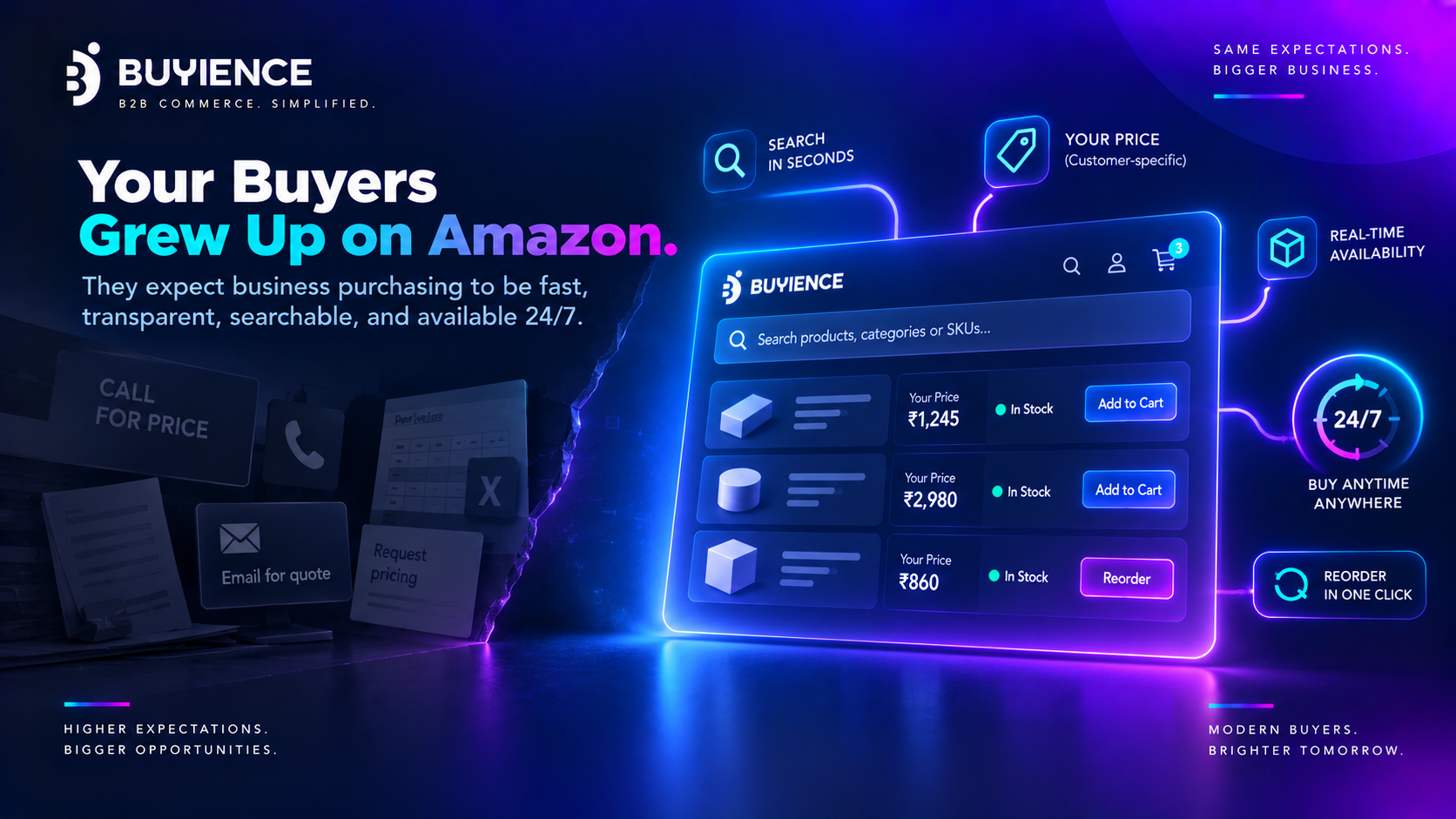
Millennials and Gen Z now dominate B2B purchasing committees, and they bring consumer-grade expectations to business transactions. They grew up with Amazon, Netflix, and mobile-first interfaces. To them, a clunky supplier portal or a "call us for pricing" button doesn't read as premium service — it reads as friction.
The data backs this up bluntly. Around 68% of millennial B2B buyers prefer self-service research tools over speaking to a sales rep, and 90% of millennial and Gen Z buyers report dissatisfaction with vendors in at least one area, compared with 71% of older buyers. When these buyers hit a wall, they don't wait for your office to open on Monday. They find someone else.
They want to buy big-ticket items without talking to you
This is the statistic that surprises most manufacturers: 97% of B2B buyers say they're willing to make self-serve purchases over $50,000, and a growing share are comfortable placing orders of $500,000 or more entirely through digital self-service channels. The idea that complex, high-value manufacturing orders "require a conversation" is increasingly a myth your competitors are exploiting.
They've already decided before they call
By the time a modern buyer contacts a sales rep, the buying journey is largely over. Studies show buyers now complete 60%+ of the purchase journey before first vendor contact, and by "Day One" of engagement they've typically already shortlisted around four of five vendors — purchasing from that shortlist 85% to 95% of the time. If you're not discoverable, priced transparently, and easy to evaluate online, you never make the shortlist. The deal is lost before your rep even knows it existed.
They expect their prices, their availability, their terms — instantly
Generic pricing doesn't cut it anymore. They expect:
- Their individual contract prices, volume discounts, and payment terms directly in the shop — without having to ask sales
- Real-time inventory so they know what's actually in stock before ordering
- One-click reordering for repeat purchases, which drive the majority of B2B revenue
The payoff for delivering this is concrete. One electrical-engineering wholesaler that implemented customer-specific pricing reduced internal sales inquiries by 60% while increasing order frequency by 35% — reaching ROI in eight months. Manufacturers offering true 24/7 self-service (order history, invoice downloads, delivery tracking) record average order volumes per customer that run roughly 40% higher, because the friction that used to cap order frequency simply disappears.
What "Modern" Actually Means (And Why Your Old Setup Fails)
It's worth being precise here, because a lot of manufacturers think they already have a digital presence. A brochure website with a contact form is not a B2B ecommerce platform. Neither is a legacy ERP portal that hasn't been touched since 2015.
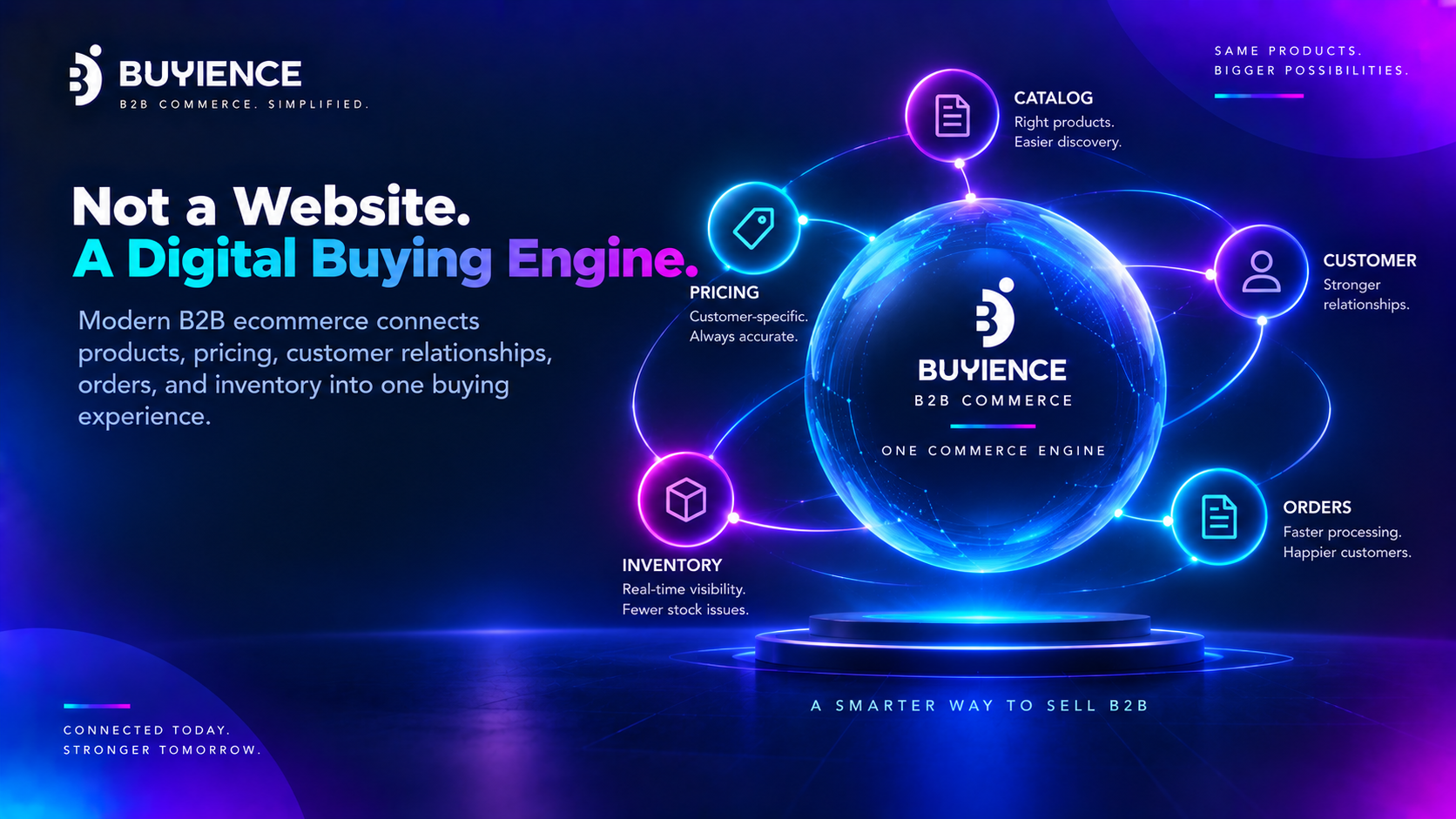
A modern B2B ecommerce platform for manufacturers does the selling for you. It handles the complexity of B2B — configurable products, bulk quantities, negotiated pricing, multi-stakeholder approvals, and repeat orders — without kicking the buyer back into email and phone calls. Here's where the old way breaks down, point by point.
- Quoting is the number-one bottleneck. In the traditional process, a customer asks for a quote, a rep digs through history, checks inventory, looks up pricing rules, calculates a price, types it into an email, and waits days for a response — then negotiates back and forth. This routinely takes two to three days. Meanwhile, speed decides deals: by the time your quote lands, the buyer may already hold three competitor quotes. Many "digital" platforms make this worse by stopping at product browsing and forcing customers into manual quoting anyway.
- Pricing is guesswork. When reps price manually, some give away too much margin to win the deal and others price too high and lose to competitors. Nobody knows the "right" number. Across a year of deals, that inconsistency quietly bleeds profit.
- Your data is scattered. Customer history lives in email. Pricing sits in spreadsheets. Orders are in accounting software. Inventory is in yet another system. When a customer calls, no one has the full picture, and every question becomes "let me check and get back to you" — the exact phrase that erodes trust.
- Implementation was a nightmare — so you never started. The reason many manufacturers still run on spreadsheets isn't ignorance. It's scar tissue. Traditional B2B software has a reputation for 6-to-12-month implementations requiring consultants, heavy customization, training, and a small fortune. That reputation kept a lot of good businesses on the sidelines. The good news: that's no longer how it has to work.
AI Is Now Part of the Buying Decision Itself
Here's a shift that's easy to miss: buyers aren't just tolerating AI in the products they purchase — they're demanding it, and they're using it to evaluate you.
On the buyer's side, roughly 89% of B2B buyers now use generative AI for self-guided research, asking tools like ChatGPT and Perplexity to compare vendors, summarize reviews, and even draft RFPs. That means your content and pricing need to be clear and extractable, or you simply won't surface in the research phase where shortlists form.
On the solution side, around 95% of buyers say AI is at least a consideration in their purchase, and 62% report being mandated or strongly encouraged to select solutions with AI features. Even traditionally conservative segments like machinery buyers now largely expect AI capabilities.
For manufacturers, the takeaway is twofold:
- The platform you run needs to be AI-native — using intelligence to price, forecast, and automate, not just to look modern
- That intelligence is precisely what lets a small or mid-sized manufacturer punch above its weight, giving a 20-person sales team the pricing discipline and responsiveness of a much larger operation
Enter Buyience: Modern B2B Ecommerce Built for Manufacturers
This is exactly the gap Buyience was built to close. If everything above describes your business — slow quotes, inconsistent margins, scattered data, and buyers you can feel drifting toward faster competitors — Buyience is the fix, and it doesn't require a 12-month project to get there.
Buyience Nova Core is an AI-powered B2B sales platform that brings quoting, negotiation, catalog, ordering, and inventory into one place. Here's how each piece directly answers the manufacturer problems we just walked through.
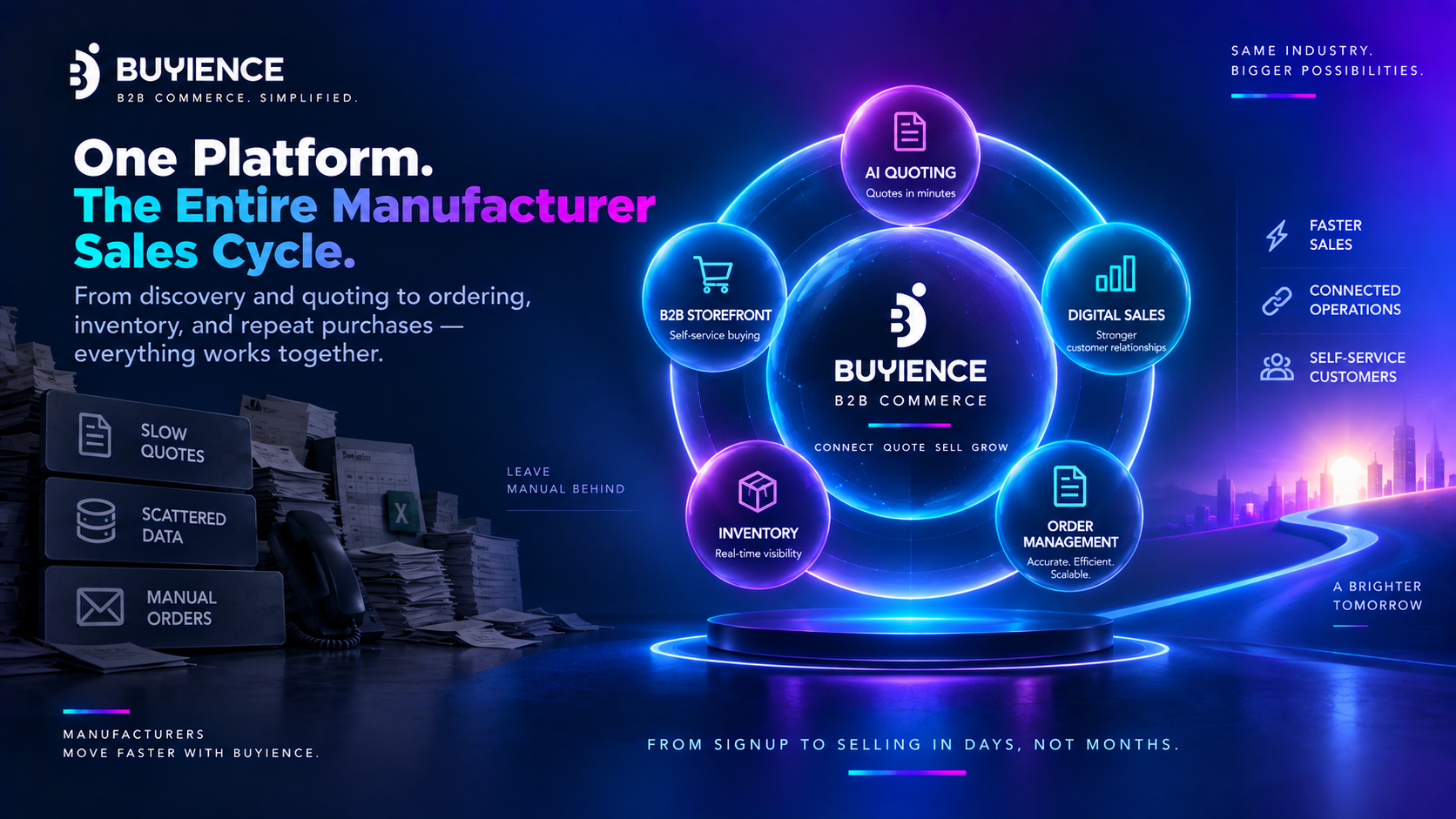
The AI Quote Engine ends the quoting bottleneck
Instead of a rep spending days assembling a quote, Buyience's AI Quote Engine instantly analyzes the customer's history, your profit margins, market conditions, and thousands of past successful deals — then recommends the optimal price. It even shows a win probability: a percentage forecast of how likely the customer is to accept, like a weather forecast for your sales pipeline.
The impact is exactly what modern buyers demand: quote turnaround drops from two to three days to under two hours. And because you set a hard margin floor (say, 20% minimum profit), the AI never prices below it. That solves the "leaving money on the table" problem structurally — average margins typically improve by 3 to 5 percentage points, without your reps having to guess.
The Digital Sales Room replaces the email chain
Rather than an endless back-and-forth across inboxes, buyers and sellers negotiate in a shared online space where both sides see the quote, make counter-offers, ask questions, and agree on terms in real time. This is what lets deals close the same day instead of dragging across a week — and it's a big part of why speed-driven win rates can climb 15% to 25%.
The B2B Storefront meets the 24/7, self-service expectation
Your customers get their own login to browse products, see their special negotiated prices, request quotes, and place orders — available around the clock, even at midnight when your office is closed. That directly answers the self-service, personalized-pricing, and real-time-availability expectations that today's buyers use to decide whether you're easy to do business with.
Order & Inventory Management kills the "scattered data" problem
Once a deal closes, the order flows straight into your system. You track what's in stock, what's shipped, and what's running low in one place — no more "sorry, we're out of that" surprises, and no more digging through four systems when a customer calls. Your team finally has the full picture in front of them.
Smart Automation frees your people for relationships
Routine work — follow-up emails, reminders on pending quotes, alerts on expiring deals — happens automatically. Your salespeople stop pushing paper and start doing the one thing software can't: building relationships and handling the complex, high-value orders that actually need a human.
The Objection You're Really Wrestling With: "We Don't Have Time to Implement This"
Let's address the fear directly, because it's the real reason capable manufacturers stay stuck. You've heard the horror stories of enterprise B2B implementations, and you're picturing six months of consultants and a budget you don't have.
Buyience was designed specifically to break that pattern. You sign up, answer a few questions, and your store is ready in under 10 minutes. An AI setup assistant guides you through onboarding like a conversation. You import your products from a spreadsheet or connect an existing WooCommerce store — and you're selling. From signup to selling takes days, not months.
You don't need to be a tech company. If your team can use email and a web browser, they can use Buyience. It's built for small and medium-sized manufacturers — typically 5 to 200 employees — who've outgrown spreadsheets but don't want to buy complicated enterprise software that takes months to stand up.
The Cost of Waiting Is Higher Than the Cost of Acting
Every quarter you delay, the gap between what buyers expect and what you offer widens — and that gap has a price:
- Slower sales cycles as customers wait for answers to simple questions
- Rising cost of sales as reps burn hours on quoting and order-tracking that should be automated
- Lost deals to competitors who simply made buying easier
- Quiet erosion of your existing customer base, who may switch without ever telling you why
The manufacturers who win in 2026 aren't necessarily the ones with the best products or even the lowest prices. They're the ones who are the easiest to buy from — fast, transparent, self-service, and always available. Digital self-service has crossed the line from differentiator to baseline requirement. The companies that act now position themselves for growth; the ones that delay will find it harder to catch up as competitors lock in loyalty through seamless digital experiences.
You don't have to start perfectly. But in 2026, you do have to start.
Ready to Modernize Your Manufacturing Sales?
Buyience offers a 14-day free trial with full access to every feature — no credit card required to start exploring. The AI setup assistant will have your storefront live in minutes, not months.
If your quoting is slow, your margins are inconsistent, and your buyers are drifting toward faster competitors, the fix isn't another spreadsheet or another consultant. It's a modern B2B platform built for how manufacturers actually sell.
Visit buyience.com to start your free trial — or contact our team for a personalized demo.
From Signup to Selling in Days, Not Months.
Related articles
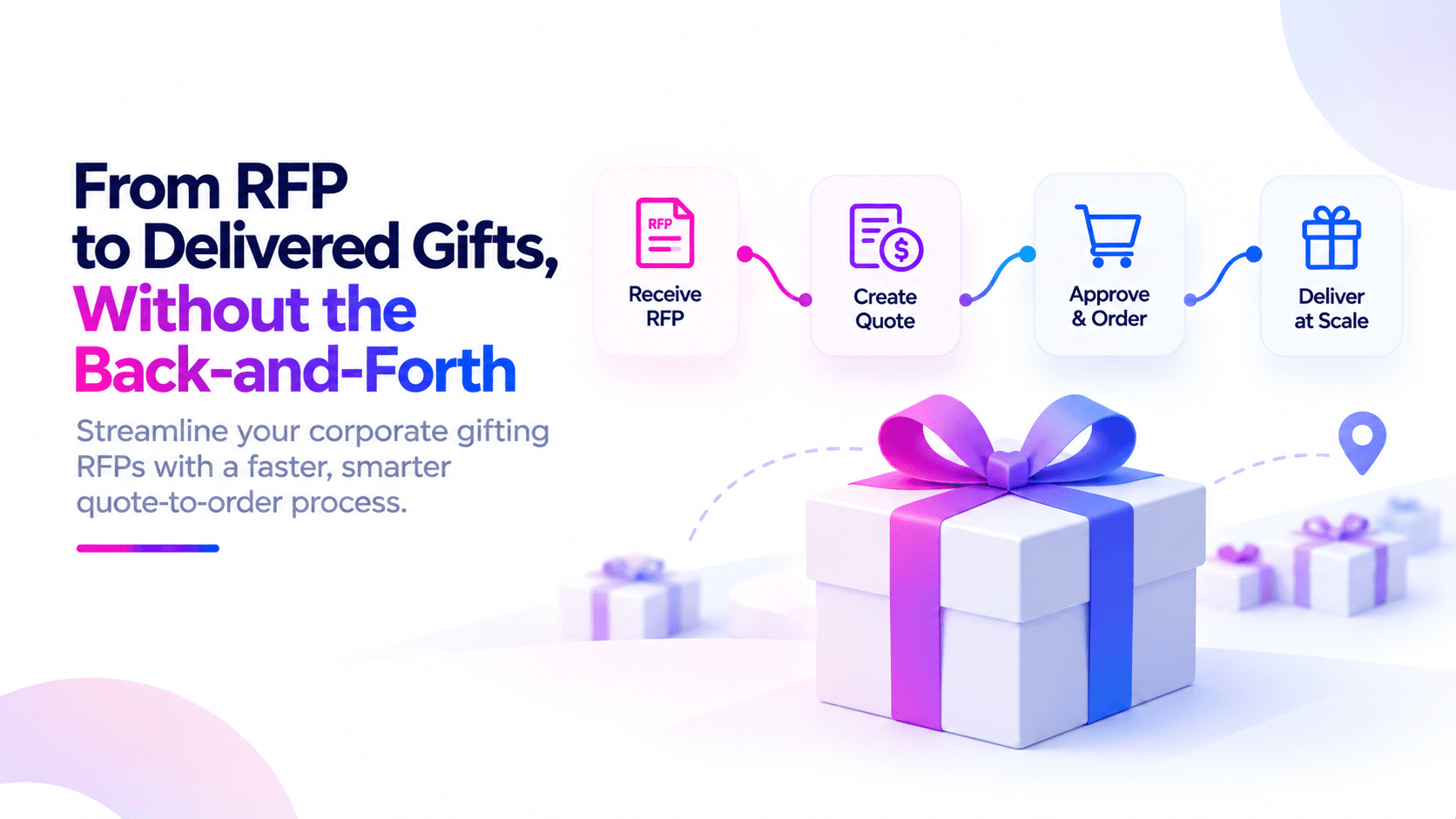
Corporate Gifting RFPs: Streamlining the Quote-to-Order Process
Corporate gifting RFPs are expensive to respond to and easy to lose for reasons unrelated to your actual capability — a missed compliance requirement, a slow response, or pricing that couldn't be revised fast enough during evaluation. The businesses that win consistently qualify hard before responding, build responses from reusable components rather than from scratch, and treat the gap between award and first order as a defined process rather than an improvisation.
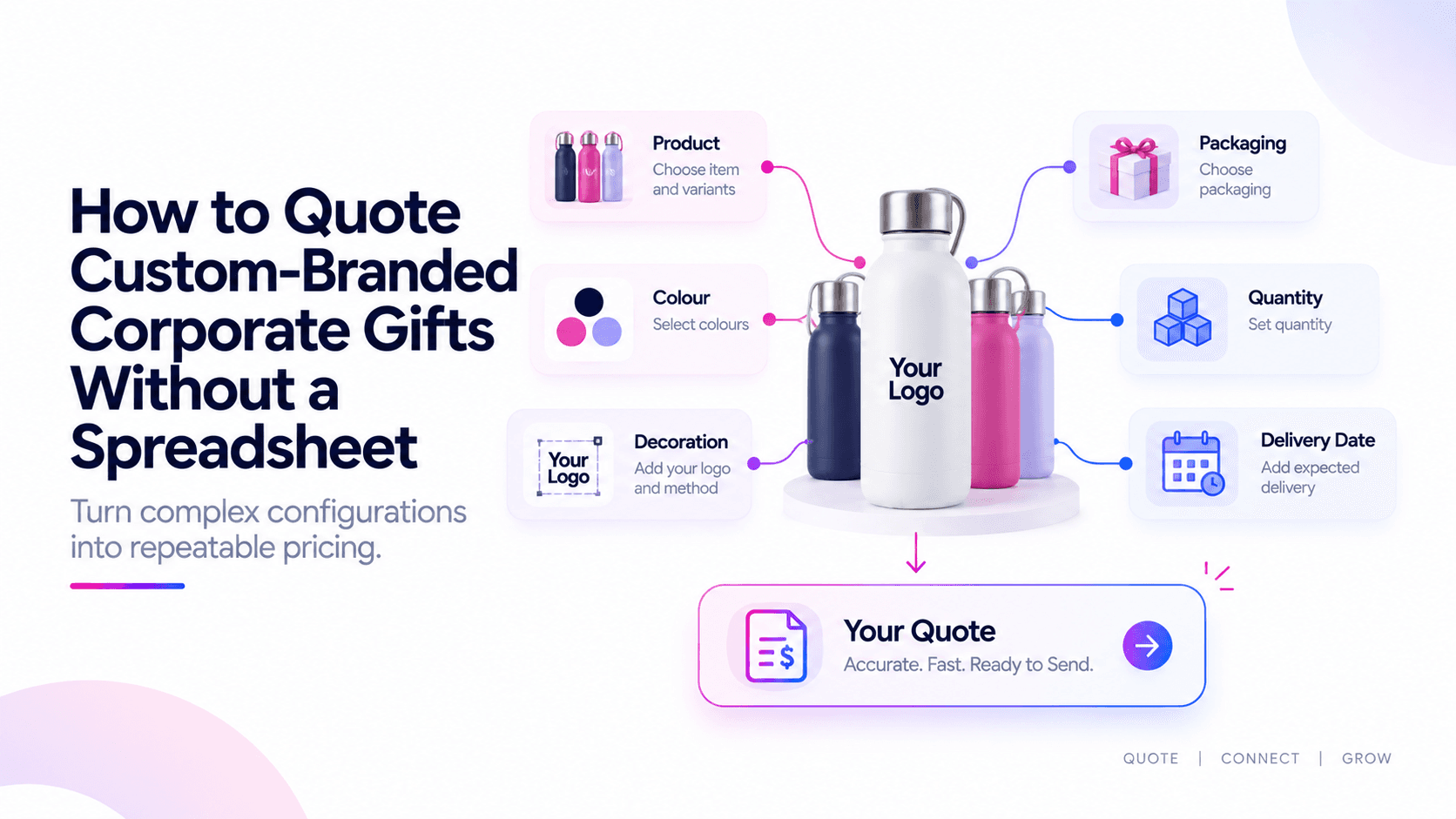
How to Quote Custom-Branded Corporate Gifts Without a Spreadsheet
Quoting a custom-branded gift order is a configuration problem, not a pricing lookup. Decoration method, setup fees, colour counts, placement counts, and variant splits all interact — and a spreadsheet forces you to rebuild that logic by hand for every quote. The fix is defining your cost components as rules once, so any combination prices itself. This guide covers how to break down a custom gift quote into its actual components and structure them so they're reusable.

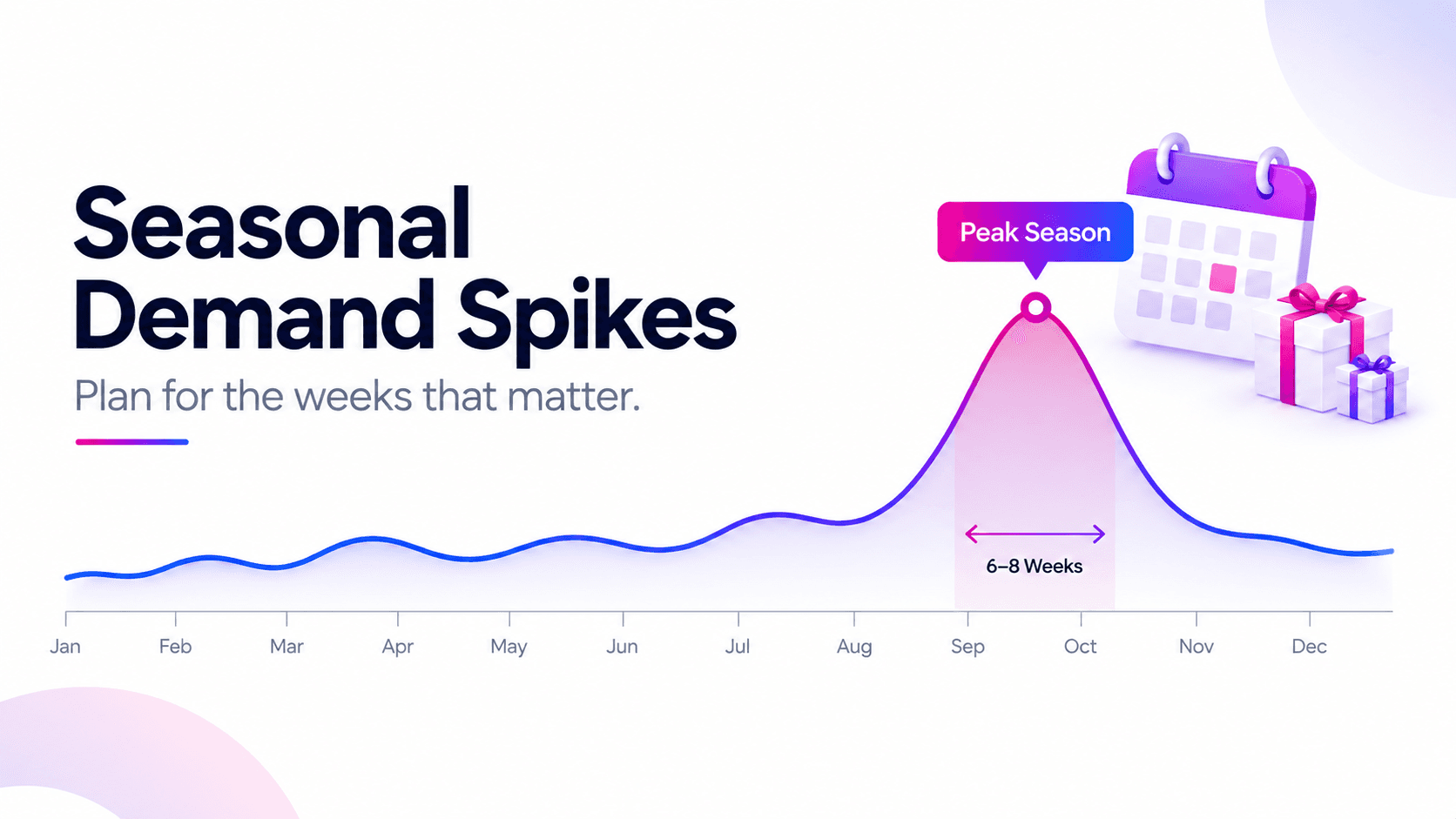
Seasonal Demand Spikes: Inventory Planning for Corporate Gifting Brands
Corporate gifting demand doesn't spread evenly across the year — it concentrates heavily into a handful of weeks, which means annual averages are close to useless for planning. Effective planning works backward from peak-week capacity rather than forward from annual volume, commits inventory early enough to clear supplier lead times, and separates what genuinely must be pre-committed from what can stay flexible. This guide covers how to build that plan.