
Net 30/60/90 Terms in Industrial Distribution: What Actually Works
Net terms are standard practice in industrial and fastener distribution, but "standard" doesn't mean "safe by default." The distributors who manage terms well tie them to a defined credit policy, apply them consistently rather than case-by-case, and track them in the same system that handles quoting and orders — not in a separate spreadsheet that goes stale. This guide covers how to set a terms policy, when to extend or restrict it, and what breaks when terms live disconnected from the rest of your sales process.

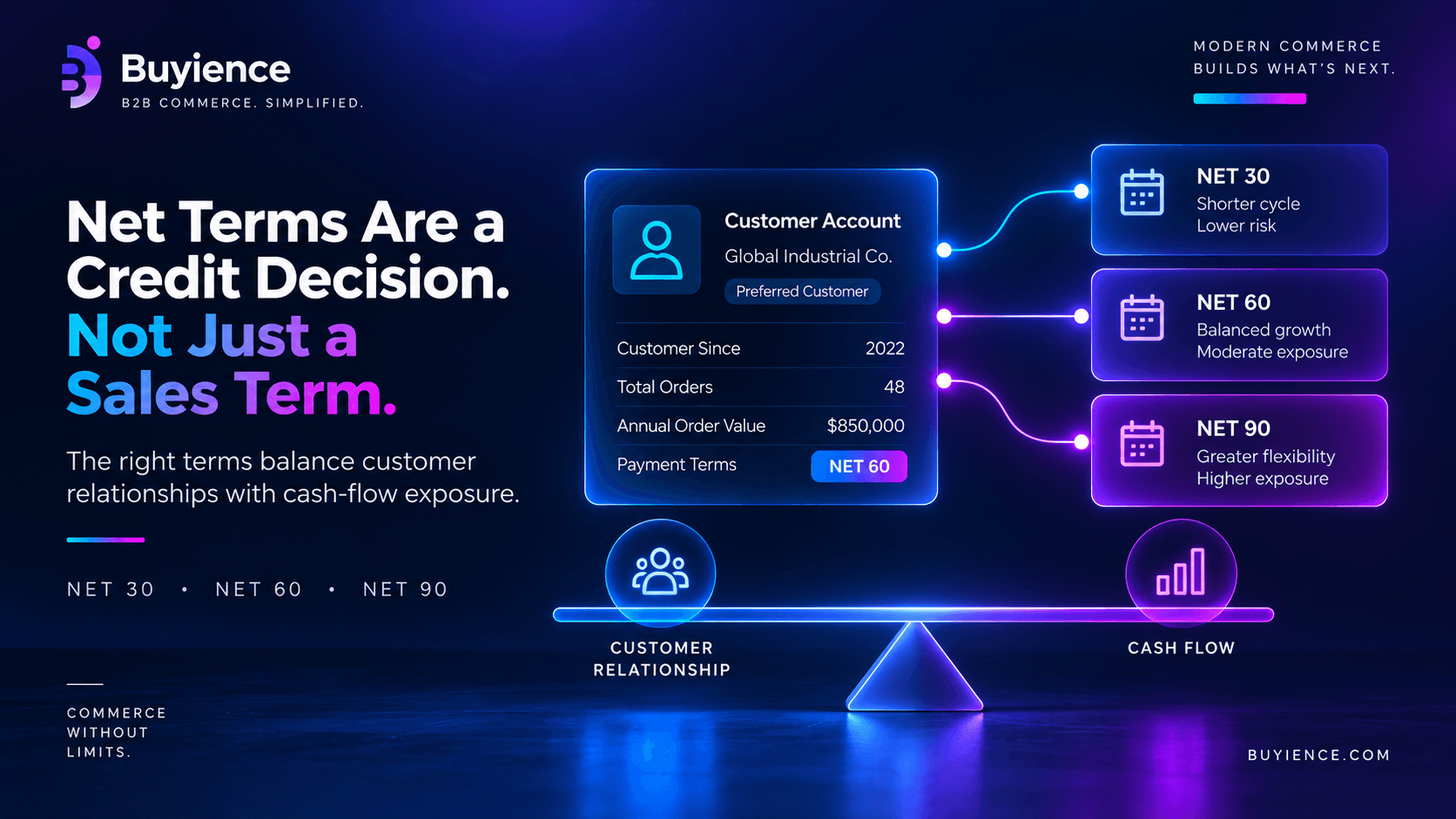
Ask any fastener or MRO distributor whether they offer Net 30 and most will say yes without hesitation. Trade credit is so embedded in industrial B2B selling that it barely feels like a decision anymore — it's just how business gets done. But "we offer Net 30" and "we manage Net 30 well" are two very different statements, and the gap between them shows up directly on your cash flow statement.
What Net 30/60/90 actually means
These terms specify how many days a customer has to pay an invoice after it's issued, not after the order is placed or shipped. Net 30 means payment is due 30 days from invoice date. Net 60 and Net 90 extend that window further, typically reserved for larger, longer-tenured, or strategically important accounts.
The appeal for the buyer is obvious — it lets them receive goods, in some cases resell or use them, and pay after the fact rather than tying up cash upfront. For the distributor, offering terms is often table stakes for competing in industrial and fastener distribution, where buyers expect it as a baseline condition of doing business, not a special favor.
The risk is equally obvious, if less discussed: every invoice on terms is, functionally, a short-term loan to your customer. Extend enough of them, and your business's cash position becomes dependent on customers paying on time — which not all of them will.
Why this matters more in fastener and MRO distribution specifically
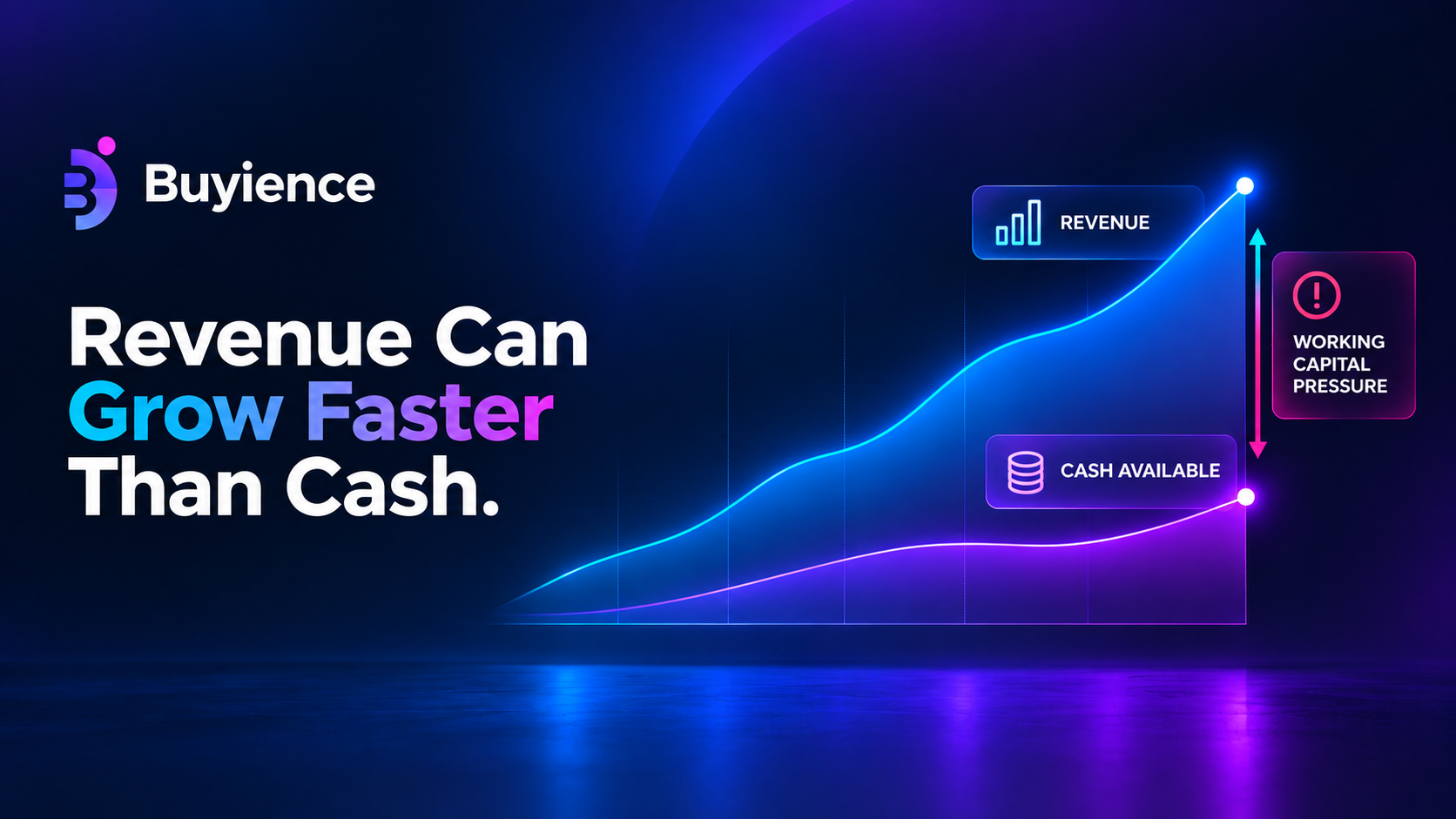
Distribution businesses tend to carry thin margins and high inventory investment relative to revenue. That combination makes cash flow timing unusually sensitive. A distributor operating on 20–25% gross margin, financing 60 days of receivables on a meaningful share of revenue, can find themselves cash-constrained even while the business is profitable on paper — because the cash to restock inventory hasn't actually arrived yet.
This is the mechanism behind a common but under-discussed failure mode: a distributor grows revenue, wins bigger accounts who expect Net 60 or Net 90 as a condition of the relationship, and finds their working capital increasingly stretched — not because the business is unhealthy, but because growth outpaced the cash conversion cycle.
Building a terms policy that actually holds
The distributors who manage this well tend to share a few practices in common.
- Tier terms to a defined credit policy, not a gut feeling. New accounts typically start on shorter terms or even prepayment until a payment history exists. Established accounts with a track record can graduate to longer terms. The key is having criteria — trailing payment history, credit check results, order volume, relationship length — rather than letting individual reps negotiate terms as part of closing a deal, which is how terms creep gets baked into your customer base without anyone deciding it on purpose.
- Separate the sales decision from the credit decision. A rep's job is to sell. Whether a customer qualifies for Net 60 versus Net 30 is a credit and cash-flow decision that shouldn't be made in the middle of a negotiation, under pressure to close. Distributors who let the two blur tend to end up with the most generous terms going to whoever negotiated hardest, not whoever actually merits the risk.
- Track terms alongside every order, not in a separate ledger. If your quote-to-order process doesn't know what terms apply to a given customer, someone has to remember or look it up manually — and that's exactly the kind of manual step where inconsistency creeps in, the same pattern that shows up in manual pricing (see our related post on margin leakage in manual quoting).
- Build in a review trigger, not just a set-and-forget assignment. A customer's payment reliability can change — a great payer for two years can start slipping. Terms should be reviewed periodically against actual payment history, with a defined threshold for tightening terms (or requiring prepayment) if reliability drops, rather than treating the original terms decision as permanent.
- Make the terms visible to the customer at every stage. Confusion about payment terms — whether it's Net 30 or Net 60, whether it applies to this order or just future ones — creates friction and late payments that have nothing to do with the customer's actual ability or willingness to pay. Terms should be stated clearly on every quote and every invoice, not assumed to be common knowledge from a conversation months earlier.
When to extend terms — and when not to
Extending longer terms can be a legitimate, strategic move — winning or retaining a large account, matching a competitor's offer, or supporting a customer through a genuinely temporary cash crunch when the relationship has earned that trust. It becomes a problem when it happens by default rather than by decision: when Net 60 quietly becomes the norm for new accounts because nobody pushed back, or when a struggling payer keeps getting the same terms because revisiting them feels awkward.
A few signals worth treating as review triggers rather than ignoring:
- Payment consistently arriving at the edge of the terms window or slightly past it
- A customer requesting extended terms shortly after a large or unusual order
- Terms granted verbally in a sales conversation without going through the credit process
- Any account where terms were set more than 12–18 months ago with no review since
None of these automatically mean terms should be pulled back — but they're worth a deliberate look rather than assuming the original decision still holds.
What breaks when terms live disconnected from your order system
A lot of distributors manage payment terms in a separate system from quoting and order management — a note in an accounting platform, a column in a spreadsheet, institutional knowledge held by whoever handles collections. This works until it doesn't:
- A rep quotes a customer without knowing their current terms status, creating confusion when the invoice doesn't match expectations
- A customer whose terms should have been tightened after late payments keeps receiving the same generous terms because the change never made it back to the sales side
- Collections has no visibility into upcoming large orders, so cash-flow forecasting is reactive rather than planned
Keeping terms as a first-class part of the same system that handles pricing, quoting, self-service ordering, and orders — rather than a side process — removes the gap where these issues live.

How Nova Core handles this
Nova Core supports Net 30/60/90 terms natively as part of the order management workflow, tied to the same customer record used for pricing and quoting — so terms are visible and consistent at every stage, not managed separately from the rest of the sales process. Combined with tiered customer pricing and real-time order tracking, it gives distributors one place to manage both what a customer pays and when.
Start your free trial → — 14 days, no card required.
Want to see how Net 30/60/90 terms tie into pricing and order management in Nova Core? Request a demo.
Questions, answered
What's the difference between Net 30, Net 60, and Net 90?
The number refers to how many days after the invoice date payment is due. Net 30 gives 30 days, Net 60 gives 60, and Net 90 gives 90 — with longer terms typically reserved for larger or longer-tenured accounts given the greater cash-flow exposure involved.
Is offering Net 30 terms standard in fastener and MRO distribution?
It's common practice and often expected by industrial buyers as a baseline condition of doing business, though "common" doesn't mean every distributor should extend it without a credit policy behind the decision.
How do I decide which customers get longer payment terms?
Base it on defined criteria — payment history, credit check results, order volume, and relationship length — rather than case-by-case negotiation during a sales conversation. Separating the credit decision from the sales decision keeps terms consistent across your customer base.
What's the biggest risk of offering generous payment terms?
Cash-flow strain. Every invoice on terms functions as a short-term loan to the customer. A distributor with thin margins and high inventory investment can become cash-constrained even while profitable, if too much revenue is tied up in receivables at any given time.
Should payment terms ever be revisited after they're set?
Yes. Payment reliability can change over time, so terms should be reviewed periodically against actual payment history rather than treated as a permanent, one-time decision.
Where should payment terms be tracked?
Alongside quoting and order data in the same system customers and reps already use — not in a separate spreadsheet or ledger disconnected from the sales process, which is where terms tend to drift out of date or get applied inconsistently.
Related articles
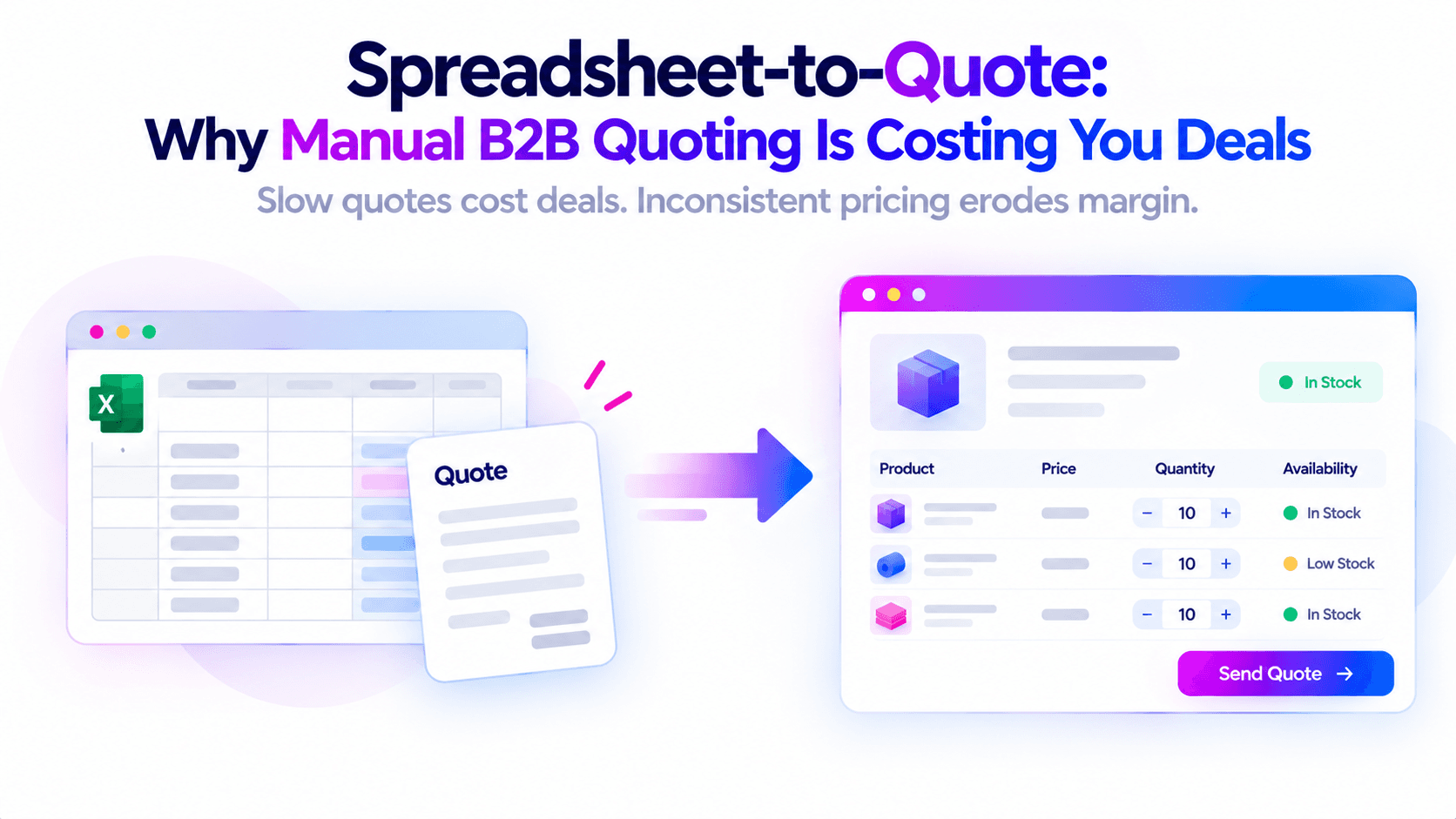
Spreadsheet-to-Quote: Why Manual B2B Quoting Is Costing You Deals
Manual quoting rarely loses a deal in a way anyone records. It loses deals through delay — the quote that arrives after the buyer decided — and it loses margin through inconsistency nobody traces back. The cost is invisible precisely because the failures look like normal business: a slow week, a competitive loss, a thin month. This post maps the five stages where a spreadsheet quote leaks, and which one to fix first.

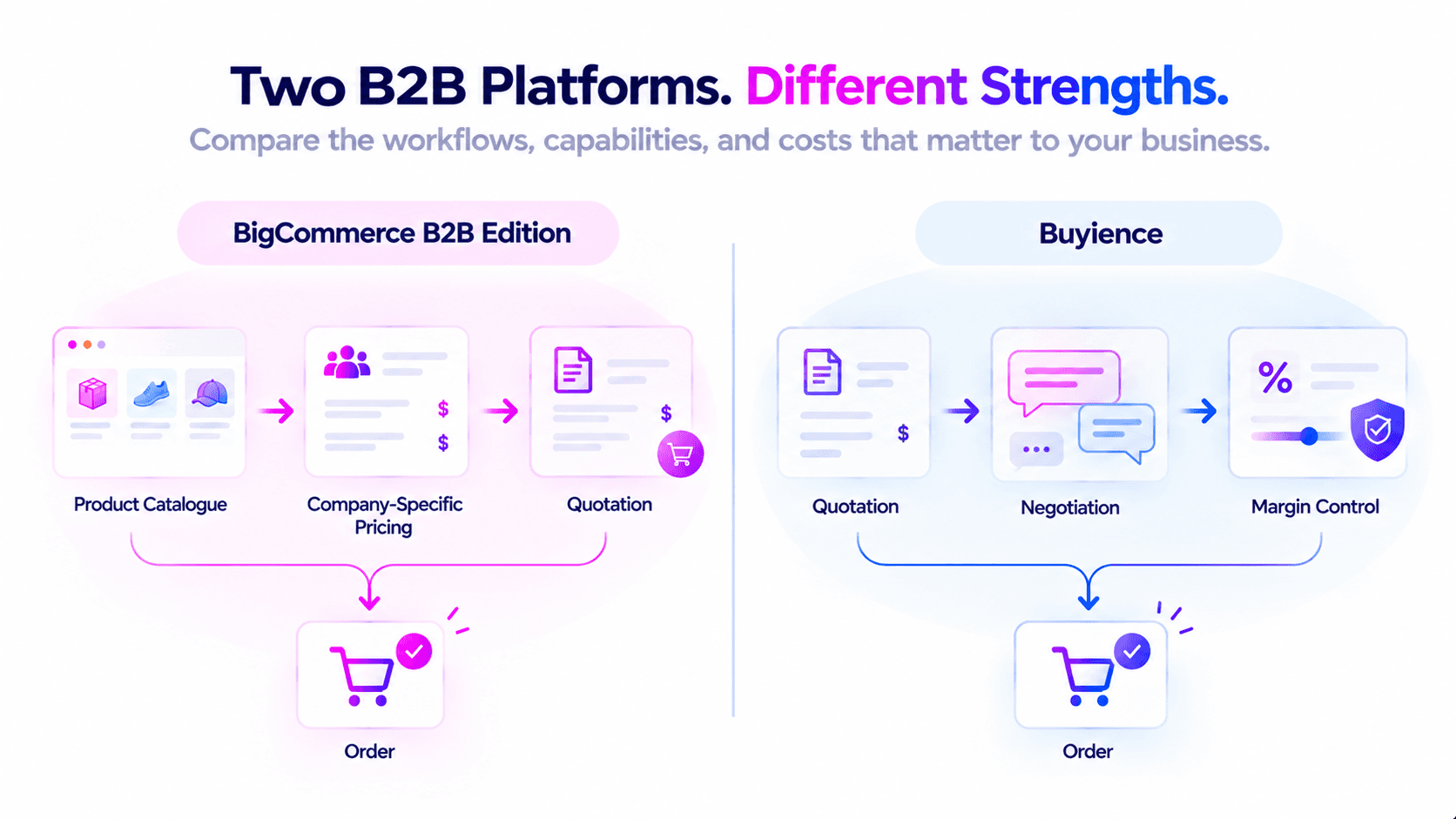
Buyience vs BigCommerce B2B Edition: A Side-by-Side Comparison
BigCommerce B2B Edition is a genuinely capable B2B platform with native quoting, company accounts, price lists and purchase order workflows — it is not a consumer cart with wholesale bolted on. The honest comparison with Buyience comes down to two things: cost tier, since B2B Edition is Enterprise-only with custom pricing, and what happens during negotiation rather than during quoting. If you have the budget and your quoting is structured rather than negotiated, B2B Edition is a strong choice.
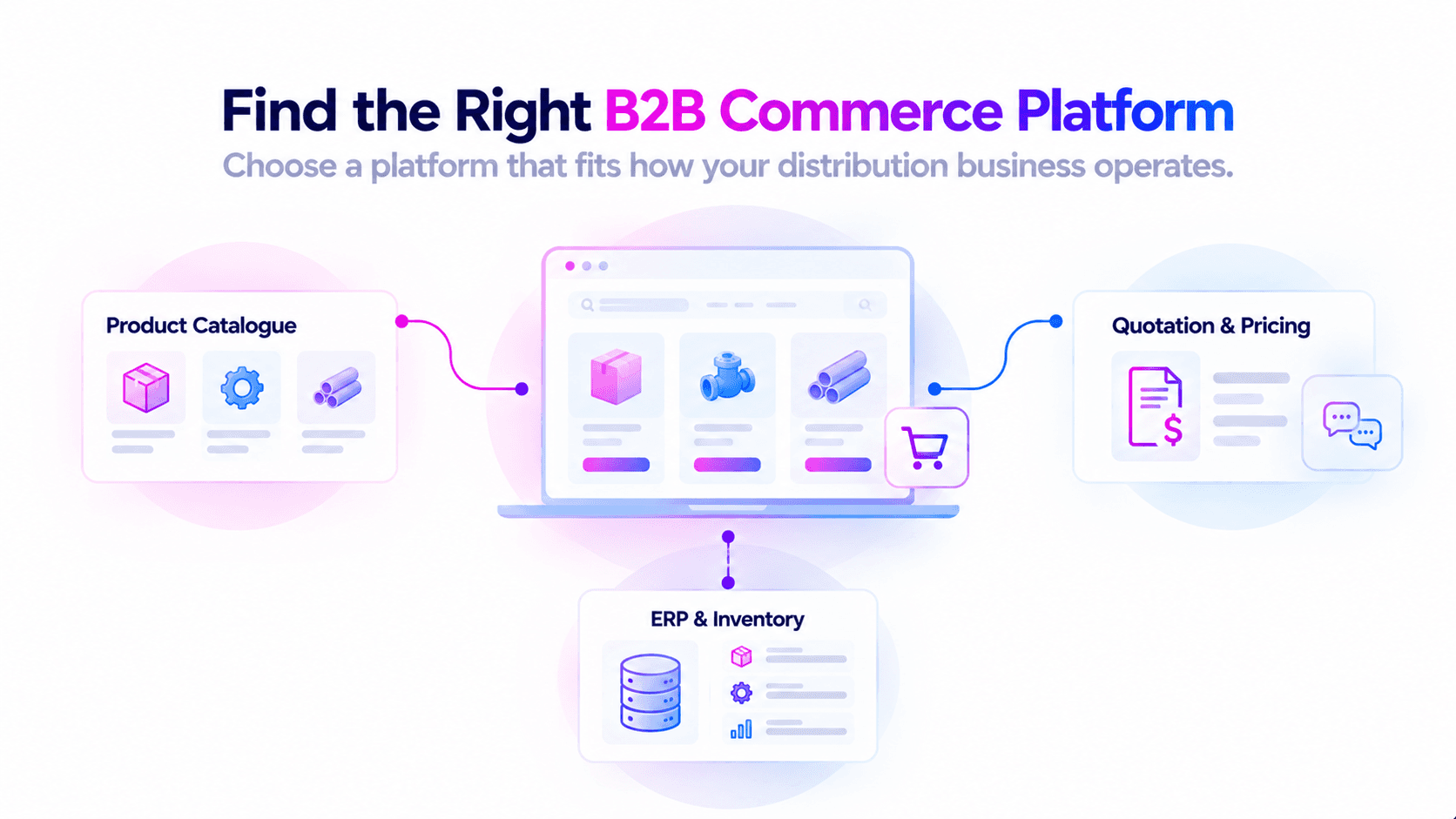
The Best B2B Commerce Platforms for SMB Distributors in 2026
Most "best B2B platform" lists are published by vendors who rank themselves first. This one is too — we build Buyience — so the useful thing we can offer is published pricing where it exists, honest placement of where each platform actually fits, and a clear statement of which distributors should rule us out. For SMB distributors the real shortlist is short: BigCommerce B2B or Shopify for catalogue-led wholesale, Sana or an ERP-led option if your ERP governs pricing, OroCommerce if you have genuine enterprise complexity and the budget, and quoting-led platforms including ours if your revenue arrives through negotiated quotes.