
The Real Cost of Headless Commerce for B2B Companies
The cost of headless commerce in B2B includes not just development and infrastructure, but also ongoing expenses from integration complexity.

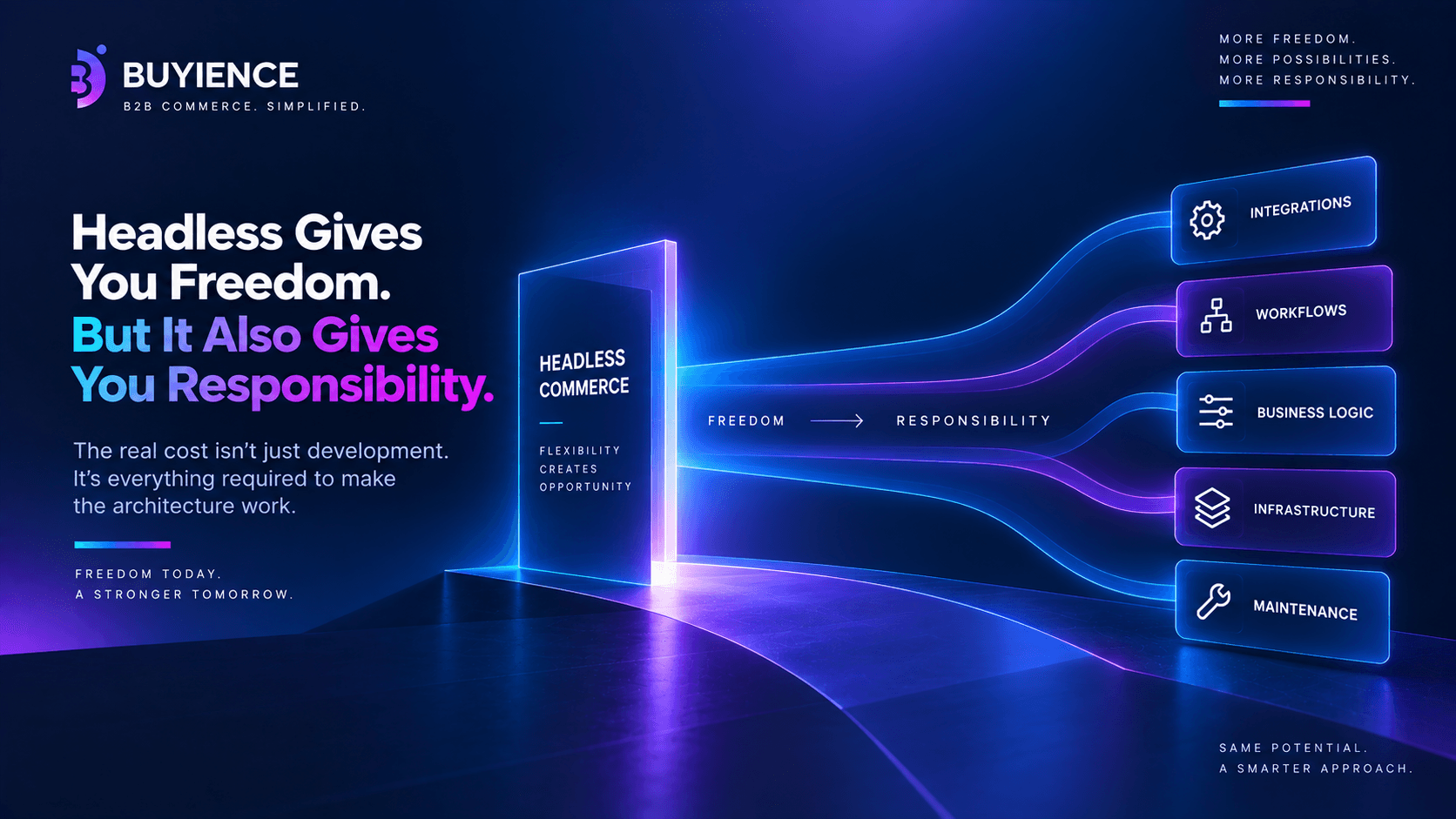
Introduction: Headless Promises Flexibility—But at What Cost?
Headless commerce is often positioned as the solution to everything:
- Flexibility
- Scalability
- Better frontend experiences
And technically, that’s true.
But for B2B companies, the real question isn’t:
“Is headless powerful?”
It’s:
“What does it actually cost to make it work?”
Because most B2B teams underestimate one thing:
Headless shifts complexity—it doesn’t remove it.
What “Headless Commerce Cost” Actually Includes
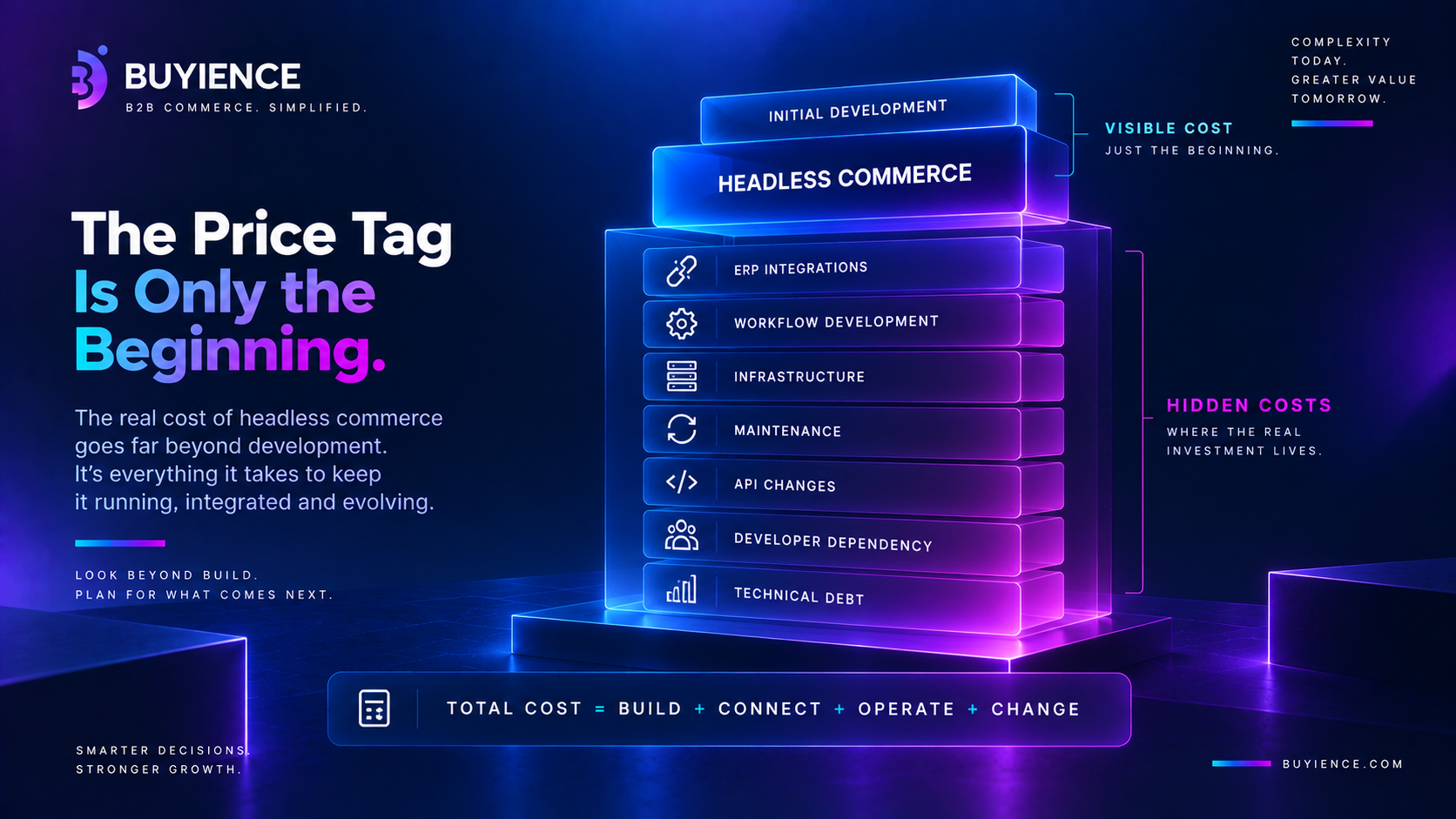
When evaluating headless commerce in B2B, costs include:
- Initial development and setup
- Integration with ERP and other systems
- Ongoing maintenance and updates
- Workflow implementation (pricing, approvals, reordering)
- Infrastructure and hosting
- Developer dependency
Most comparisons only consider #1.
That’s where mistakes start.
Why Headless Looks Cheaper Than It Really Is
The Pitch
- “Decouple frontend and backend”
- “Use best-of-breed tools”
- “Scale independently”
The Reality
Headless gives you:
- Freedom
But also:
- Responsibility
You now need to build:
- Integrations
- Business logic
- Workflow systems
From scratch—or stitch them together.
The Core Problem: Missing Workflow Layer
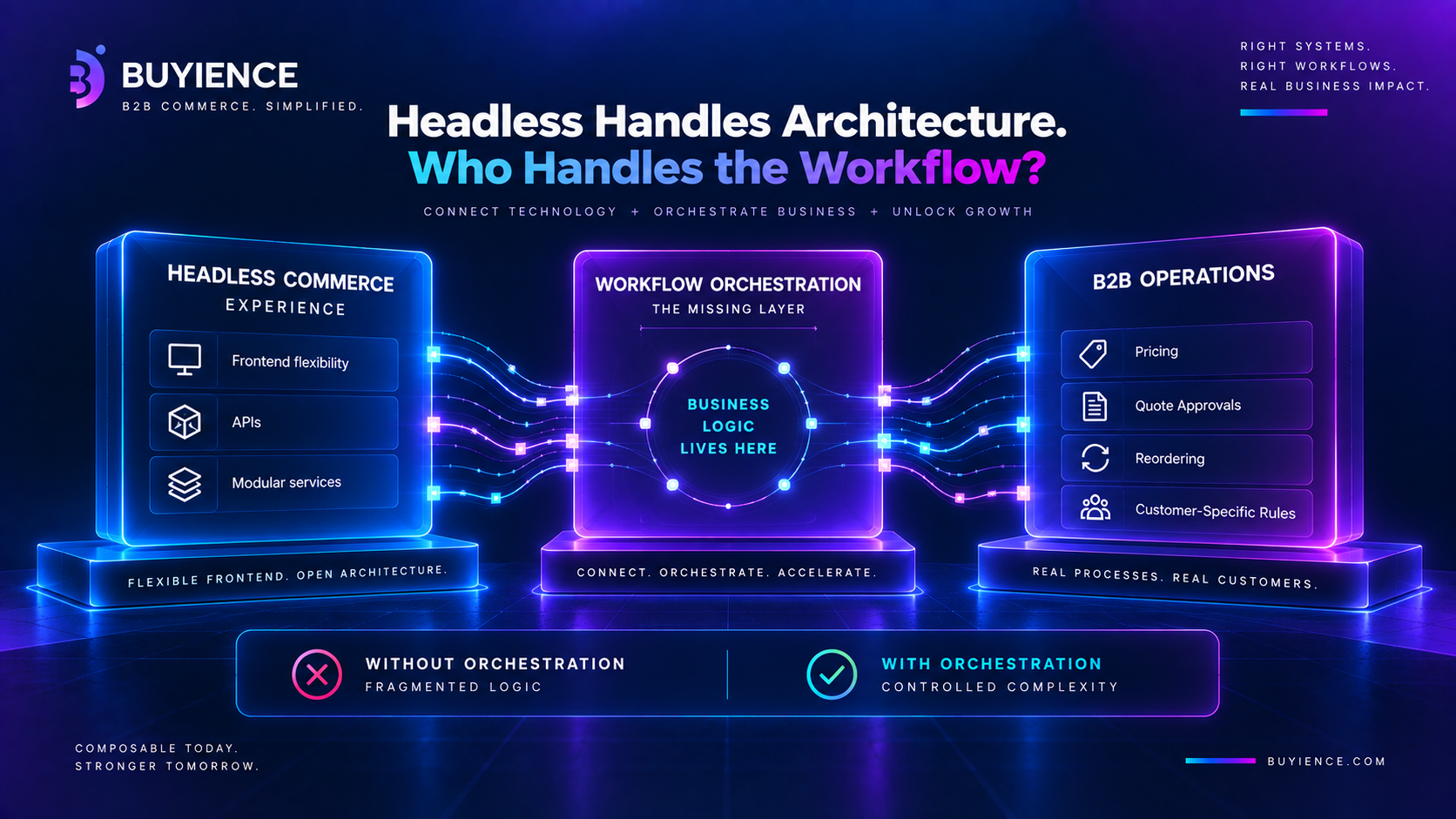
This is where most headless implementations break.
What Headless Handles Well
- Frontend flexibility
- API-based architecture
- Modular systems
What It Does NOT Handle
- Pricing logic
- Quote approvals
- Reordering workflows
- Customer-specific rules
So what happens?
Teams push these into:
- Custom code
- ERP
- Multiple services
Result:
Fragmented logic and growing technical debt
Hidden Costs of Headless Commerce in B2B
1. Integration Complexity
Headless requires connecting:
- ERP
- Pricing systems
- Inventory
- CRM
- Middleware
Each integration:
- Costs time
- Adds failure points
- Requires maintenance
2. Workflow Implementation Cost
B2B is not just “add to cart.”
You need:
- Pricing rules
- Approval flows
- Reordering systems
Without a workflow layer:
- Everything becomes custom development
3. Developer Dependency
Every change requires:
- Developers
- Testing
- Deployment
Even simple updates like:
- Pricing rules
- Customer logic
4. Long-Term Maintenance
Headless systems don’t “finish.”
They evolve.
Which means:
- Continuous updates
- API changes
- Integration fixes
5. Performance Tradeoffs
More services = more latency.
Without proper orchestration:
- Slower response times
- Inconsistent user experience
Headless vs Traditional Commerce: Cost Comparison (Simplified)
Traditional Platform
- Lower upfront cost
- Limited flexibility
- Faster to launch
Headless Commerce
- Higher initial cost
- Higher ongoing cost
- More flexibility
Key Insight
Headless commerce is not cheaper—it’s more flexible, but only if you can manage the complexity.
When Headless Actually Makes Sense for B2B
Headless is the right choice if:
- You need custom frontend experiences
- You have strong development resources
- You require multi-channel flexibility
- Your workflows are already well-defined
When Headless Becomes a Problem
Headless creates issues if:
- Workflows are unclear
- Pricing logic is fragmented
- ERP is overloaded
- You rely heavily on manual processes
Real Scenario: Headless Without Workflow Layer
What Happens
- Pricing handled in ERP
- Approvals handled manually
- Reordering handled in frontend
- Logic spread across systems
Result
- High development cost
- Slow iteration
- Inconsistent behavior
The Right Approach: Headless + Workflow Orchestration
Headless works when combined with:
Dedicated Workflow Layer
Handles:
- Pricing
- Approvals
- Reordering
- Business logic
Clear System Roles
- ERP → Data
- Commerce → Experience
- Workflow → Logic
How to Evaluate the True Cost of Headless
Before choosing headless, ask:
- Where will pricing logic live?
- How will workflows be handled?
- How many integrations are required?
- What depends on developers?
- What happens when requirements change?
If these answers aren’t clear:
Your cost will increase over time.
The Bigger Shift: From Composable to Orchestrated Systems
- Most teams focus on: Composable architecture and best-of-breed tools
- But miss: Workflow orchestration
Composable without orchestration = complexity without control
Conclusion: Headless Is Not the Problem—Architecture Is
Headless commerce can be powerful.
But without proper structure, it leads to:
- Higher costs
- More complexity
- Slower operations
The real takeaway:
Headless without workflow orchestration creates technical debt.
Evaluate Your Headless Architecture
If you’re considering—or already using—headless:
Don’t just ask:
“Is our frontend flexible?”
Ask:
- Where does business logic live?
- How are workflows managed?
- How many systems are involved?
- How hard is it to make changes?
If the answers are unclear, your system is already accumulating hidden costs.
We help B2B teams evaluate their headless architecture, identify workflow gaps, and design systems that scale without unnecessary complexity.
Questions, answered
What is the real cost of headless commerce in B2B?
The real cost of headless commerce in B2B includes:
- Initial development and setup
- Integration with ERP and other systems
- Workflow implementation (pricing, approvals, reordering)
- Ongoing maintenance and updates
- Infrastructure and hosting
- Developer dependency
Most businesses underestimate long-term maintenance and workflow complexity costs.
Is headless commerce more expensive than traditional platforms?
Yes, in most cases headless commerce is more expensive than traditional platforms.
While upfront costs may seem manageable, long-term costs increase due to:
- Continuous development needs
- Integration complexity
- Ongoing system maintenance
Headless trades lower rigidity for higher operational cost.
Why does headless commerce become expensive over time?
Headless becomes expensive because:
- Business logic is often custom-built
- Multiple systems need constant integration
- Every change requires development effort
- Workflow gaps lead to additional tools or fixes
The cost grows as complexity increases.
What are the hidden costs of headless commerce in B2B?
Hidden costs include:
- Integration failures and rework
- Performance issues from multiple services
- Manual workflow handling
- Technical debt from custom logic
- Increased dependency on developers
These costs are often not considered during initial planning.
Does headless commerce include pricing and workflow management?
No, headless commerce does not natively handle:
- Pricing logic
- Quote approvals
- Reordering workflows
These must be built separately or managed through additional systems.
When does headless commerce make sense for B2B companies?
Headless is a good fit when:
- You need custom frontend experiences
- You have strong technical resources
- Your workflows are already well-defined
- You require multi-channel flexibility
Without these, headless can create more problems than it solves.
What is the biggest mistake companies make with headless commerce?
The biggest mistake is:
Assuming headless solves workflows.
In reality, headless only handles architecture and frontend flexibility—not business logic.
This leads to:
- Fragmented systems
- Custom development overload
- Increased costs
How can you reduce the cost of headless commerce?
To control costs:
- Define workflows before implementation
- Introduce a workflow orchestration layer
- Avoid pushing logic into ERP or frontend
- Limit unnecessary integrations
- Plan architecture before choosing tools
What is the best architecture for headless commerce in B2B?
The most effective setup includes:
- ERP → Data management
- Commerce → Customer experience
- Workflow layer → Business logic
Is headless commerce worth it for mid-market B2B companies?
It depends.
For mid-market B2B:
- Headless can be overkill without proper structure
- Costs can outweigh benefits if workflows are not defined
Headless works best when paired with clear architecture and workflow orchestration.
Related articles
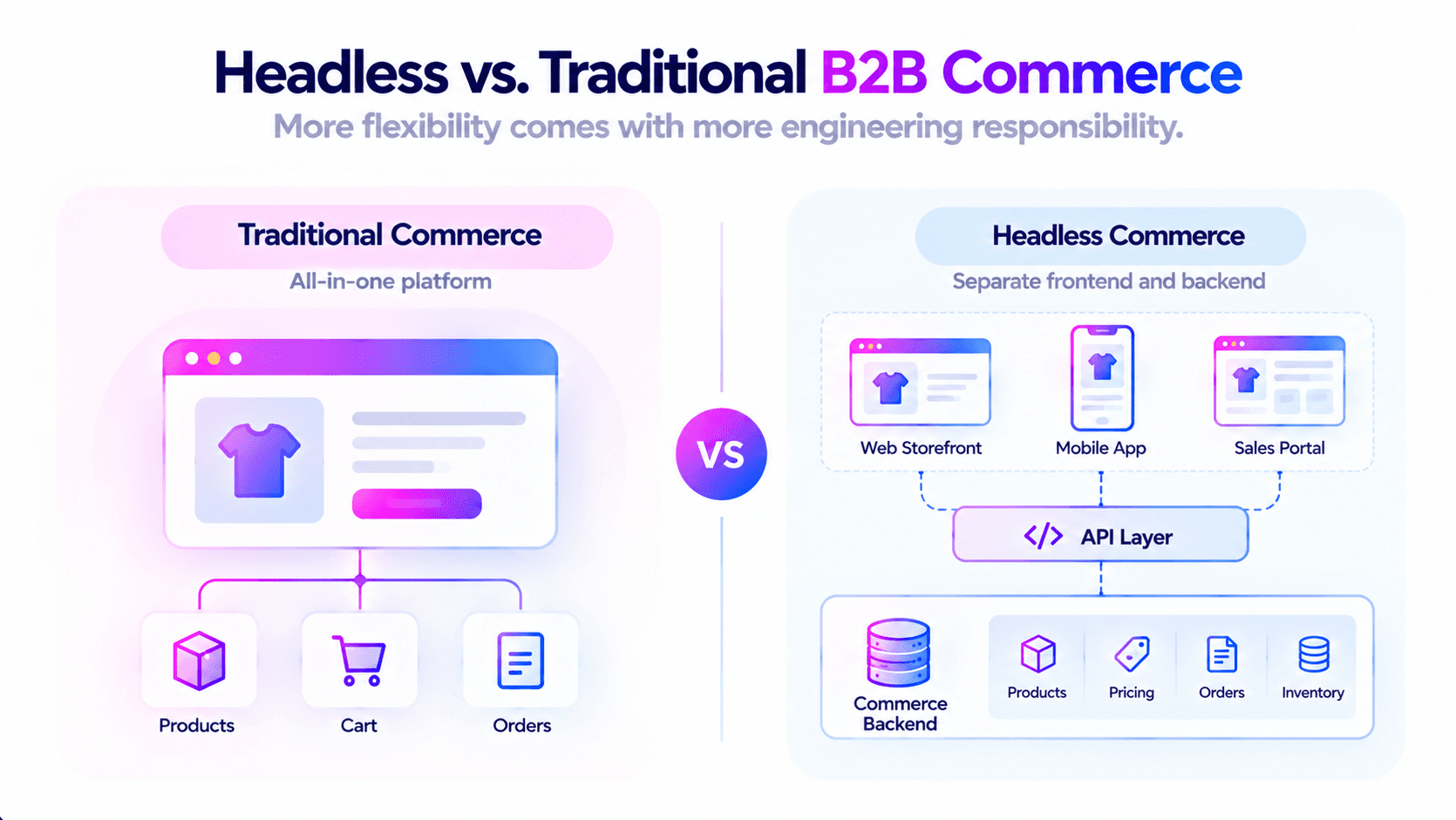
Headless B2B Commerce vs Traditional Platforms: What's the Real Difference
Headless decouples the storefront from the commerce backend, connecting them through APIs. Traditional platforms ship both together. Neither is better in the abstract — headless buys flexibility and pays for it in engineering capacity, and traditional buys speed and pays for it in constraint. For most SMB distributors without a front-end development team, traditional or lightly decoupled is the correct answer, and the honest version of this comparison says so.
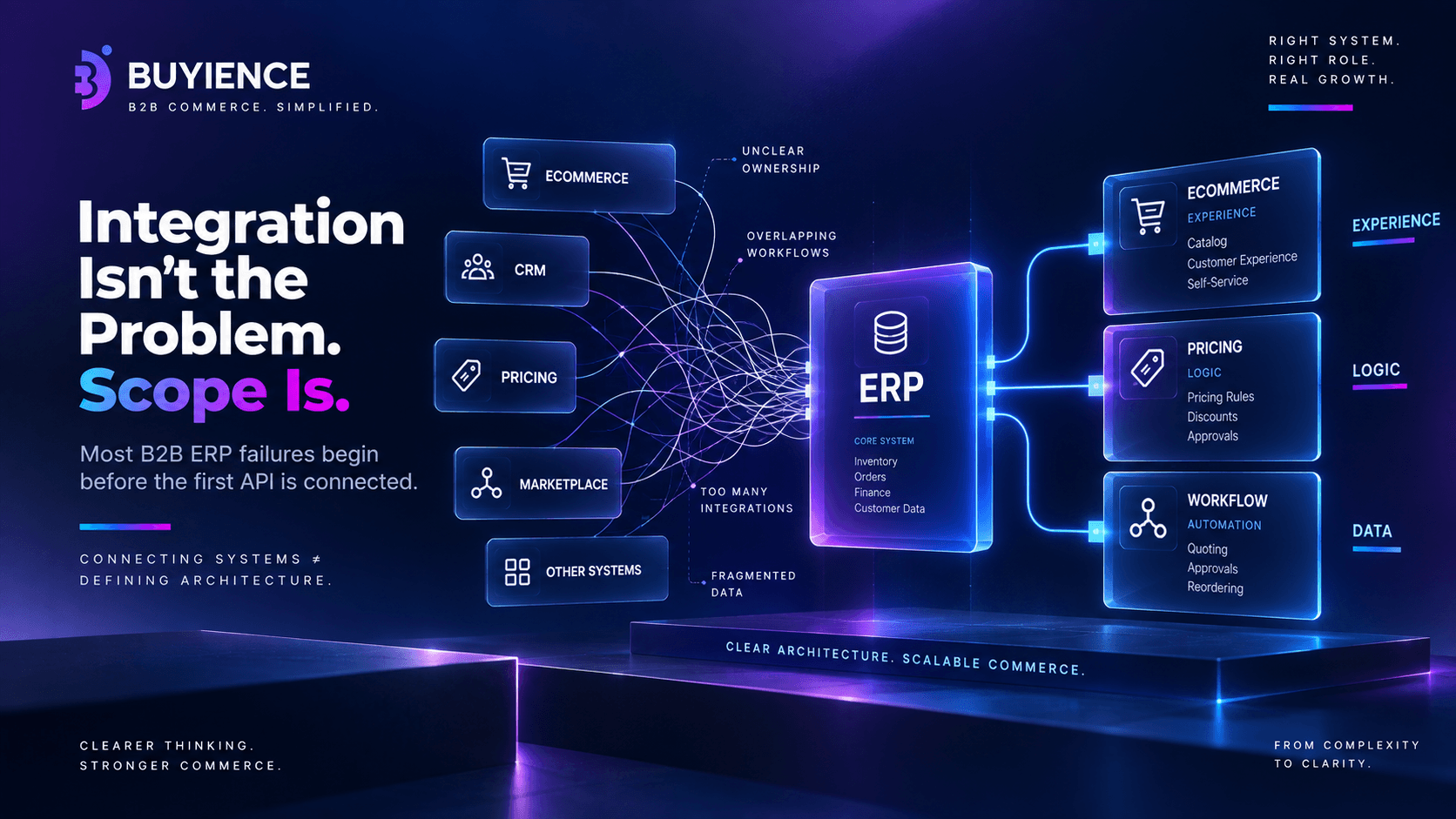
Why Most B2B ERP Integrations Fail
B2B ERP integration challenges refer to the difficulties of connecting ERP systems with ecommerce, pricing, and workflow tools—often resulting in slow performance, inconsistent data, and failed implementations due to poor planning and unclear system responsibilities.
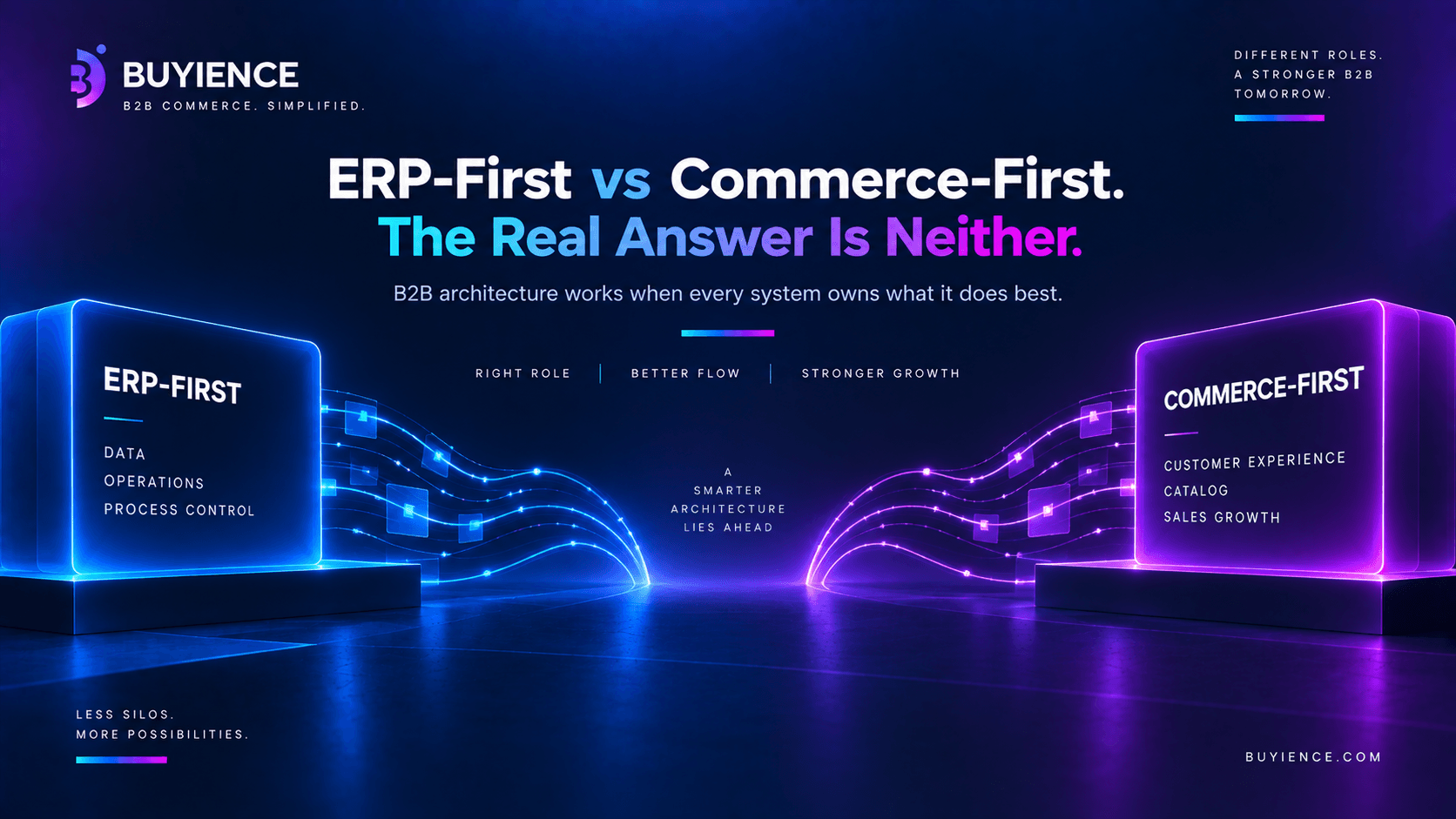
ERP-First vs Commerce-First Architecture in B2B — What Actually Works
ERP ecommerce integration in B2B is the process of connecting your ERP system with your ecommerce platform to sync data like pricing, inventory, orders, and customers—while enabling real-time workflows across systems.