
ERP-First vs Commerce-First Architecture in B2B — What Actually Works
ERP ecommerce integration in B2B is the process of connecting your ERP system with your ecommerce platform to sync data like pricing, inventory, orders, and customers—while enabling real-time workflows across systems.

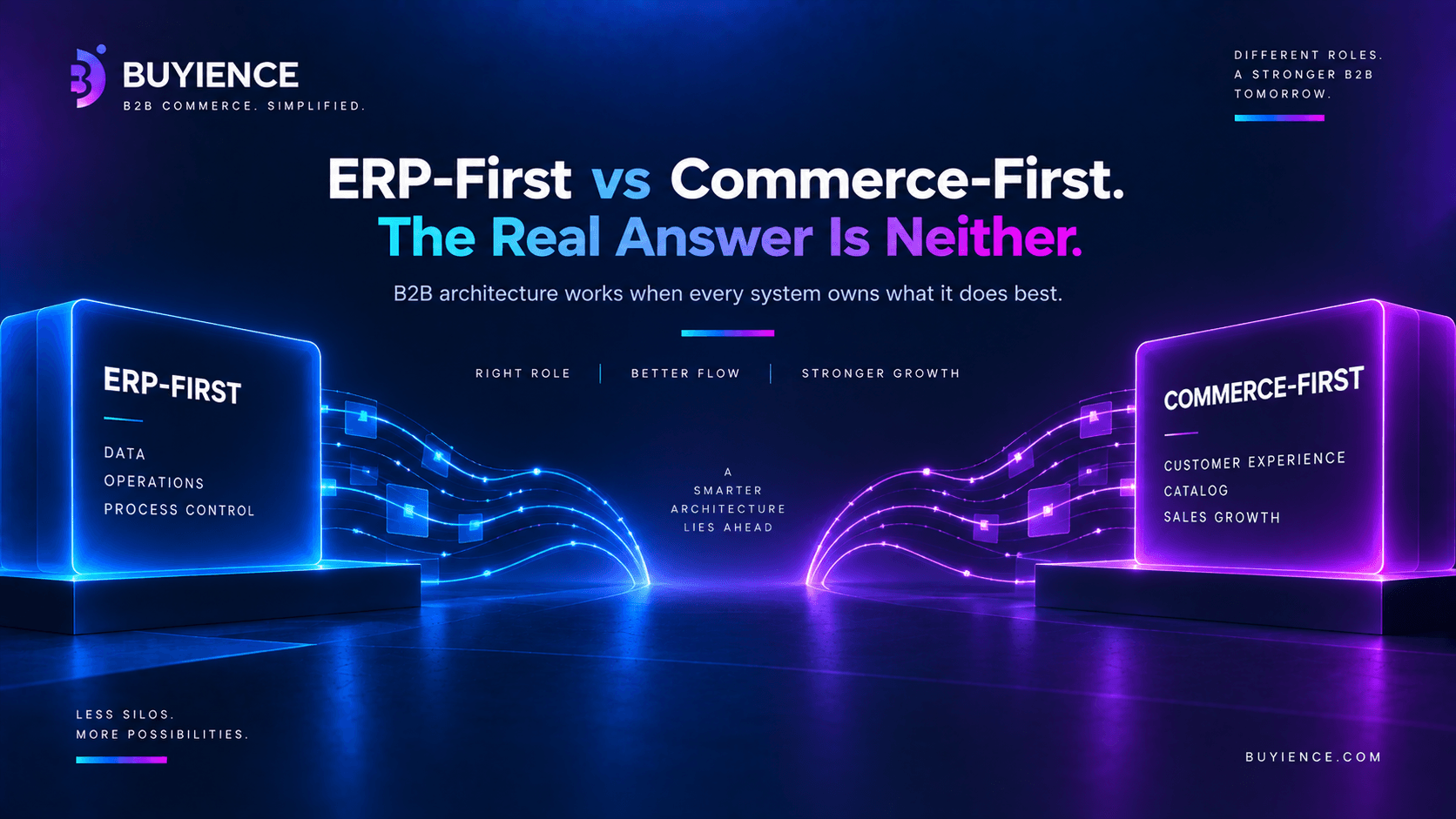
Introduction: The Wrong Debate B2B Teams Keep Having
Most B2B companies frame architecture decisions like this:
- Should ERP control everything?
- Or should ecommerce lead the experience?
This is the wrong question.
Because both approaches fail—just in different ways.
The real issue is trying to make one system do everything.
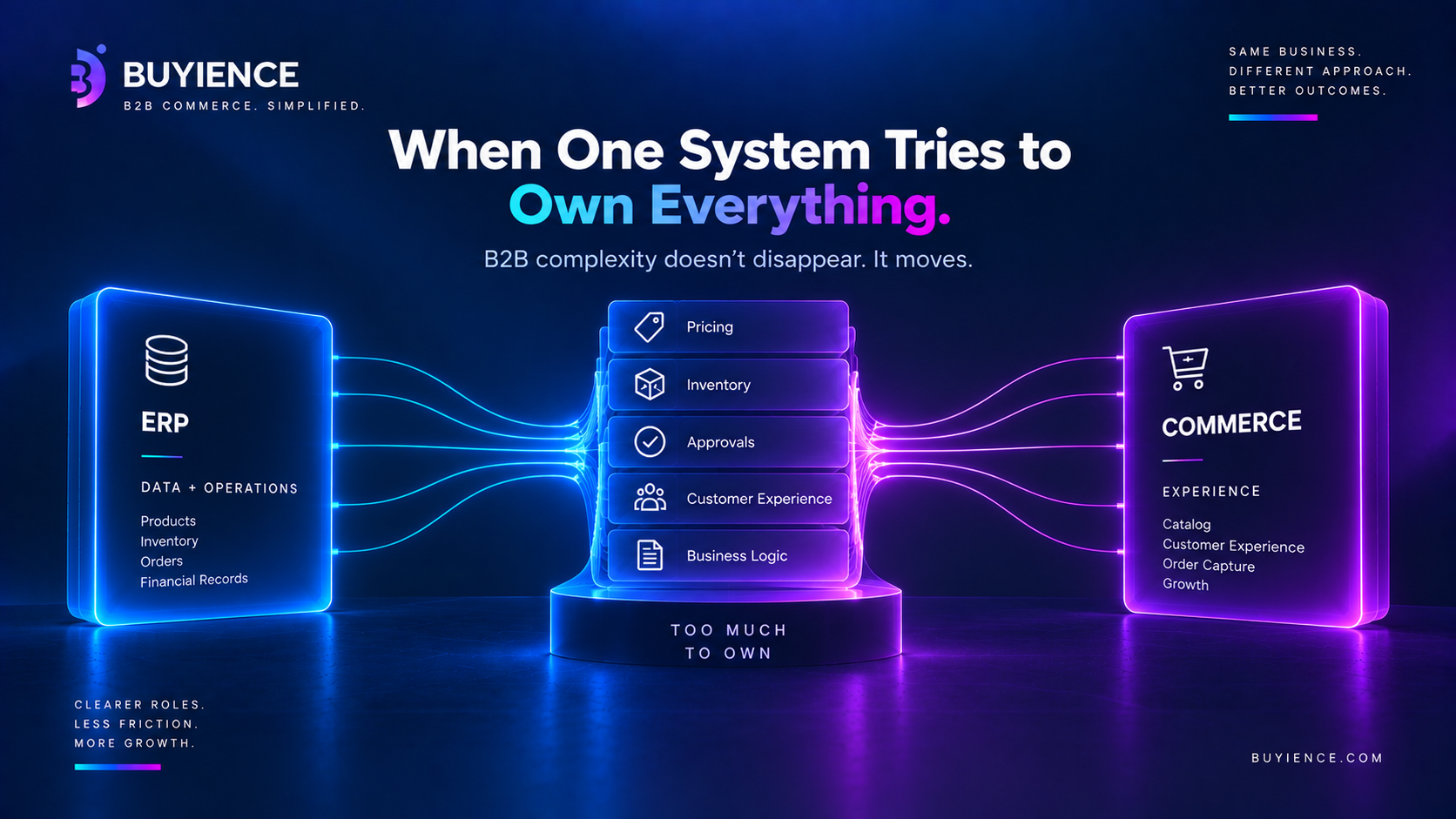
ERP systems weren’t built for customer-facing workflows.
Ecommerce platforms weren’t built for operational complexity.
Yet most architectures force one of them to take over.
ERP-First vs Commerce-First (Quick Comparison)
ERP-First Architecture
- ERP is the source of truth
- Ecommerce acts as a thin frontend
- Pricing, inventory, and logic live in ERP
Commerce-First Architecture
- Ecommerce platform drives experience
- ERP acts as backend support
- Business logic moves into commerce layer
The Reality
Both ERP-first and commerce-first architectures fail when they try to own workflows outside their core purpose.
Why ERP-First Architecture Breaks at Scale
Why companies choose it:
- ERP already manages pricing, inventory, orders
- Centralized control feels safer
Where it fails:
1. Slow Customer Experience
Every action depends on ERP response time.
Result:
- Slow page loads
- Delayed pricing
- Poor UX
2. Limited Flexibility
ERP systems are not designed for:
- Complex pricing rules
- Customer-specific experiences
- Fast UI iterations
3. Integration Overload
Everything connects to ERP:
- Ecommerce
- CRM
- Mobile apps
Result:
- Fragile system
- High maintenance
Why Commerce-First Architecture Also Fails
Why companies choose it:
- Better frontend control
- Faster UX improvements
Where it fails:
1. Business Logic Gets Hardcoded
Pricing, approvals, workflows move into ecommerce.
Result:
- Custom code everywhere
- Difficult to maintain
2. Data Duplication
Commerce starts storing:
- Pricing
- Customer rules
- Product logic
Now ERP and commerce disagree.
3. Scaling Becomes Expensive
Every change requires:
- Developers
- Testing
- Deployment
The Core Problem: Misplaced Ownership of Workflows
This is where most architectures break.
Workflows Include:
- Pricing logic
- Quote approvals
- Reordering
- Customer-specific rules
And here’s the issue:
- ERP can’t handle dynamic workflows
- Ecommerce shouldn’t own operational logic
So where do these workflows go?
What Actually Works: Distributed Architecture
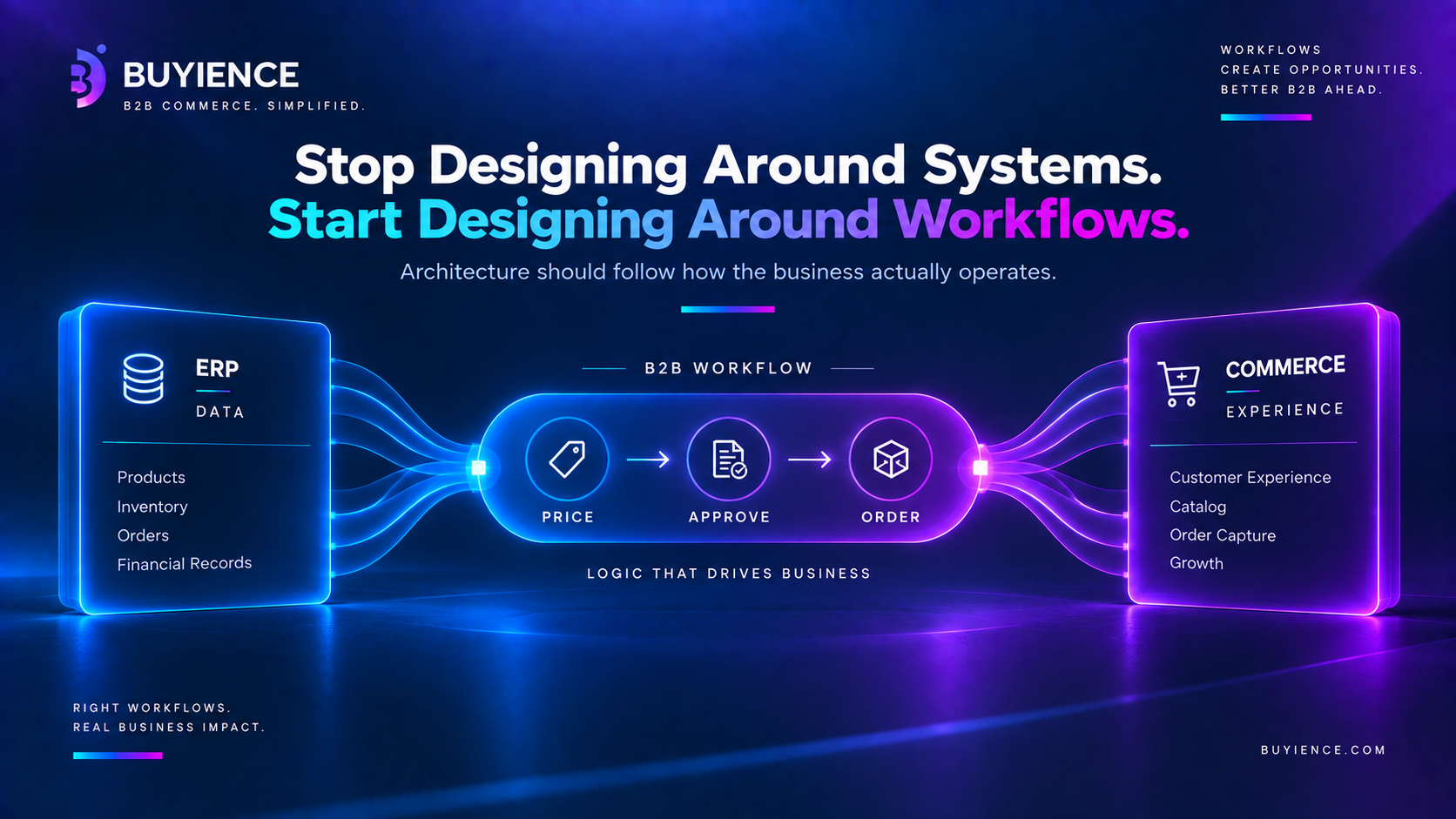
A scalable B2B architecture distributes responsibilities across systems instead of centralizing them in one platform.
Correct Role of Each System
ERP
- Master data (products, inventory, orders)
- Financial records
Ecommerce Platform
- Customer experience
- Order capture
Workflow / Logic Layer
- Pricing rules
- Approval flows
- Reordering logic
- Business processes
Why This Model Works
1. Each System Does What It’s Good At
- ERP handles data integrity
- Ecommerce handles UX
- Workflow layer handles logic
2. Reduced System Dependency
No single system becomes a bottleneck.
3. Faster Iteration
You can:
- Update pricing logic
- Change workflows
- Improve processes
Without touching core systems.
Real Example: ERP-First vs Distributed Approach
ERP-First Setup
- Pricing calculated in ERP
- Ecommerce requests pricing in real-time
- Slow performance
- Limited flexibility
Distributed Setup
- Pricing handled by dedicated logic layer
- ERP provides base data
- Ecommerce displays results
Result:
- Faster experience
- More flexibility
- Better scalability
Where Most Integration Projects Go Wrong
Common Mistakes
- Treating ERP as the central brain
- Overloading ecommerce with business logic
- Ignoring workflow orchestration
- Building point-to-point integrations
- Not planning for scale
The Hidden Cost of Choosing the Wrong Architecture
1. Slower Sales Cycles
- Delayed pricing
- Manual approvals
2. Higher Operational Costs
- More manual work
- More support tickets
3. Technical Debt
- Hardcoded logic
- Fragile integrations
- Expensive changes
How Reordering and Quoting Fit Into This
Architecture directly impacts:
- Reordering speed
- Pricing consistency
- Quote generation
If workflows are broken:
- Reordering becomes manual
- Pricing becomes inconsistent
- Quotes slow down
When Do You Need to Rethink Your Architecture?
You likely have a problem if:
- ERP is slowing down frontend performance
- Ecommerce contains business logic
- Pricing is inconsistent across systems
- Integration projects keep failing
- Scaling requires more developers
The Bigger Shift: From System-Centric to Workflow-Centric
- Old model: ERP-centric or commerce-centric
- New model: Workflow-centric
Workflows should drive architecture—not systems.
Conclusion: No Single System Should Own Everything
Trying to make ERP or ecommerce do everything leads to:
- Bottlenecks
- Complexity
- Technical debt
The better approach is simple:
Distribute responsibilities and introduce a dedicated workflow layer.
That’s how modern B2B systems scale.
Questions, answered
What is ERP ecommerce integration in B2B?
ERP ecommerce integration in B2B is the process of connecting your ERP system with your ecommerce platform to synchronize:
- Pricing
- Inventory
- Orders
- Customer data
This enables consistent data flow across systems while supporting business operations and customer experience.
What is ERP-first architecture in B2B?
ERP-first architecture means:
- ERP controls most business logic
- Ecommerce acts as a frontend layer
- Pricing, inventory, and workflows are managed inside ERP
This approach prioritizes centralized control but often limits flexibility and performance.
What is commerce-first architecture in B2B?
Commerce-first architecture means:
- Ecommerce platform drives the customer experience
- Business logic is handled within the commerce layer
- ERP supports backend operations
This approach improves flexibility but can lead to data duplication and maintenance complexity.
Which is better: ERP-first or commerce-first architecture?
Neither approach is ideal on its own.
- ERP-first creates bottlenecks and slow performance
- Commerce-first leads to fragmented logic and technical debt
The best approach is a distributed architecture, where each system handles its core responsibility.
What is the biggest problem with ERP-first architecture?
The biggest issue is:
ERP is forced to handle real-time workflows it wasn’t designed for.
This results in:
- Slow system performance
- Limited flexibility
- Difficult updates
What is the biggest problem with commerce-first architecture?
The main problem is:
Business logic gets hardcoded into the ecommerce platform.
This leads to:
- Increased development effort
- Data inconsistencies
- Scaling challenges
What is the best architecture for B2B ecommerce?
The most effective architecture is a distributed model, where:
- ERP → manages data and transactions
- Ecommerce → handles customer experience
- Workflow layer → manages pricing, approvals, and logic
Why should no single system own everything in B2B?
Because no system is designed to handle all responsibilities.
- ERP is not built for customer-facing workflows
- Ecommerce is not built for operational complexity
Trying to centralize everything leads to:
- Bottlenecks
- Technical debt
- Poor scalability
How does architecture impact pricing and reordering?
Architecture directly affects:
- Pricing consistency
- Quote generation speed
- Reordering efficiency
Poor architecture results in:
- Inconsistent pricing
- Slow workflows
- Manual processes
When should a B2B company rethink its architecture?
You should reconsider your architecture if:
- ERP is slowing down your ecommerce experience
- Business logic exists in multiple systems
- Integration projects keep failing
- Scaling requires constant development effort
What role does a workflow layer play in B2B architecture?
A workflow layer handles:
- Pricing logic
- Approval processes
- Reordering systems
- Business rules
It acts as the bridge between ERP and ecommerce, ensuring scalability and flexibility.
Related articles
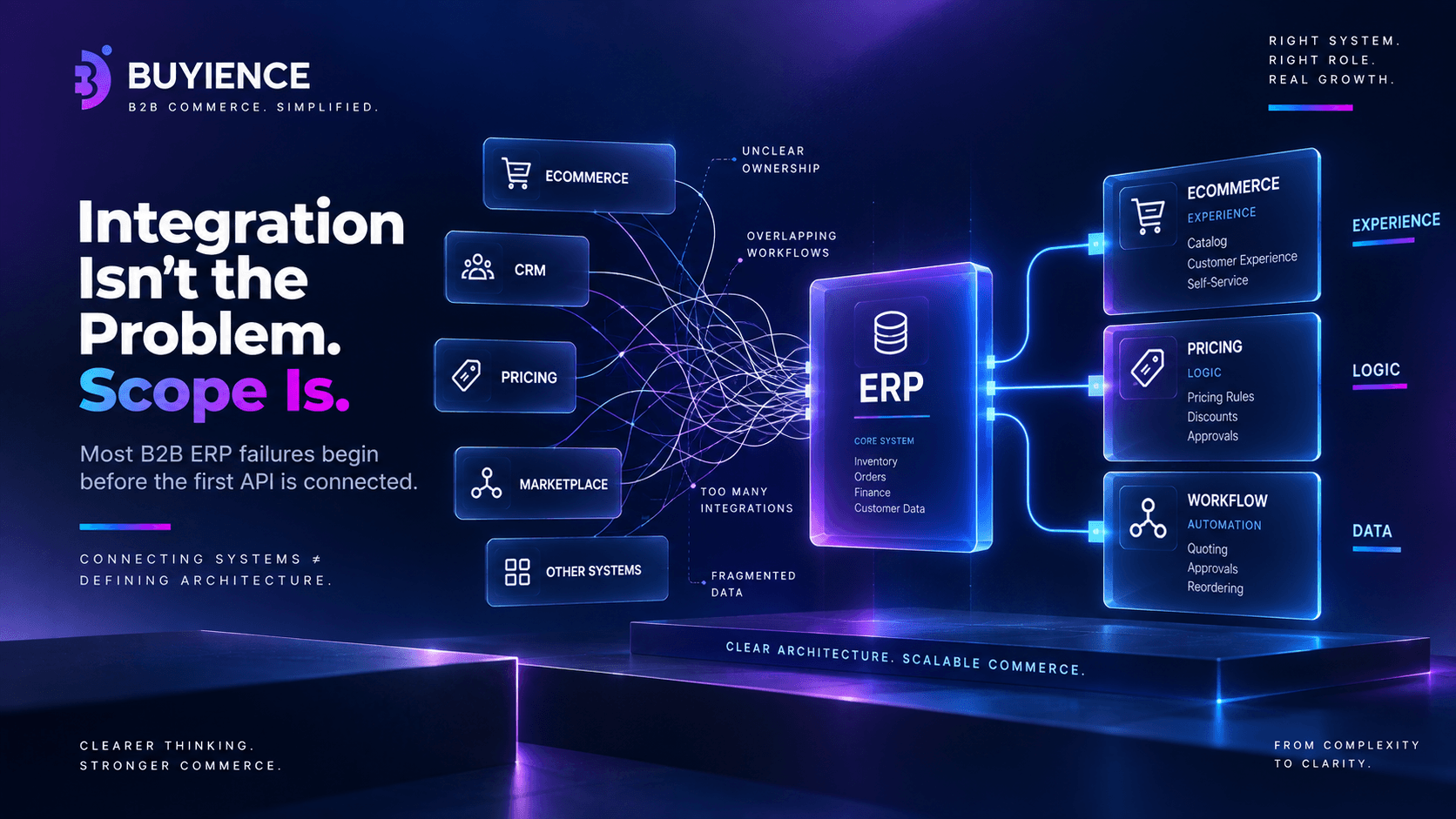
Why Most B2B ERP Integrations Fail
B2B ERP integration challenges refer to the difficulties of connecting ERP systems with ecommerce, pricing, and workflow tools—often resulting in slow performance, inconsistent data, and failed implementations due to poor planning and unclear system responsibilities.
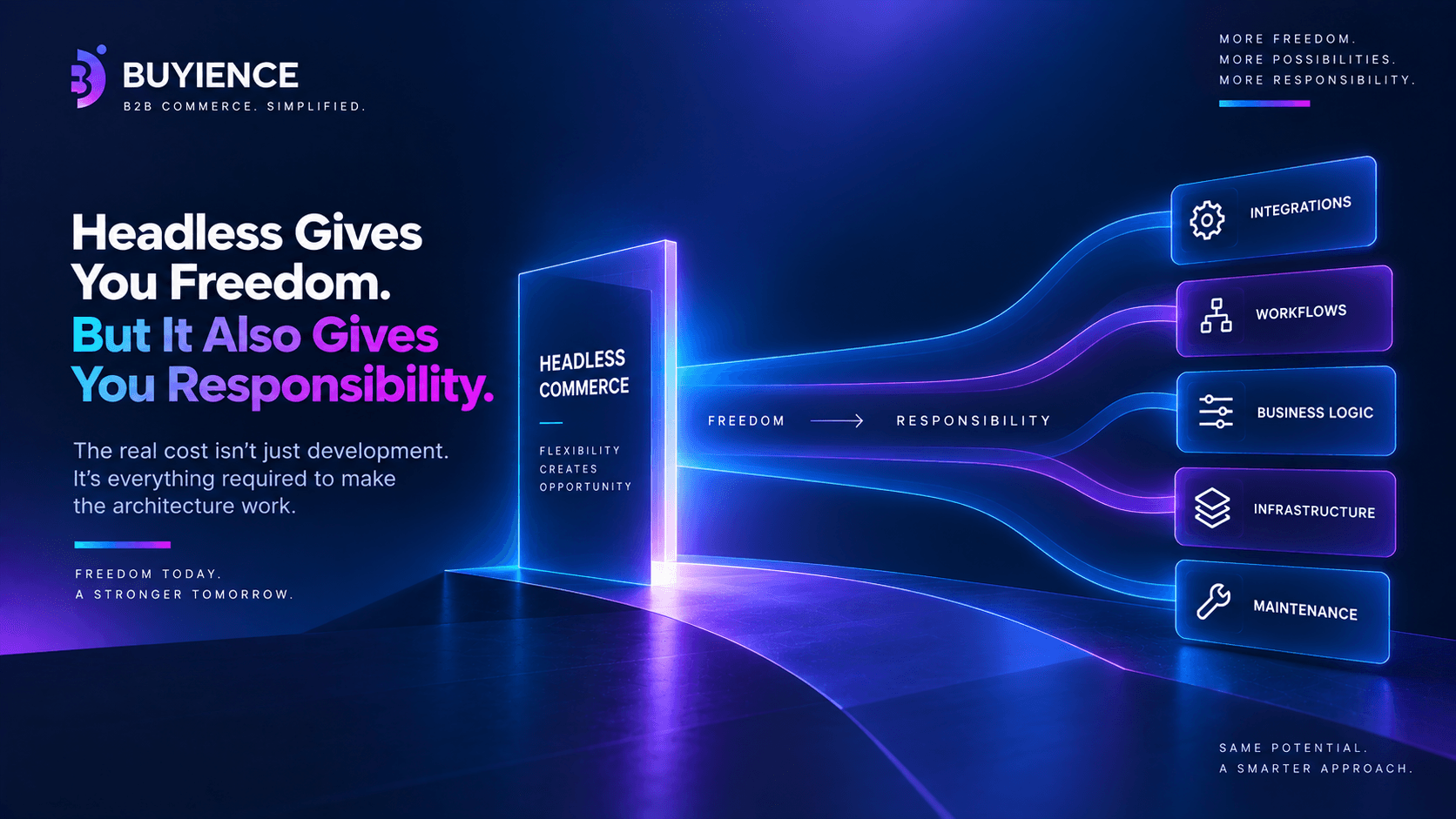
The Real Cost of Headless Commerce for B2B Companies
The cost of headless commerce in B2B includes not just development and infrastructure, but also ongoing expenses from integration complexity.
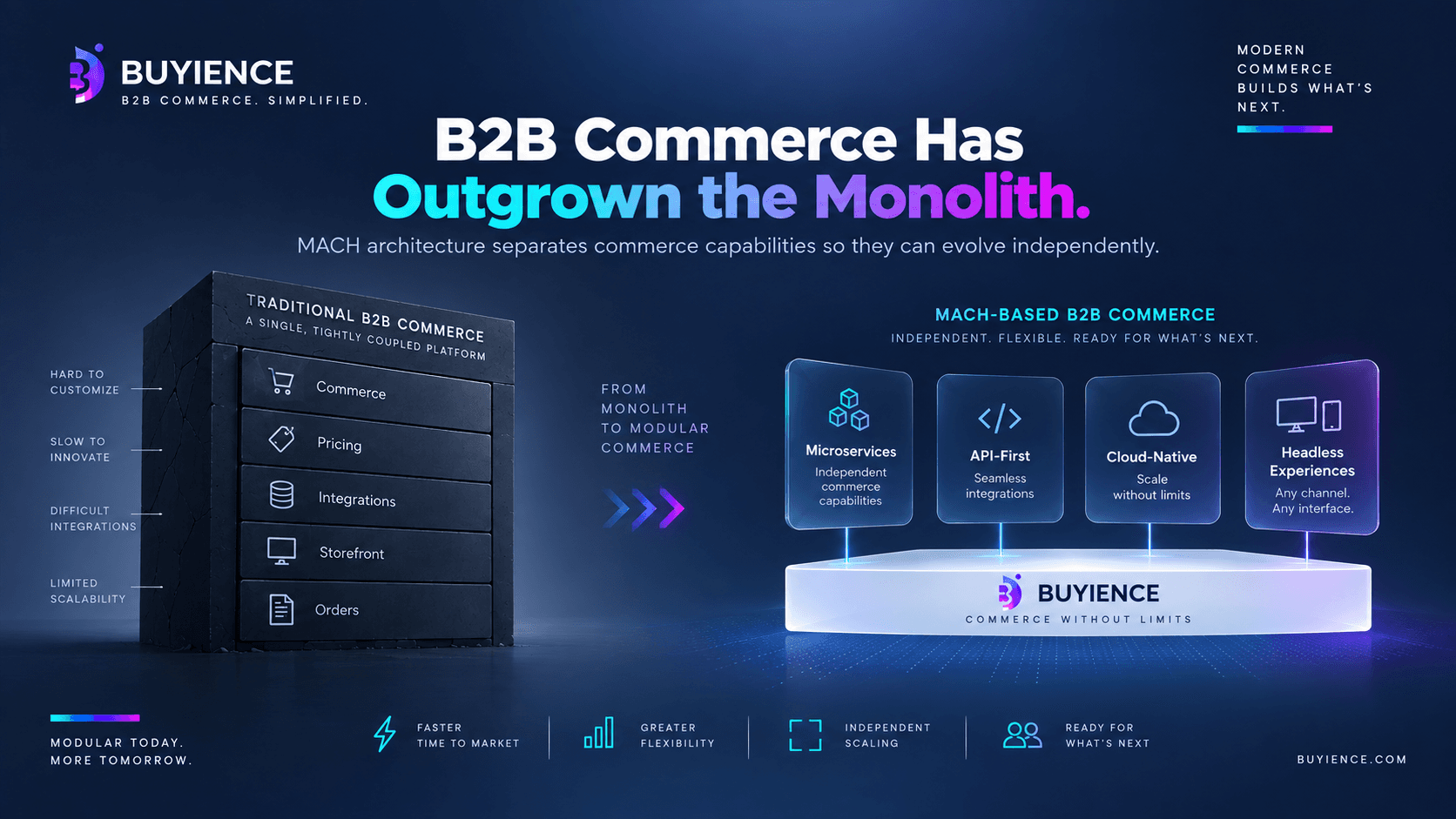
How MACH Architecture Enables Modern B2B Commerce
Traditional B2B commerce platforms were built to solve simpler problems. When they launched, the typical B2B workflow was relatively predictable.