
The Real Cost of Manual Quote Approvals in B2B
Most B2B leaders think approval delays are a discipline issue. They're usually wrong. When discounts fluctuate, when deals stall waiting for sign-off, when managers complain about review fatigue — the instinct is to tighten policy.

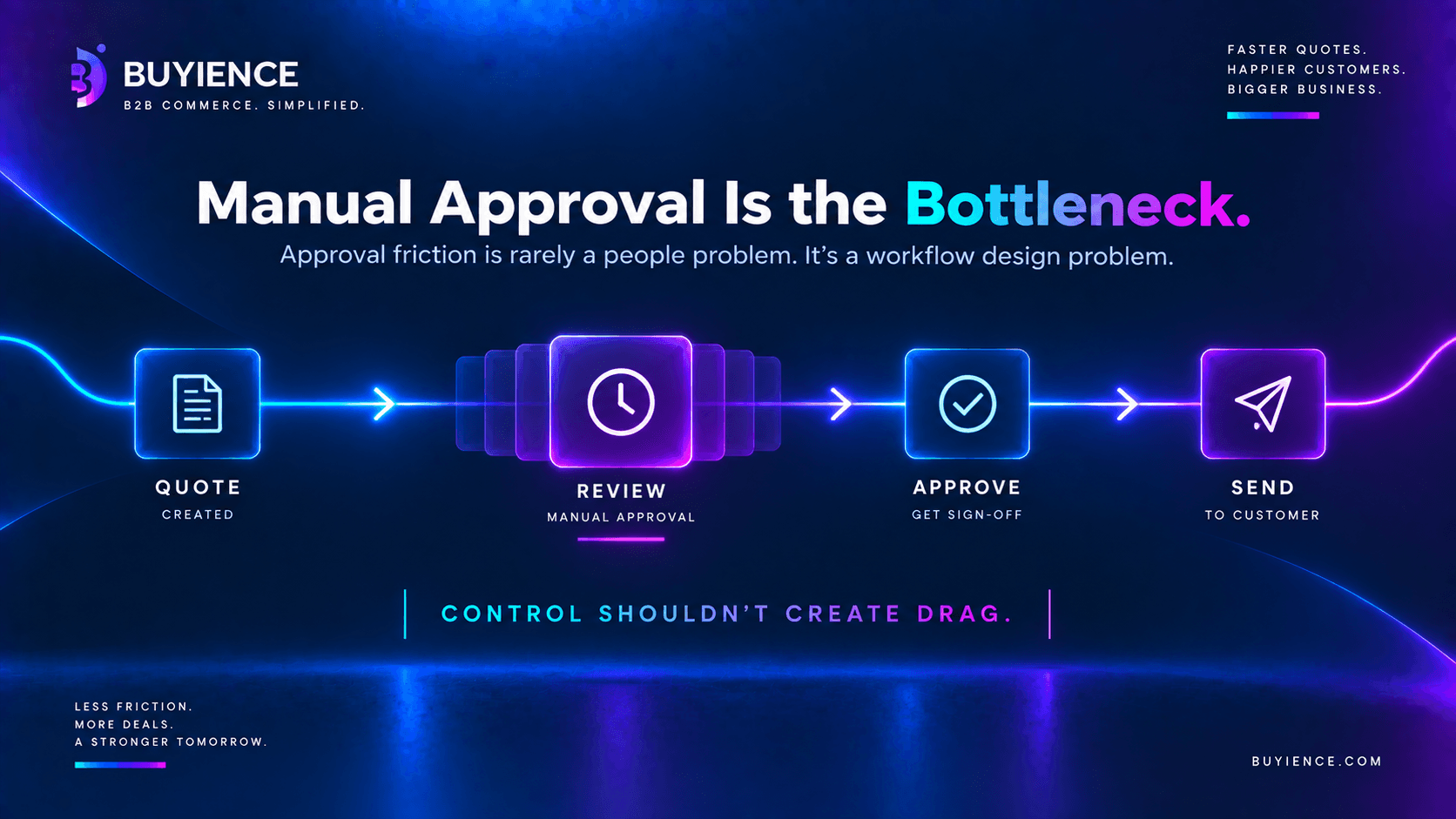
Common responses look like this:
- Add another layer
- Require written justification
- Narrow discount bands
But here’s the uncomfortable truth:
Approval friction is rarely a people problem.
It’s a workflow design problem.
And policy-based approval systems do not scale.
That’s why structured quote approval software B2B environments consistently outperform manual approval models — not because they remove control, but because they redesign how control works.
Let’s break down the real cost.
The Approval Drag Index (ADI)
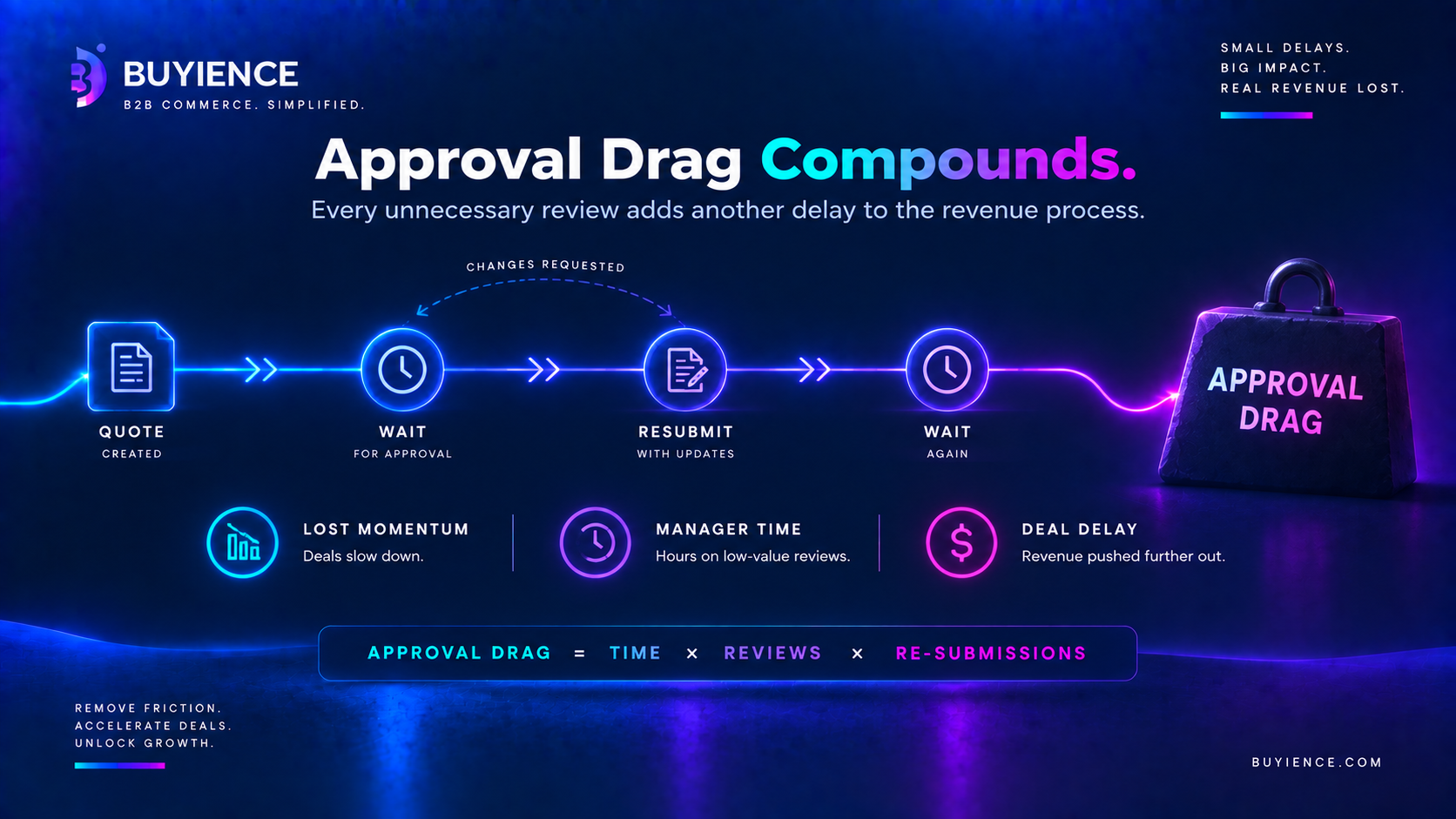
Before diving into automation, it helps to quantify the problem.
We use a simple concept internally when analyzing revenue workflows:
Approval Drag Index (ADI) = Average approval time × Percentage of quotes requiring review × Frequency of re-submissions
In one 42-rep industrial distribution team, ADI revealed:
- 78% of quotes required manual review
- Average approval time: 2.9 days
- 23% required at least one re-submission
On paper, nothing seemed broken.
In reality, pricing had become the single slowest stage in the pipeline.
Manual systems create invisible drag.
And drag compounds.
Cost #1: Momentum Loss (The Win-Rate Multiplier Nobody Tracks)
Speed signals confidence.
When a buyer asks for pricing, internal alignment is at its peak. Delay shifts energy away from your deal.
Revenue operations benchmarks consistently show that deals slowest at the pricing stage experience measurable drops in close probability.
In practical terms, manual approvals introduce:
- Email dependency
- Context gaps
- Manager availability risk
- Escalation chains
Even a 24-hour delay changes competitive positioning.
Modern B2B quote approval automation eliminates unnecessary waiting by:
- Auto-approving deals within margin guardrails
- Triggering escalation only when thresholds are exceeded
- Routing approvals instantly to the correct stakeholder
The difference is structural. Approval becomes conditional — not default.
Cost #2: Discount Behavior Distortion
Here’s where manual systems quietly damage margin.
When approvals are slow, reps adapt strategically.
Common behaviors include:
- Requesting higher discounts upfront to avoid re-approval
- Over-padding concessions
- Inflating list price to create negotiation flexibility
In a SaaS pricing audit across three regions, nearly 17% of approved discounts exceeded what buyers ultimately required — primarily because reps optimized for approval efficiency rather than pricing precision.
Manual friction changes behavior.
Structured quote approval software B2B environments reverse this by:
- Auto-clearing compliant deals instantly
- Enforcing pricing floors
- Tracking discount variance by rep and territory
- Requiring structured justification only for true exceptions
When friction disappears, precision improves.
Cost #3: Managerial Bandwidth Drain
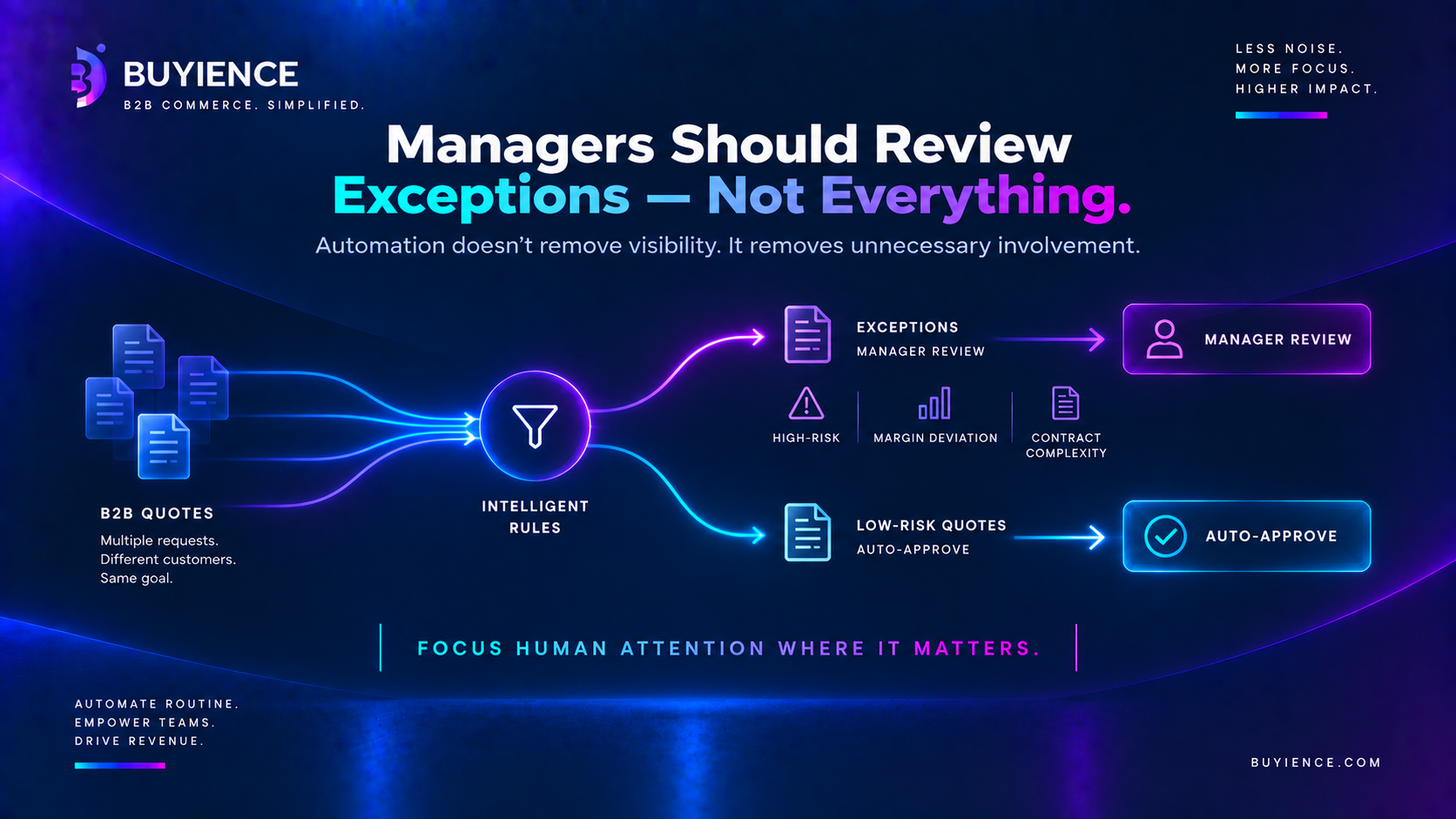
Manual systems assume review equals control.
In practice, review often equals repetition.
Sales leaders routinely spend hours weekly approving low-risk quotes that fall well within acceptable margin bands.
In one mid-market manufacturing organization (approx. $120M revenue), sales managers estimated 6–8 hours weekly spent on approval tasks that automation could have handled instantly.
That’s nearly 15% of leadership capacity redirected toward transactional oversight.
Automation doesn’t remove visibility.
It removes unnecessary involvement.
Exception-based routing ensures managers focus on:
- Strategic deals
- High-risk pricing deviations
- Contractual complexity
Everything else moves without friction.
Cost #4: Post-Close Revenue Leakage
The most expensive approval problems show up after signature.
Manual workflows often disconnect from:
- ERP validation logic
- Tax rules
- SKU configuration integrity
- Contract clause compliance
This results in:
- Rebilling cycles
- Credit memos
- Delayed revenue recognition
- Customer trust friction
Policy-based systems depend on humans to catch errors.
Automated B2B pricing approval workflow software embeds validation directly into the quote-to-order engine.
If configuration violates logic, it never reaches the customer.
Prevention beats correction.
Why Stronger Policies Fail at Scale
When approval delays surface, leadership tightens rules.
But policy increases complexity.
And complexity increases cognitive load.
Layered policies introduce:
- More manual interpretation
- More context exchange
- More dependency on availability
- More opportunity for inconsistency
Automation replaces reactive governance with embedded governance.
Instead of asking:
“Who needs to approve this?”
The system evaluates:
“Does this breach predefined risk parameters?”
That shift is what makes automation scalable.
Policy-Based vs Automated B2B Quote Approval Systems
| | | | --- | --- | | Policy-Based Approval | Automated Approval System | | Manual review by default | Auto-approval within guardrails | | Email/Slack coordination | Embedded routing logic | | Human context interpretation | Real-time margin visibility | | High re-submission rates | Exception-based escalation | | Fragmented audit tracking | Centralized approval history |
The difference isn’t speed alone.
It’s consistency.
The Control Myth
A common objection is that automation reduces oversight.
The opposite is true — if implemented correctly.
Modern B2B sales approval automation tools allow:
- Locked margin floors
- Tier-based approval hierarchies
- Automated legal clause validation
- ERP and CRM integration
- Full audit logs
Manual systems rely on memory and attention.
Automated systems rely on logic.
Logic scales.
When Manual Approvals May Still Be Appropriate
Not every company needs immediate automation.
Manual approval models may remain practical when:
- Deal volume is low
- Pricing is highly bespoke
- Executive review is required for every contract
However, once organizations operate with:
- Multi-region sales teams
- Tiered pricing models
- Channel distribution
- 50+ quotes per week
Manual systems become structural bottlenecks.
At that point, quote approval software B2B solutions function as operational infrastructure — not optional enhancement.
The Financial Impact of Approval Automation
Organizations transitioning to structured B2B pricing approval automation commonly observe:
- 20–40% reduction in approval cycle time
- Lower discount variance
- Reduced post-close corrections
- Improved managerial leverage
- Cleaner revenue data integrity
Even shaving one day from pricing stages can significantly influence quarterly outcomes.
The ROI extends beyond efficiency.
It influences:
- Win rates
- Revenue timing
- Margin consistency
- Forecast accuracy
A Simple Self-Diagnostic
If you’re unsure whether manual approvals are costing you, answer honestly:
- What percentage of quotes truly require human judgment?
- How many approval hours are spent weekly on low-risk deals?
- How often are pricing errors discovered post-signature?
- Are approvals triggered by risk — or by habit?
Most teams discover that over 60% of approval workload adds minimal strategic value.
That’s a design flaw — not a discipline failure.
Control Without Drag
Manual approvals feel safe because they’re visible.
Automation feels risky because it’s invisible.
But invisible systems — when designed correctly — are what allow scale.
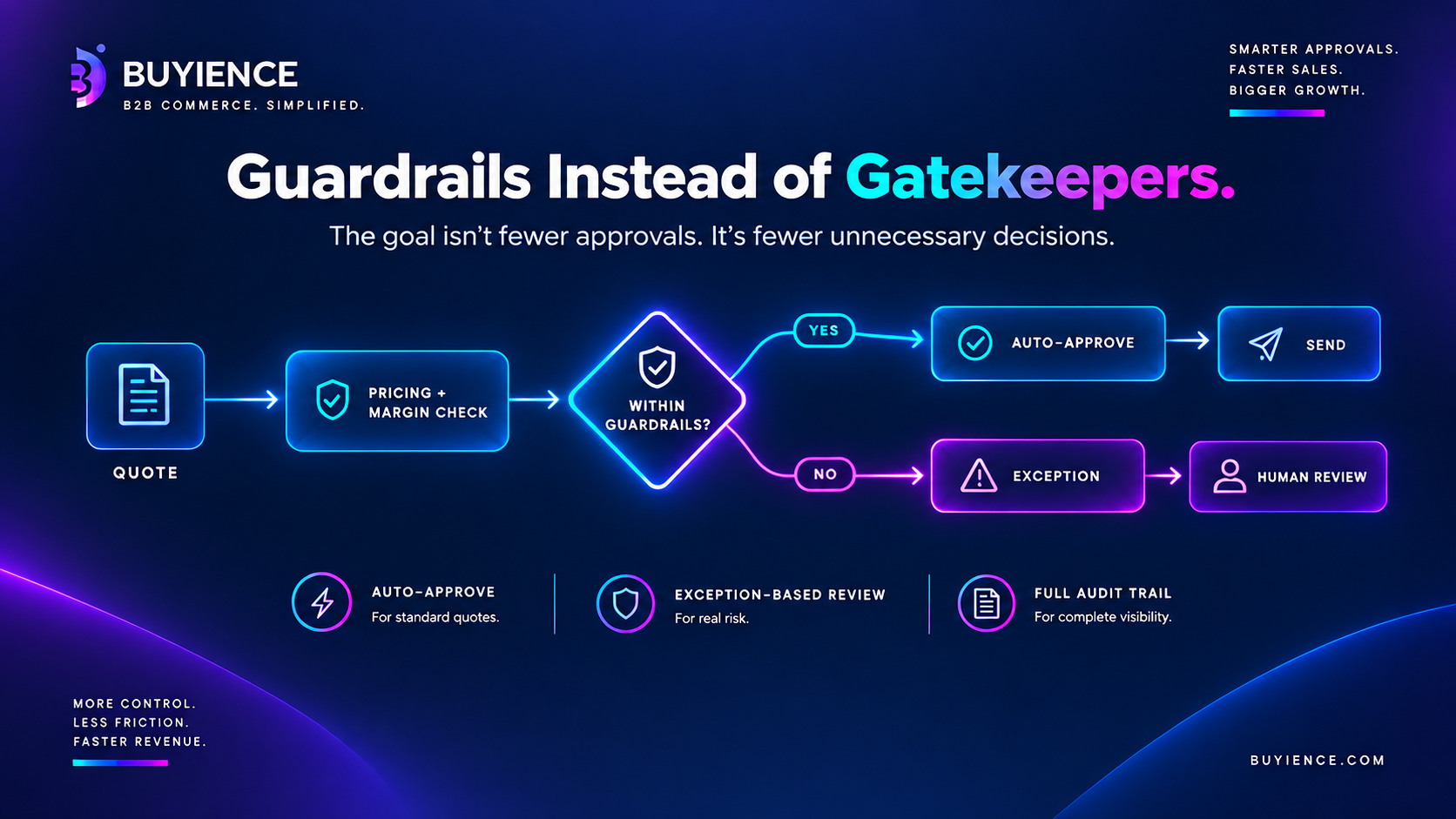
Automation beats policy-based approvals not because it removes governance.
It embeds governance into workflow logic.
Structured quote approval software B2B solutions provide:
- Guardrails instead of gatekeepers
- Exception-based review instead of blanket oversight
- Integrated validation instead of reactive correction
The goal isn’t fewer approvals.
It’s fewer unnecessary decisions.
Questions, answered
What is quote approval software B2B?
Quote approval software B2B automates the validation and authorization of pricing, discounts, and contract terms before a quote is finalized. It applies predefined rules to determine whether approval is required and routes requests automatically.
How does automated quote approval improve sales speed?
Automation removes unnecessary review cycles by instantly approving quotes that fall within predefined margin and pricing guardrails. Only exceptions require manual intervention.
Does approval automation increase risk?
No. When designed correctly, automation strengthens compliance by enforcing consistent pricing floors, approval hierarchies, and validation rules across all deals.
How do I know if my company needs quote approval automation?
Consider automation if you experience:
- Approval cycles exceeding 24–48 hours
- Frequent discount inconsistencies
- Manager approval fatigue
- Post-close pricing corrections
- High quote volume environments
Can quote approval software integrate with CRM and ERP systems?
Yes. Most modern systems integrate directly with CRM and ERP platforms to ensure pricing accuracy, compliance validation, and clean data transfer.
Is automation only for enterprise companies?
No. Mid-market B2B organizations with structured pricing models and growing sales teams often see significant operational benefits from approval automation.
Related articles
Why Manual B2B Quoting Is Costing You Deals
And why your “faster quoting” initiative is probably solving the wrong problem.

Corporate Gifting RFPs: Streamlining the Quote-to-Order Process
Corporate gifting RFPs are expensive to respond to and easy to lose for reasons unrelated to your actual capability — a missed compliance requirement, a slow response, or pricing that couldn't be revised fast enough during evaluation. The businesses that win consistently qualify hard before responding, build responses from reusable components rather than from scratch, and treat the gap between award and first order as a defined process rather than an improvisation.
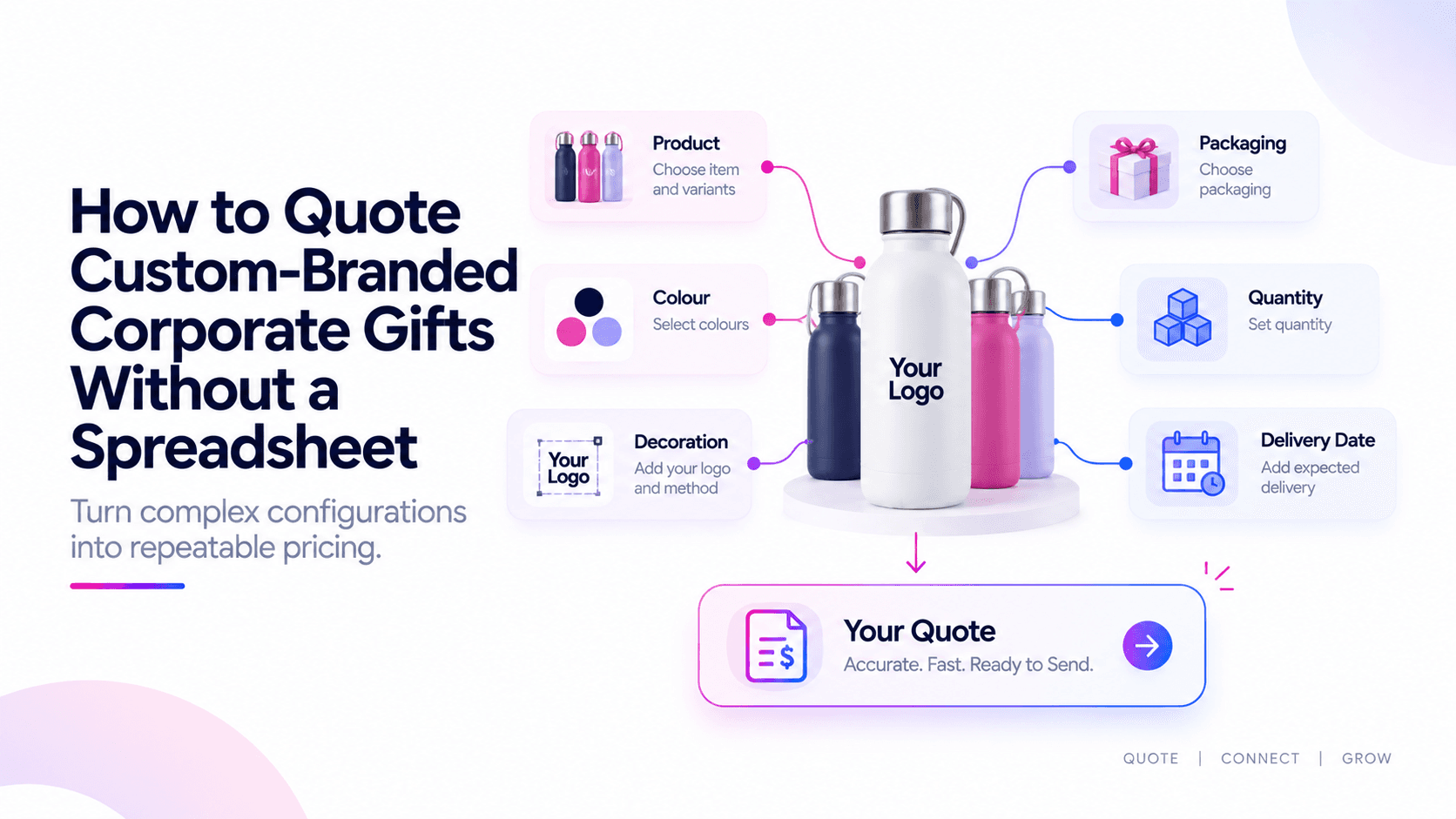
How to Quote Custom-Branded Corporate Gifts Without a Spreadsheet
Quoting a custom-branded gift order is a configuration problem, not a pricing lookup. Decoration method, setup fees, colour counts, placement counts, and variant splits all interact — and a spreadsheet forces you to rebuild that logic by hand for every quote. The fix is defining your cost components as rules once, so any combination prices itself. This guide covers how to break down a custom gift quote into its actual components and structure them so they're reusable.
