
Volume Discount Structures That Actually Protect Your Margin
Volume discounts are supposed to trade lower unit price for higher order size — a fair exchange when it's modeled correctly. The failure mode isn't offering volume discounts; it's setting break points and discount depths without checking them against actual cost structure and margin floor, which turns a growth lever into a slow margin leak. This guide covers how to build volume discount tiers that hold up under real negotiation pressure.

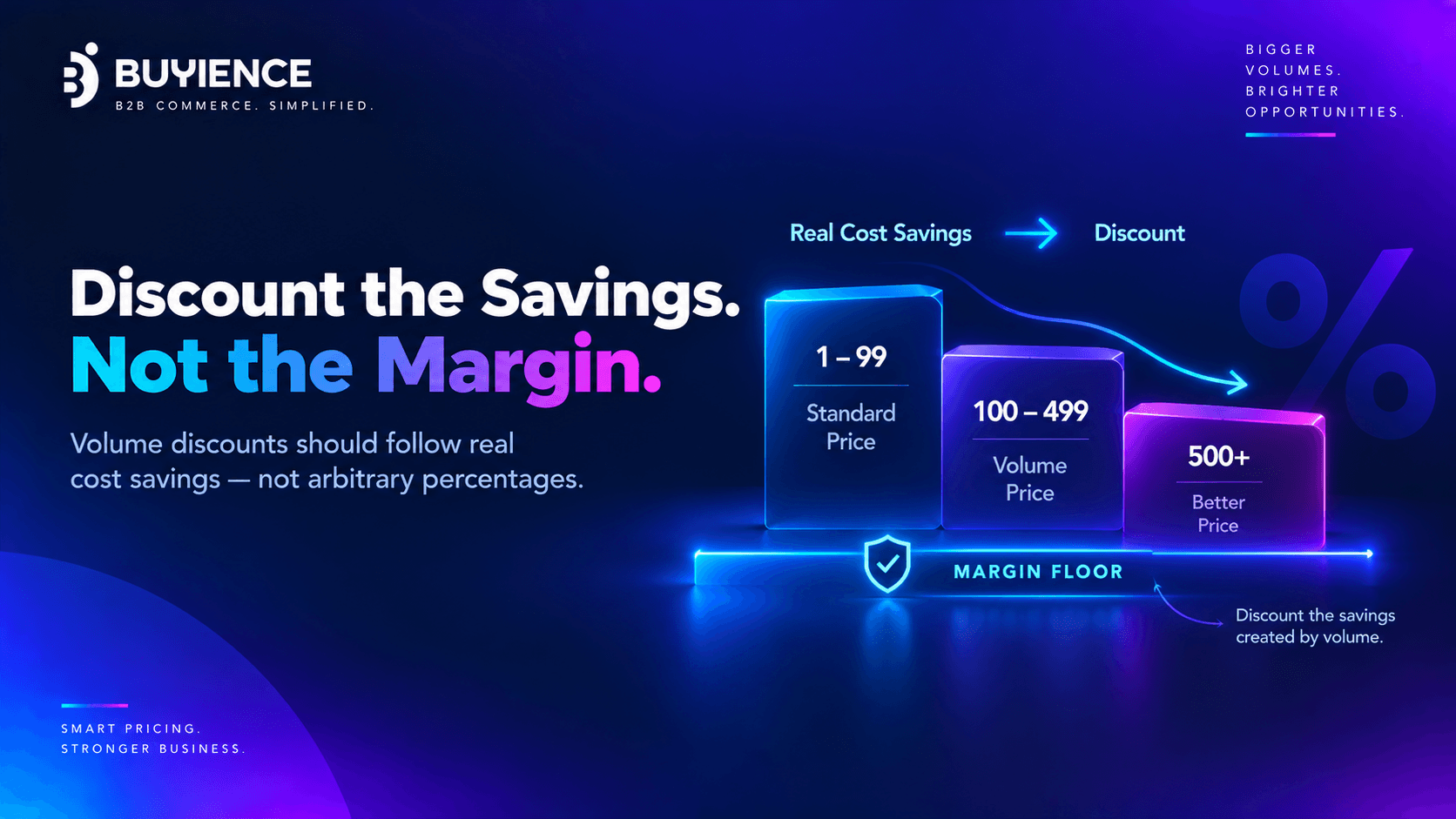
Almost every fastener and MRO distributor offers some form of volume discount — order more, pay less per unit. It's one of the oldest pricing mechanisms in B2B, and for good reason: it rewards customers for consolidating orders, gives distributors predictable larger transactions, and reduces the per-unit cost of fulfillment. Done well, it's a genuine win for both sides.
Done poorly, it's one of the quietest ways margin disappears — because a discount structure that looks reasonable on a price sheet can still be losing money once you account for what a larger order actually costs to fulfill, and how often reps stretch beyond the intended break points under negotiation pressure.
The mistake most volume discount structures make
The most common error isn't the existence of volume discounts — it's setting them based on what feels competitive rather than what the numbers actually support. A break point of "10% off for 1,000+ units" might be chosen because it sounds like a round, attractive number, without checking whether 10% still clears margin at that volume once true incremental costs are accounted for.
Volume does reduce some costs — fewer transactions to process, more efficient picking and packing, better freight economics per unit. But it doesn't reduce all costs proportionally, and the discount needs to be sized against the actual savings, not against a guess.
Step 1: Know your true margin floor before setting any break
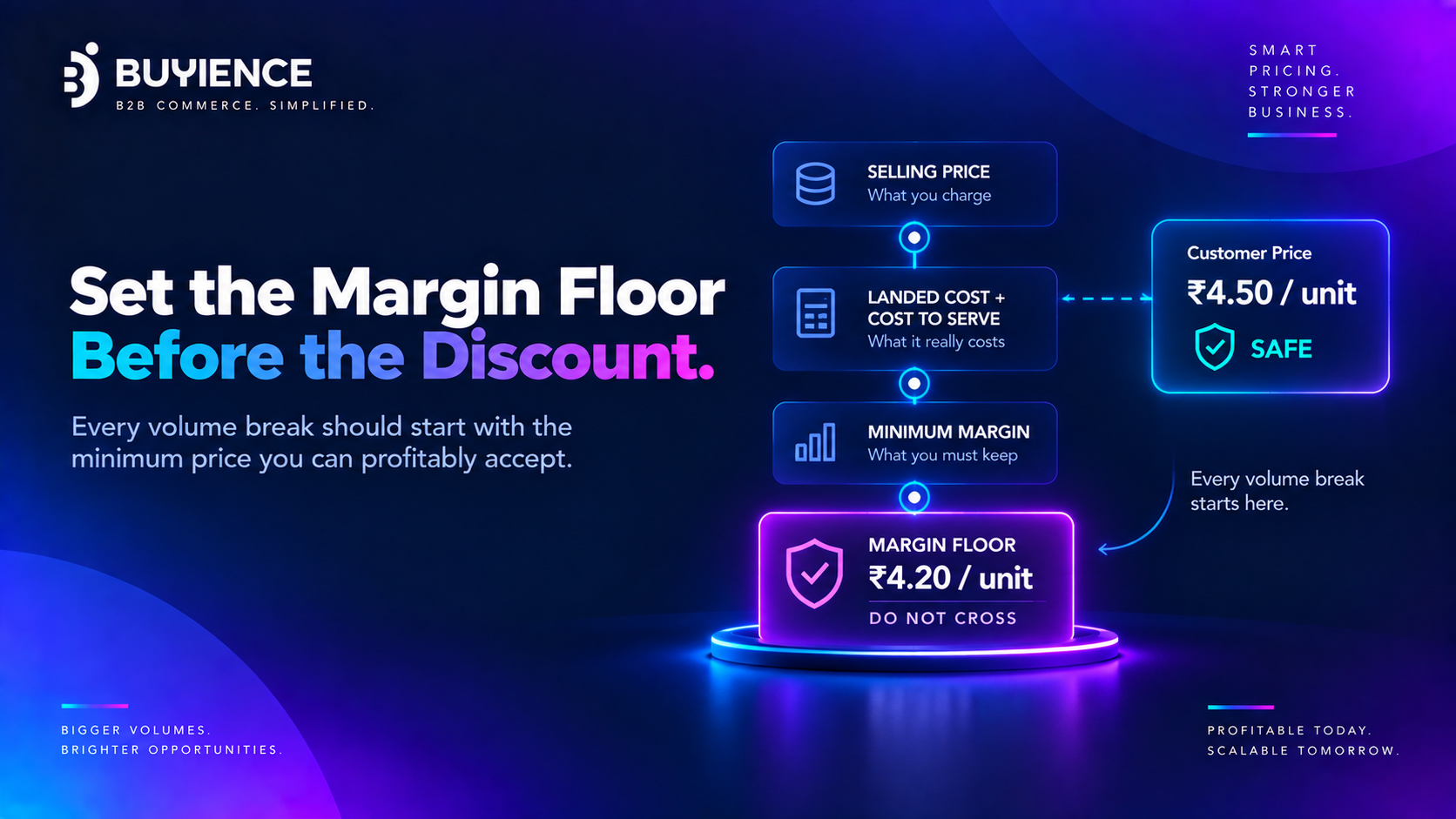
This sounds obvious, but it's the step most frequently skipped or done loosely. Your margin floor for volume discounting purposes needs to reflect:
- True landed cost per unit, including freight and handling, not just the base unit cost from your supplier
- Fixed costs that don't scale down with volume — administrative overhead, minimum handling costs per order, warehousing
- Your actual minimum acceptable margin for the business to remain healthy — not an aspirational number, and not just "whatever's left after the discount"
Without this number clearly defined per product category, every volume break is a guess dressed up as a pricing strategy.
Step 2: Model what volume actually saves you
Before setting a discount depth, quantify what a larger order genuinely saves in cost-to-serve. This is where the strongest, most defensible volume discount structures come from — not from matching a competitor's advertised discount, but from passing through a real efficiency gain.
Consider, per product category:
- How much does per-unit freight cost change at different order sizes?
- Does picking and packing time per unit meaningfully drop for larger orders, or is it roughly linear?
- Are there fixed per-order costs (processing, invoicing, minimum handling) that get diluted across more units?
A product with high fixed per-order costs and low marginal fulfillment cost per unit can often support a deeper volume discount than one where most of the cost is genuinely per-unit and doesn't change with order size. Treating every SKU with the same discount curve ignores this and tends to either underprice high-volume, low-margin items or leave money on the table for items that could support deeper discounts.
Step 3: Set break points around real order-size patterns
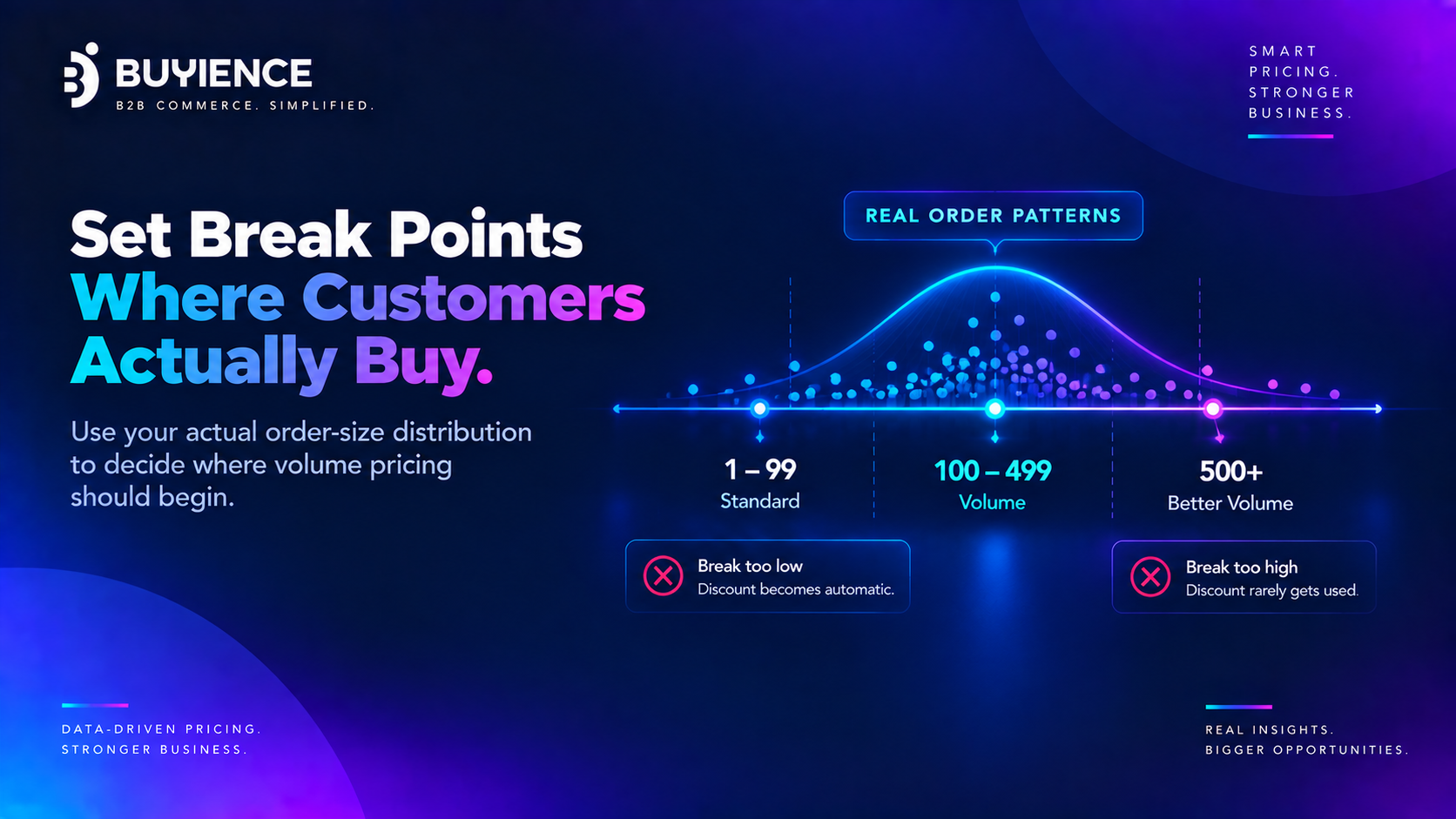
Break points chosen arbitrarily — round numbers that sound good on a price sheet — often miss where your actual order sizes cluster. Two common failure patterns:
- Break points set too low relative to typical order size, meaning most customers qualify for the discount by default, effectively lowering your baseline price without the intended trade of larger commitment
- Break points set too high relative to typical order size, meaning almost nobody reaches them, making the discount structure decorative rather than functional
Reviewing actual order-size distribution per product category — not assumptions about what customers "should" be ordering — is the most reliable way to set breaks that do real work: meaningfully rewarding larger commitments without giving away margin on orders that would have happened anyway.
Step 4: Decide how volume breaks interact with customer tiers
Volume discounts rarely operate in isolation — most distributors also have customer-based tiered pricing layered on top (a topic covered in more depth in our tiered pricing setup guide). The interaction between the two needs an explicit rule, not an assumption:
- Does a Preferred-tier customer's volume discount stack on top of their tier discount, or does the better of the two apply?
- Is there a combined-discount ceiling, below which no combination of tier and volume pricing can go, regardless of how the two interact?
Without an explicit answer, this is exactly the kind of ambiguity that leads to a rep stacking discounts in a way that clears neither number's individual floor, let alone the two combined.
Step 5: Build in negotiation guardrails, not just base rules
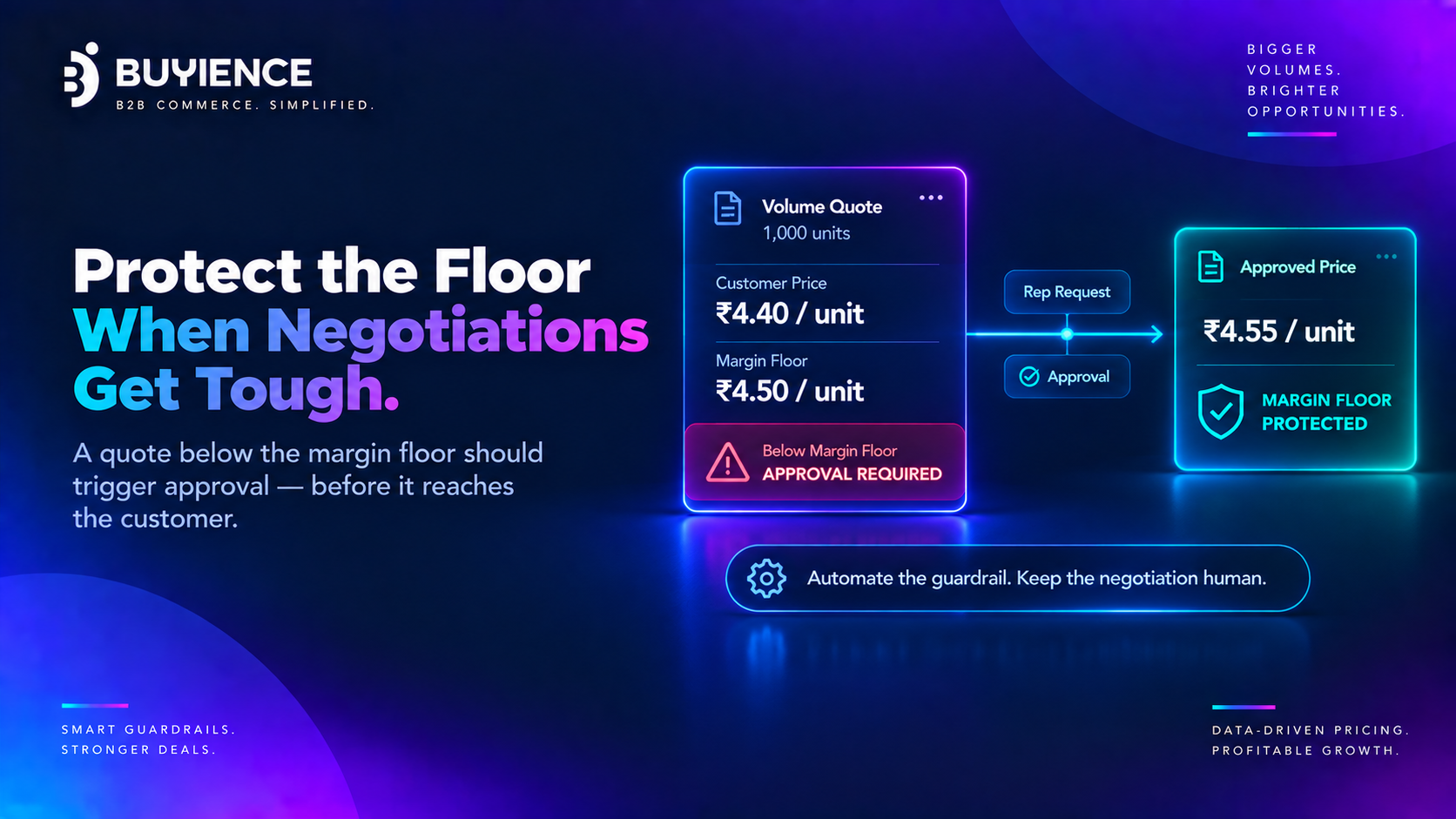
Volume discount structures tend to hold up fine on paper and then get stretched in real negotiations — a customer pushes for a deeper discount than their order size technically qualifies for, and a rep under pressure to close grants it. This is less about the discount structure being wrong and more about it lacking enforcement at the point of negotiation.
A workable approach:
- Set a hard floor below which no volume discount can go without explicit approval, regardless of how the negotiation is going
- Route any request below that floor for approval automatically, rather than leaving it to rep judgment in the moment
- Track how often exceptions are requested and granted — a pattern of frequent exceptions at a particular break point usually means the break point itself needs revisiting, not that the exception process is failing
Step 6: Revisit the structure periodically against real cost data
Cost structures shift — freight rates change, supplier pricing moves, fulfillment efficiency improves or degrades. A volume discount structure set once and left unchanged for years will drift out of alignment with actual costs, typically in the direction of eroding margin, since costs tend to rise more often than they fall. Reviewing break points and discount depths against current cost data on a defined schedule — annually at minimum — keeps the structure honest.
Where this breaks down without a system behind it
All of this is manageable in principle with careful spreadsheet modeling — until it has to be applied consistently, in real time, across thousands of SKUs and hundreds of live negotiations. The gap between a well-designed discount structure on paper and what actually gets quoted to customers is where margin erosion tends to live: reps who don't have real-time visibility into whether a proposed discount clears the floor, exceptions that get granted verbally and never make it back into a tracked record, and discount depths that were correct when set but never revisited as costs changed.
How Nova Core handles this
Nova Core's AI Quote Engine enforces margin floors on every quote, at the line-item level, whether a discount comes from a volume break, a customer tier, or a negotiated exception — with any quote that would cross the floor flagged or routed for approval before it goes out. Combined with real-time negotiation through the Digital Sales Room, it gives distributors visibility into exactly where a deal sits against the floor, in the moment, rather than discovering the answer after the order ships.
Buyience offers a 14-day free trial with full access to every feature — no credit card required to start. Visit buyience.com to start your free trial — or request a demo.
Questions, answered
How do I know if my volume discount structure is losing money?
Check whether your discount depths are modeled against true landed cost and actual cost-to-serve savings at each break point — not just chosen because they sound competitive. If break points were set without that modeling, it's worth auditing a sample of recent large orders against your actual margin floor.
Should every product have the same volume discount structure?
No. Products with high fixed per-order costs and lower marginal per-unit fulfillment cost can typically support deeper volume discounts than products where cost is largely per-unit and doesn't meaningfully change with order size.
How do volume discounts interact with customer-tier pricing?
That needs an explicit rule — whether the two stack, whether the better of the two applies, and whether there's a combined floor neither can go below. Left undefined, this ambiguity is a common source of unintentional over-discounting.
What should happen when a customer asks for a discount below the standard volume break?
Route it through an approval process rather than leaving the decision to the rep in the moment, especially under negotiation pressure. Tracking how often this happens at a given break point also tells you whether the break point itself needs adjusting.
How often should volume discount structures be reviewed?
At least annually, and any time there's a meaningful shift in cost structure — freight rates, supplier pricing, or fulfillment costs. A structure that was correctly calibrated when set can drift out of alignment as costs change.
Can volume discounts be managed without dedicated software?
For a small catalog with simple, uniform break points, yes, for a period of time. As SKU count grows and break points vary by product category and interact with tiered customer pricing, manually enforcing margin floors in real time during live negotiations becomes increasingly difficult to do consistently.
Related articles
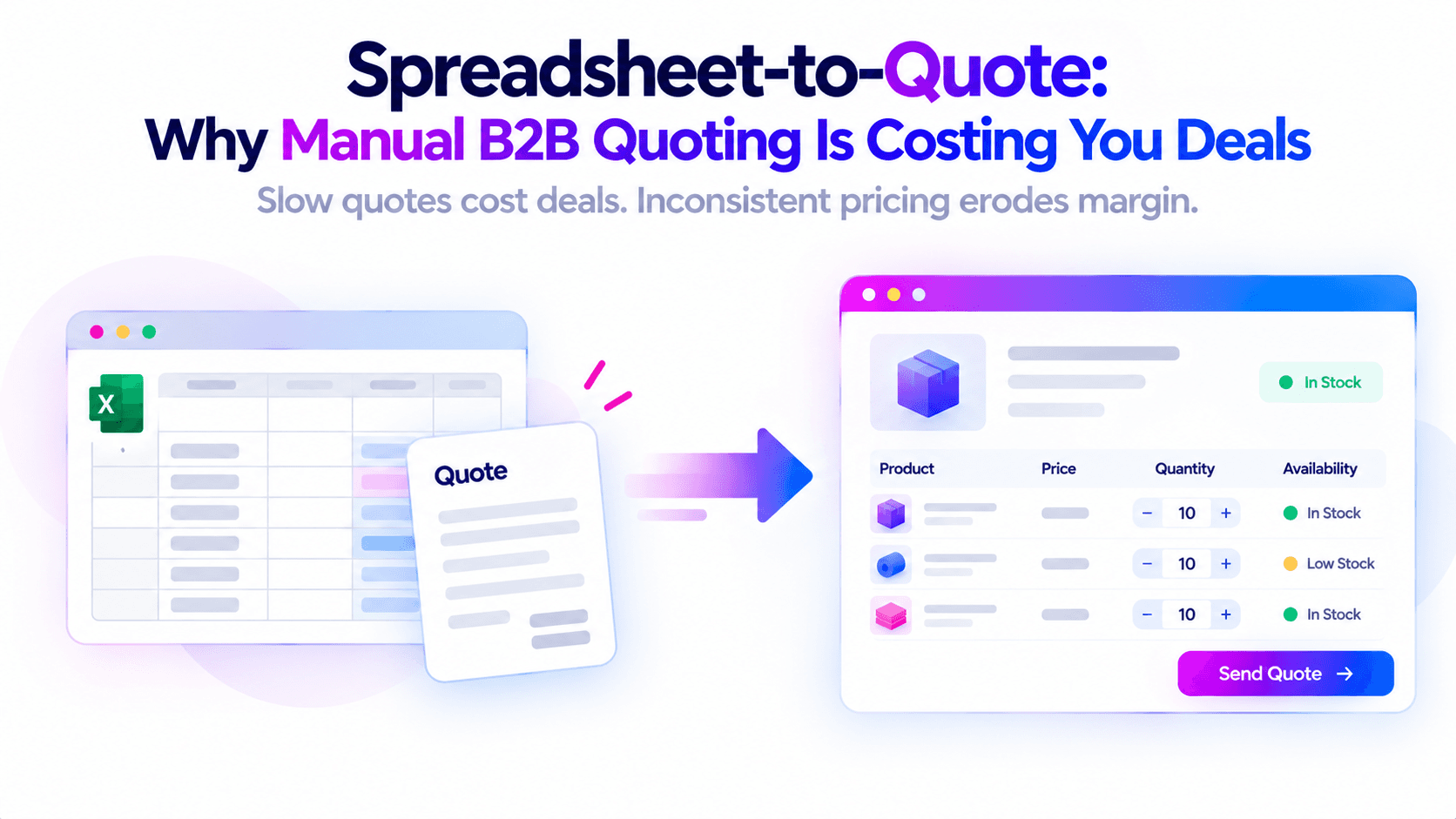
Spreadsheet-to-Quote: Why Manual B2B Quoting Is Costing You Deals
Manual quoting rarely loses a deal in a way anyone records. It loses deals through delay — the quote that arrives after the buyer decided — and it loses margin through inconsistency nobody traces back. The cost is invisible precisely because the failures look like normal business: a slow week, a competitive loss, a thin month. This post maps the five stages where a spreadsheet quote leaks, and which one to fix first.

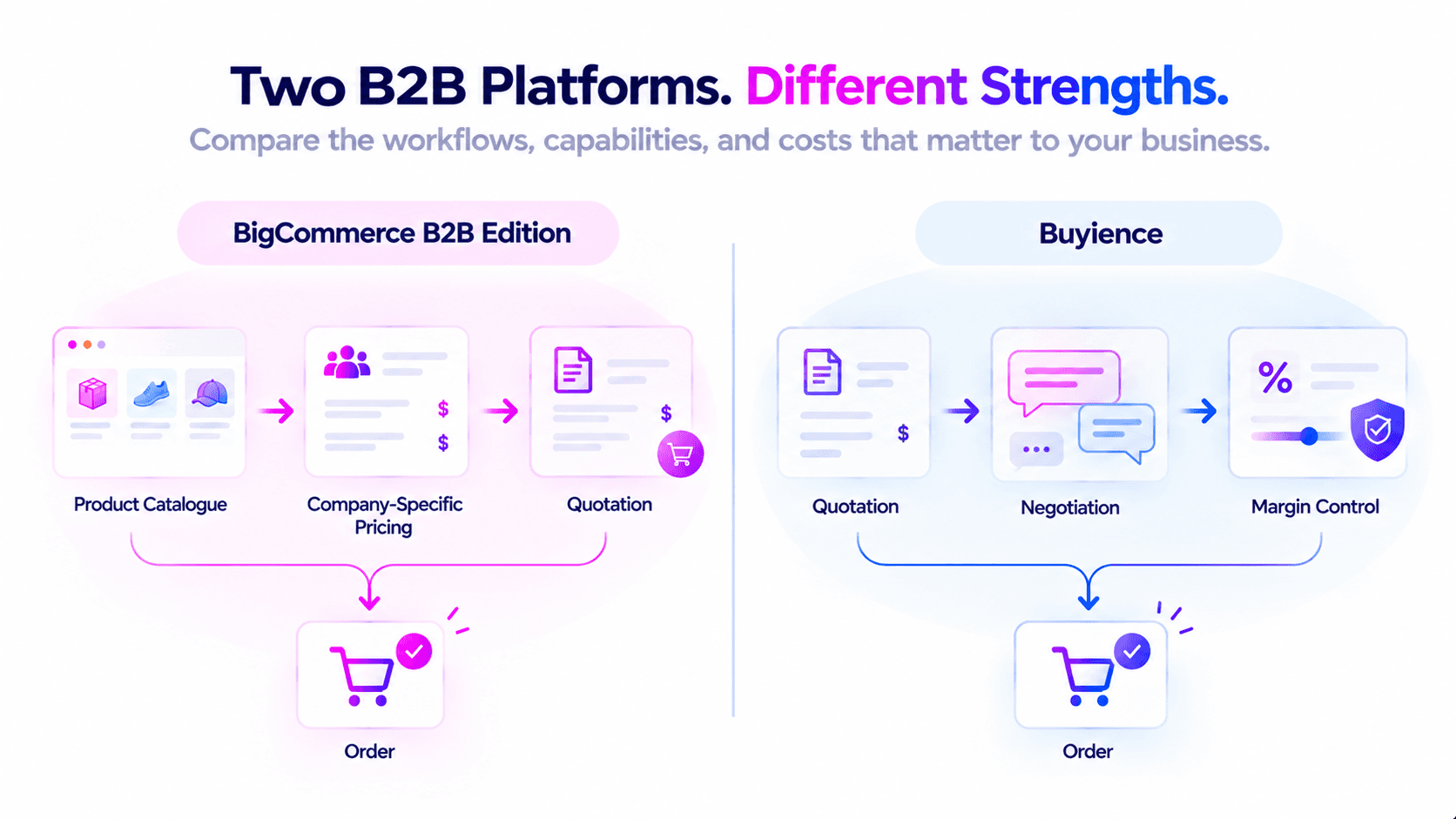
Buyience vs BigCommerce B2B Edition: A Side-by-Side Comparison
BigCommerce B2B Edition is a genuinely capable B2B platform with native quoting, company accounts, price lists and purchase order workflows — it is not a consumer cart with wholesale bolted on. The honest comparison with Buyience comes down to two things: cost tier, since B2B Edition is Enterprise-only with custom pricing, and what happens during negotiation rather than during quoting. If you have the budget and your quoting is structured rather than negotiated, B2B Edition is a strong choice.
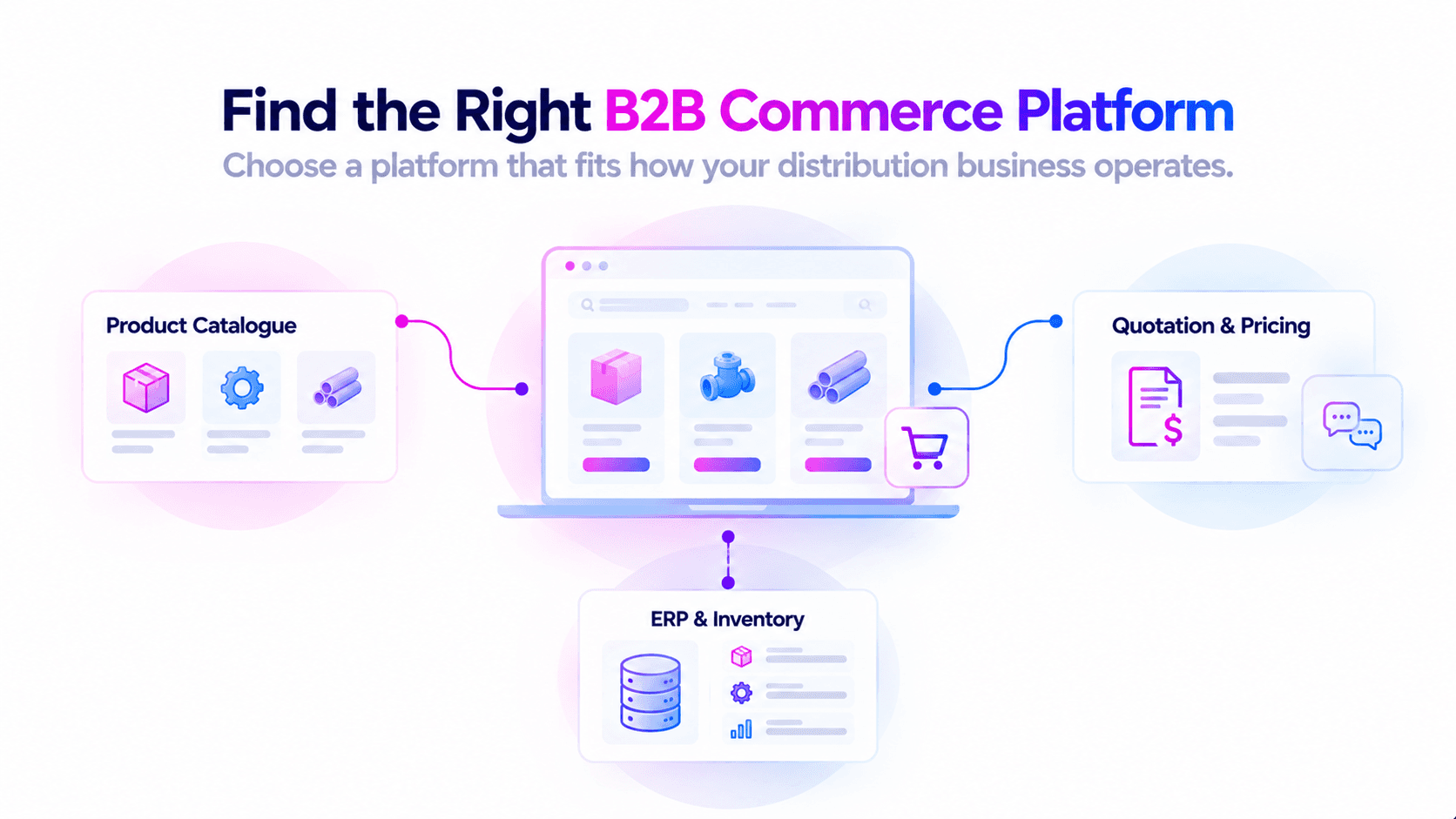
The Best B2B Commerce Platforms for SMB Distributors in 2026
Most "best B2B platform" lists are published by vendors who rank themselves first. This one is too — we build Buyience — so the useful thing we can offer is published pricing where it exists, honest placement of where each platform actually fits, and a clear statement of which distributors should rule us out. For SMB distributors the real shortlist is short: BigCommerce B2B or Shopify for catalogue-led wholesale, Sana or an ERP-led option if your ERP governs pricing, OroCommerce if you have genuine enterprise complexity and the budget, and quoting-led platforms including ours if your revenue arrives through negotiated quotes.